


The clinicopathological characteristics and survival outcomes of endometrial carcinoma coexisting with or arising in adenomyosis: A pilot study
- PMID: 32249826
- PMCID: PMC7136226
- DOI: 10.1038/s41598-020-63065-w
The clinicopathological characteristics and survival outcomes of endometrial carcinoma coexisting with or arising in adenomyosis: A pilot study
Abstract
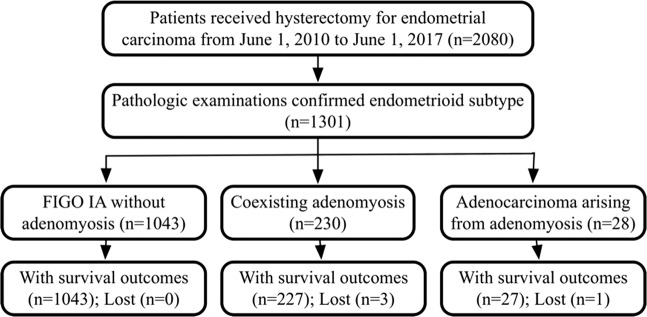
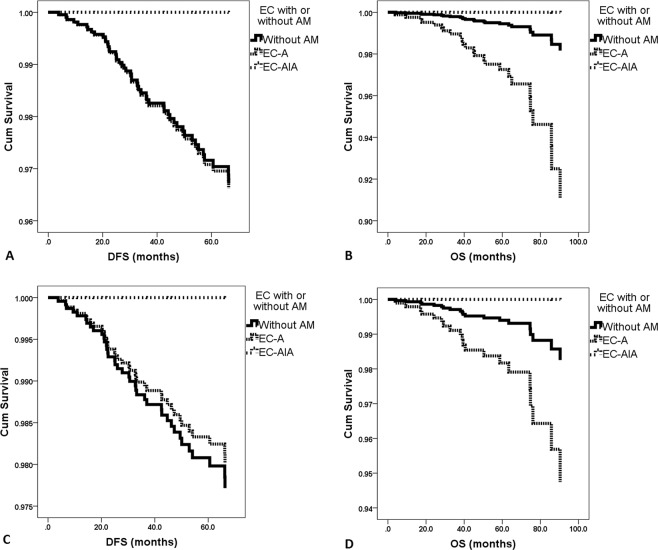
Little is known about the epidemiological and clinicopathological characteristics of endometrial endometrioid carcinoma (EEC) coexisting with or arising in adenomyosis (EEC-A or EEC-AIA) due to their rarity. This study compared EEC-A and EEC-AIA with endometrial carcinoma without adenomyosis. Cases of endometrial cancer treated at the study center from June 1, 2010, to June 1, 2017, were reviewed. The epidemiological, clinicopathological characteristics and survival outcomes were compared among three groups of endometrioid subtypes: group A, stage IA endometrial carcinoma patients without coexisting adenomyosis; group B, patients with EEC-A; and group C, patients with EEC-AIA. Among the 2080 patients reviewed, groups A, B, and C included 1043, 230 and 28 patients, respectively. Patients in group A and group B had similar clinicopathological and survival outcomes. Patients in group C were significantly younger and had less gravidity and parity than patients in groups A and B. More tumors from group C were grade 1, and they had a smaller maximum diameter and less mismatch repair deficiency than those from groups A and B. After a median follow-up of 57.0 months, the 5-year disease-free survival (DFS) rates of groups A, B and C were 96%, 91% and 100% (p = 0.045), respectively; the 5-year overall survival (OS) rates were 98%, 93% and 100%, respectively (p = 0.001), in the Kaplan-Meier analysis. However, these difference disappeared in a subgroup of stage IA patients in univariate and multivariate analysis. Cox regression analysis in stage IA patients also revealed no significant differences in survival outcome across the three groups. In conclusion, EEC-AIA exhibited specific clinicopathological characteristics that were probably associated with favorable survival outcomes. The characteristics and survival outcomes of EEC-A were similar to those of EEC without adenomyosis in stage IA patients.
Conflict of interest statement
The authors declare no competing interests.
Figures
References
Publication types
MeSH terms
LinkOut - more resources
Full Text Sources
