


Acute and long-term costs of 268 peripheral nerve injuries in the upper extremity
- PMID: 32251479
- PMCID: PMC7135060
- DOI: 10.1371/journal.pone.0229530
Acute and long-term costs of 268 peripheral nerve injuries in the upper extremity
Abstract
Background: Peripheral nerve injury in the upper extremity is linked to high socioeconomic burden, yet cost-analyses are rare and from small cohorts. The objective of this study was to determine the costs and long-term socioeconomic effects of peripheral nerve injuries in the upper extremity in Germany.
Methods: We analyzed data of 250 patients with 268 work-related upper extremity nerve injuries from acute treatment to long-term follow-up on rehabilitation, sick-leave and disability-pension.
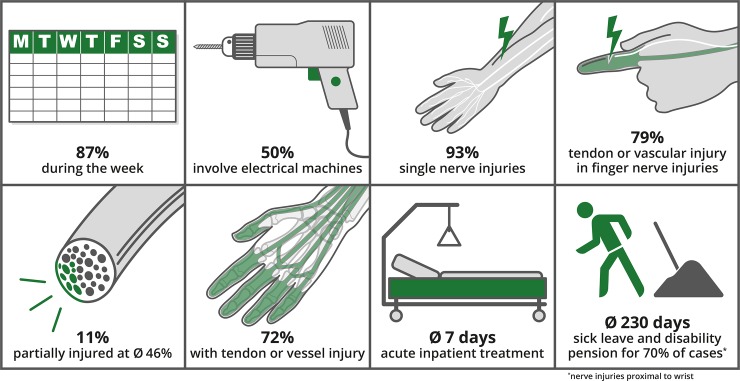
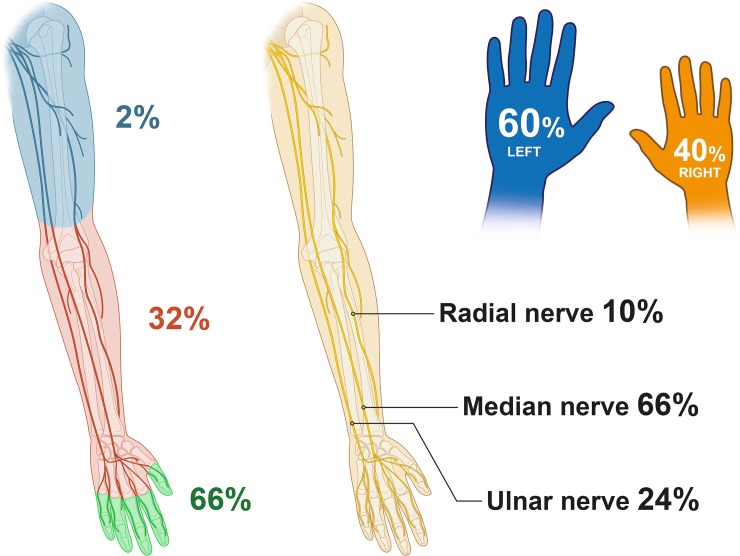
Results: Patients were on average 39.9±14.2 years old, male (85%) and mean inpatient treatment was 7±6 days. Location of nerve was 8% (N = 19) proximal to the wrist, 26% (N = 65) at the wrist and metacarpus, and 66% (N = 166) at phalangeal level. Acute in-patient treatment for (single) median nerve injury accounted for 66% with hospital reimbursement of 3.570€, ulnar nerve injury for 24% and 2.650€ and radial nerve injury for 10% and 3.166€, all including finger nerve injuries. The remaining were combined nerve injuries, with significantly higher costs, especially if combined with tendon 5.086€ or vascular injury 4.886€. Based on location, nerve injuries proximal to the wrist averaged 5.360±6.429€, at the wrist and metacarpus 3.534±2.710€ and at the phalangeal level 3.418±3.330€. 16% required rehabilitation with average costs of 5.842€ and stay of 41±21 days. Sick leave was between 11-1109 days with an average of 147 days with socioeconomic costs of 197€/day, equaling on average 17.640€. 30% received a mean yearly disability pension of 3.187€, that would account to 102.167€ per lifetime.
Conclusion: This large German patient sample indicates that nerve injury has a major impact on function and employment, resulting in significant health care costs. Both proximal and distal nerve injuries led to long-term disability, subsequent sick-leave and in 30% to permanent disability pension. These data are determined to support future studies and health economical work on prevention, treatment and rehabilitation of these often small injuries with great consequences.
Conflict of interest statement
The authors have declared that no competing interests exist.
Figures

References
-
- Torres RY, Miranda GE. Epidemiology of Traumatic Peripheral Nerve Injuries Evaluated by Electrodiagnostic Studies in a Tertiary Care Hospital Clinic. Bol Asoc Med P R. 2015;107(3):79–84. - PubMed
Publication types
MeSH terms
LinkOut - more resources
Full Text Sources
Medical
