


The association between iodine intake and semen quality among fertile men in China
- PMID: 32252717
- PMCID: PMC7137216
- DOI: 10.1186/s12889-020-08547-2
The association between iodine intake and semen quality among fertile men in China
Abstract
Background: Iodine intake is essential in the production of thyroid hormone but very few foods are rich in it. Iodine deficiency or excess iodine level may both lead to thyroid disorders, which further affects human fertility function. The objective of this study is to investigate the relationship between iodine intake and seminal parameters among fertile men in China.
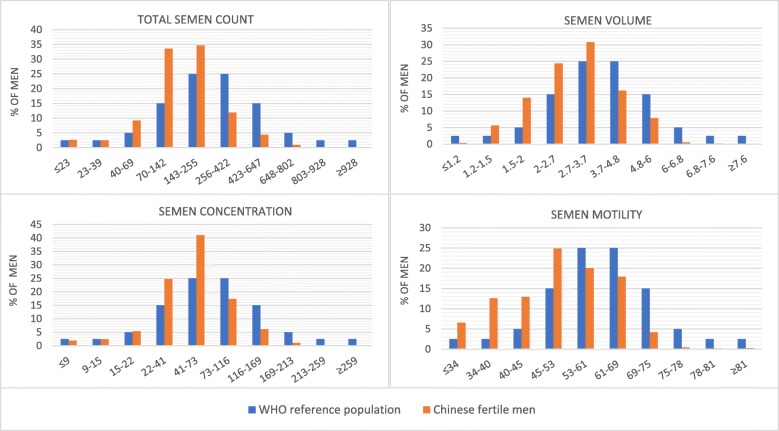
Methods: A total of 1098 couples were recruited by trained physicians at different family planning service stations in 2015. Semen and iodine samples were obtained from male respondents. A questionnaire survey inquired about demographic information from couples. The main outcome variables of semen quality were semen volume, semen concentration, semen motility, and sperm count, and time to pregnancy. Urinary iodine concentration (UIC) was used to measure iodine levels for male respondents. Ordinary least squared regressions and logistic regressions were performed to estimate the association between iodine intake level and semen quality parameters.
Results: Male respondents with deficient or excess iodine levels had a 5% higher semen volume relative to those with optimal iodine intake (p < 0.1). Suboptimal iodine intake was negatively associated with semen concentration and semen counts (p < 0.01). Longer time of pregnancy was observed in iodine deficiency and excess group than those in the optimal group (p < 0.01).
Conclusion: In general, iodine deficiency and excess were both associated with decreasing semen quality parameters in male respondents.
Keywords: Semen counts; Semen motility; Semen quality; Time to pregnancy; Urinary iodine concentration.
Conflict of interest statement
The authors declare that they have no competing interests.
Figures
References
-
- Temidayo S, Stefan S. Diabetes mellitus and male infertility. Asian Pac J Reprod. 2018;7(1):6–14. doi: 10.4103/2305-0500.220978. - DOI
MeSH terms
Substances
Grants and funding
LinkOut - more resources
Full Text Sources
