


Impact of phages on soil bacterial communities and nitrogen availability under different assembly scenarios
- PMID: 32252805
- PMCID: PMC7137350
- DOI: 10.1186/s40168-020-00822-z
Impact of phages on soil bacterial communities and nitrogen availability under different assembly scenarios
Abstract
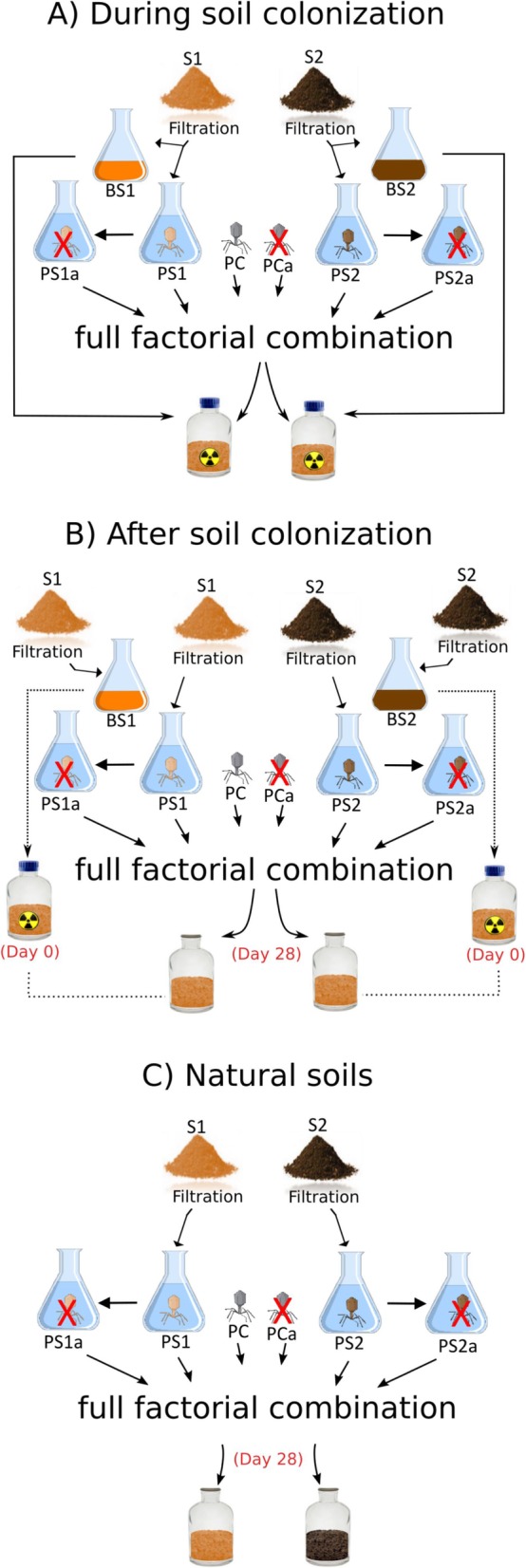
Background: Bacteriophages, the viruses infecting bacteria, are biological entities that can control their host populations. The ecological relevance of phages for microbial systems has been widely explored in aquatic environments, but the current understanding of the role of phages in terrestrial ecosystems remains limited. Here, our objective was to quantify the extent to which phages drive the assembly and functioning of soil bacterial communities. We performed a reciprocal transplant experiment using natural and sterilized soil incubated with different combinations of two soil microbial communities, challenged against native and non-native phage suspensions as well as against a cocktail of phage isolates. We tested three different community assembly scenarios by adding phages: (a) during soil colonization, (b) after colonization, and (c) in natural soil communities. One month after inoculation with phage suspensions, bacterial communities were assessed by 16S rRNA amplicon gene sequencing.
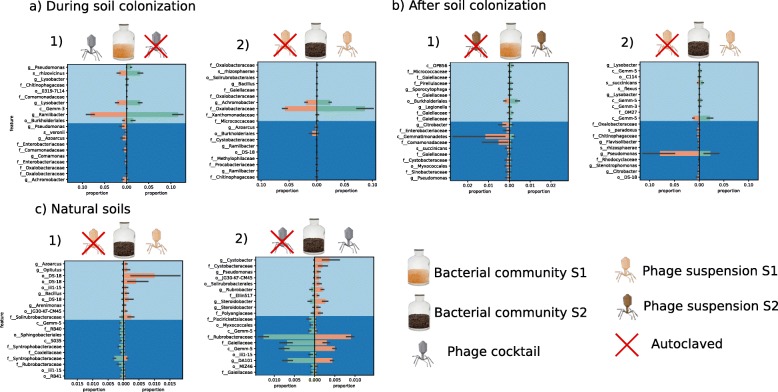
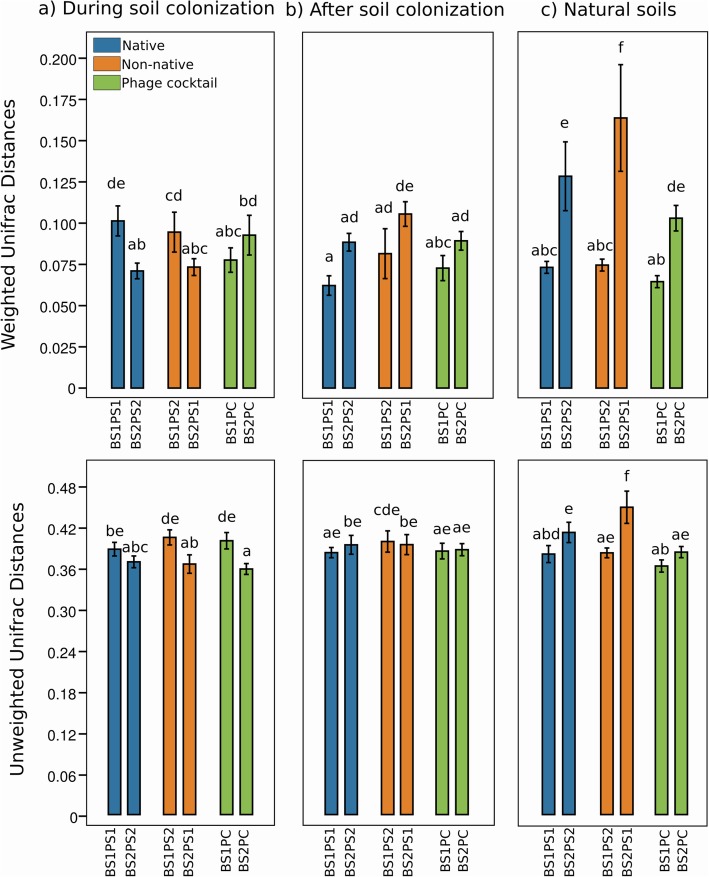
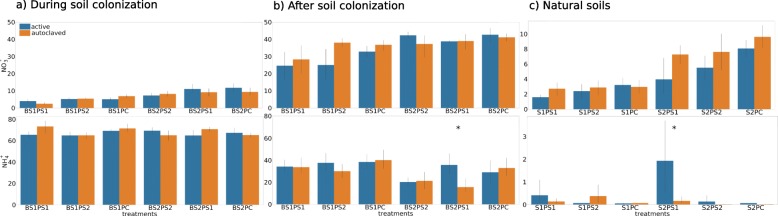
Results: By comparing the treatments inoculated with active versus autoclaved phages, our results show that changes in phage pressure have the potential to impact soil bacterial community composition and diversity. We also found a positive effect of active phages on the soil ammonium concentration in a few treatments, which indicates that increased phage pressure may also be important for soil functions.
Conclusions: Overall, the present work contributes to expand the current knowledge about soil phages and provide some empirical evidence supporting their relevance for soil bacterial community assembly and functioning. Video Abstract.
Conflict of interest statement
The authors declare that they have no competing interests.
Figures
References
-
- Braga LPP, Soucy SM, Amgarten DE, da Silva AM, Setubal JC. Bacterial diversification in the light of the interactions with phages: the genetic symbionts and their role in ecological speciation. Frontiers in Ecology and Evolution. 2018;6:6. doi: 10.3389/fevo.2018.00006. - DOI
-
- Wilhelm SW, Suttle CA. Viruses and nutrient cycles in the seaviruses play critical roles in the structure and function of aquatic food webs. Bioscience. Narnia. 1999;49:781–788. doi: 10.2307/1313569. - DOI
Publication types
MeSH terms
Substances
LinkOut - more resources
Full Text Sources
