


Amygdala Functional Connectivity Features in Grief: A Pilot Longitudinal Study
- PMID: 32253102
- PMCID: PMC7483593
- DOI: 10.1016/j.jagp.2020.02.014
Amygdala Functional Connectivity Features in Grief: A Pilot Longitudinal Study
Abstract
Objective: Acute grief, in an important minority of older adults, can become protracted, intense, and debilitating, leading to the development of complicated grief (CG). However, the neurobiologic mechanisms underlying a maladaptive grief response after an attachment loss are unknown. The current study aimed to examine the amygdala brain network features that cross-sectionally explain the symptom variance and longitudinally relate to grief symptom trajectories after an attachment loss.
Methods: Baseline amygdala functional connectivity (Fc) was assessed using a seed-based resting-state functional magnetic resonance imaging method in 35 adults who were within 1-year after death of a loved one and 21 healthy comparison (HC) participants. Magnetic resonance imaging scans were obtained at baseline, and clinical assessments, including the inventory of complicated grief (ICG) were completed at weeks 0, 8, 16, and 26 (endpoint).
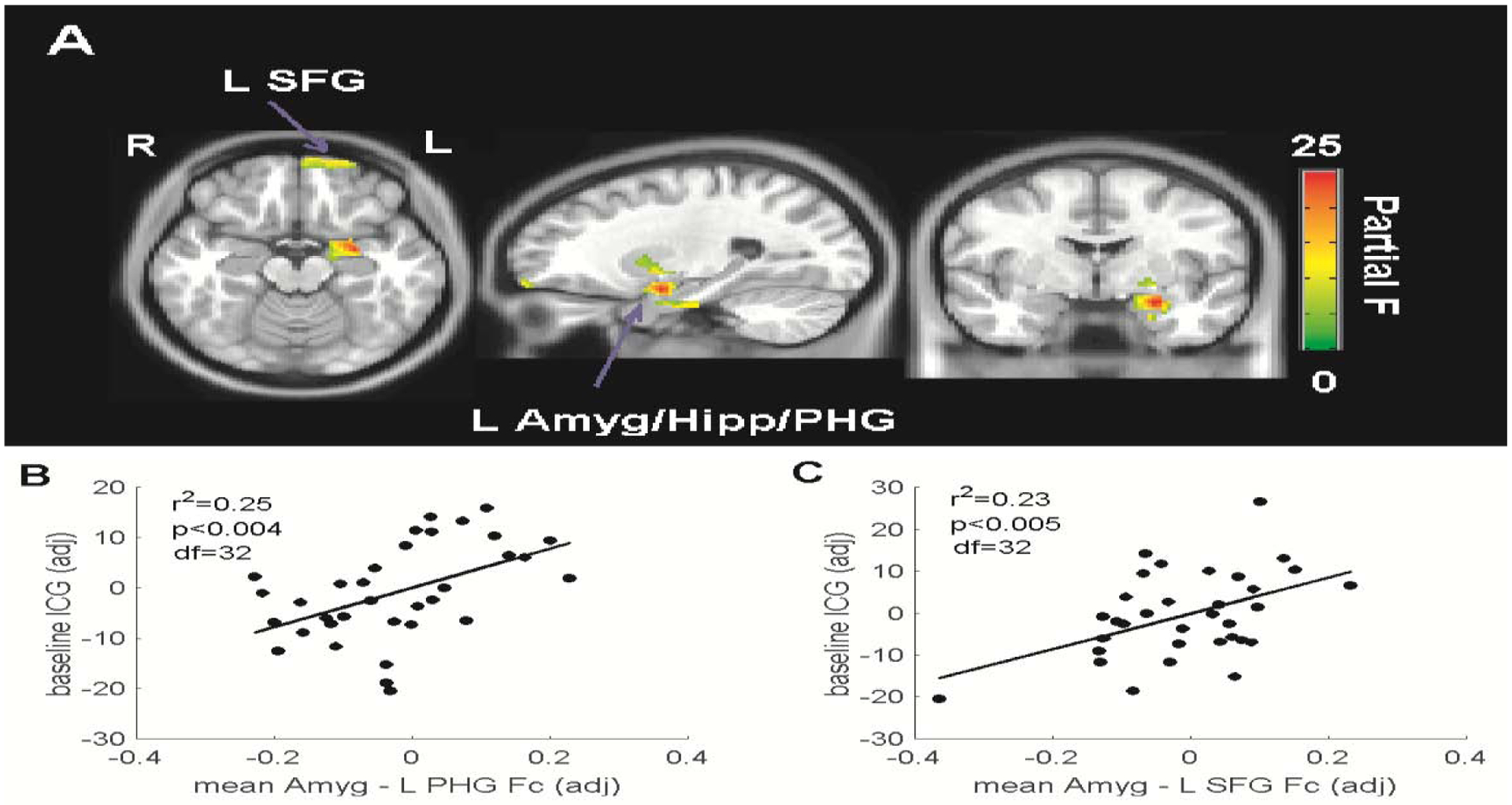
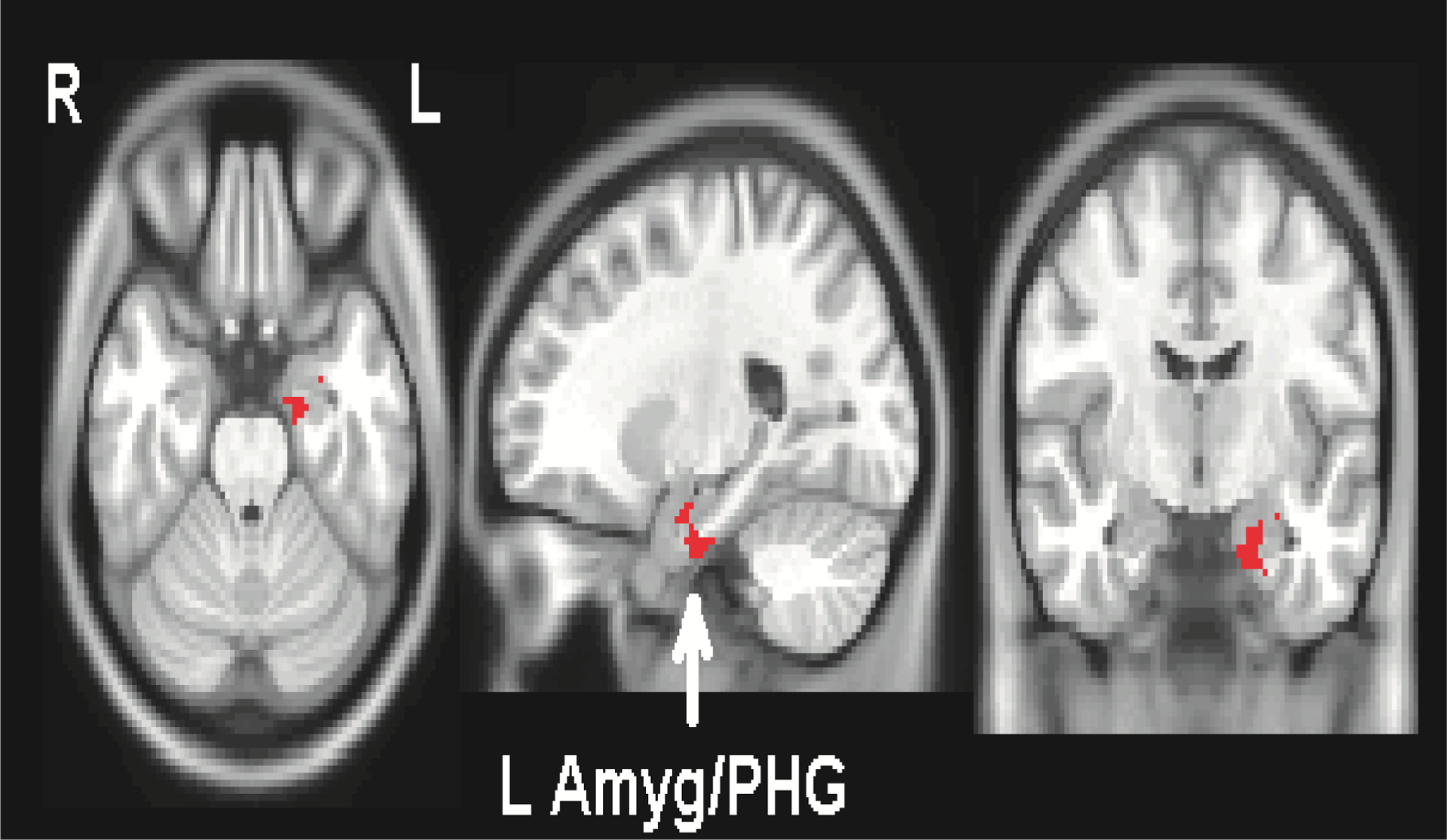
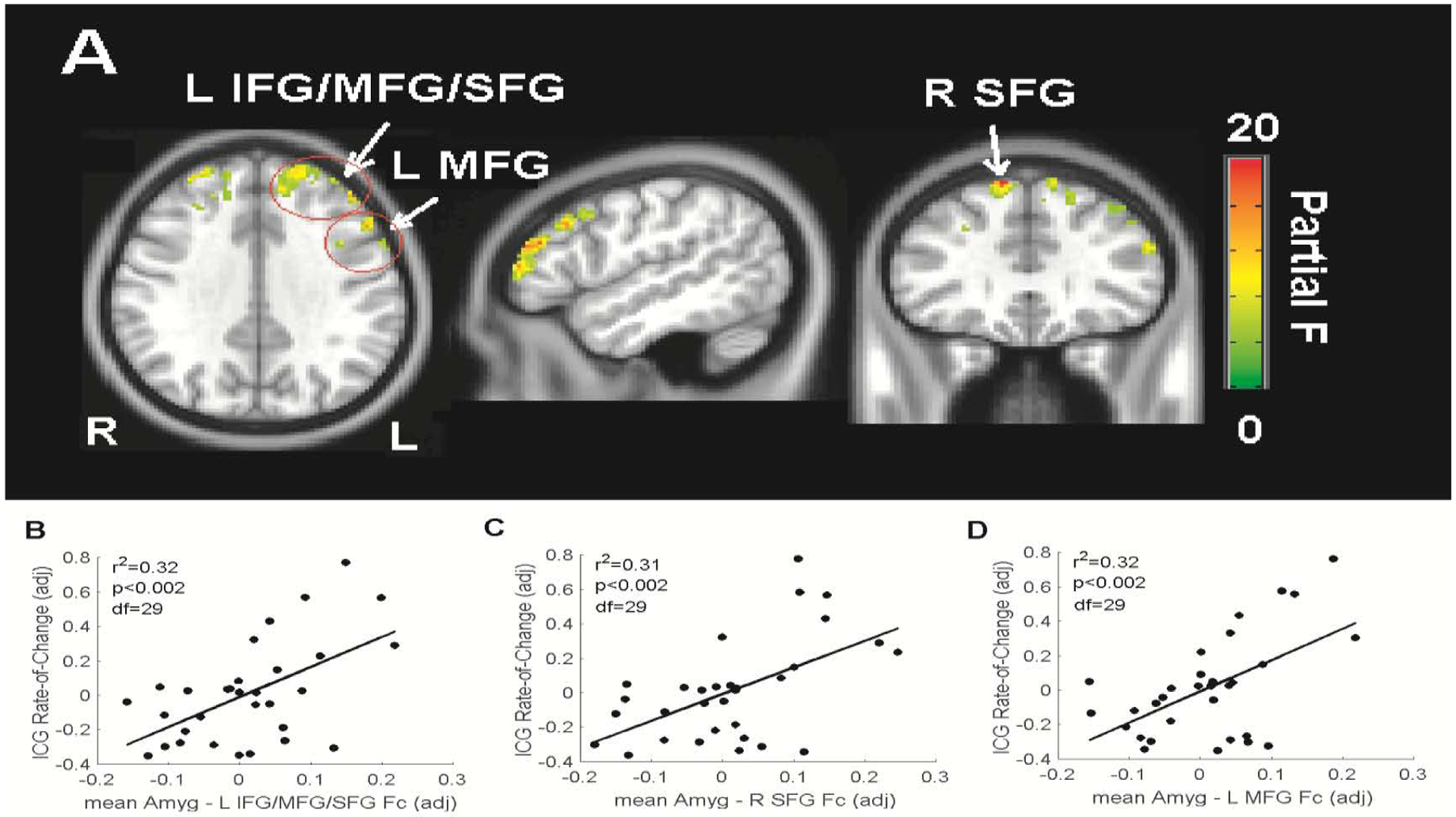
Results: Relative to HC participants, grief participants showed increased amygdala Fc in the posterior default mode (bilateral medial temporal lobes and left precuneus) and thalamus. Amygdala Fc in the default mode and ventral affective regions positively correlated with ICG scores at baseline. Furthermore, increased baseline amygdala functional connections with the dorsal frontal executive control and salience network regions correlated with worsening ICG scores over time. These longitudinal findings persisted after controlling for covariates, including baseline depressive and anxiety symptoms.
Conclusion: These results provide novel preliminary evidence suggesting amygdala-based brain network measures to cross-sectionally explain symptom variance and longitudinally correlate with grief symptom trajectories in grievers. Amygdala brain network function measures may have the potential to serve as biomarkers of CG.
Keywords: Amygdala; bereavement; brain network; complicated grief; emotion processing; emotion regulation; functional connectivity; grief; resting-state functional MRI.
Copyright © 2020 American Association for Geriatric Psychiatry. Published by Elsevier Inc. All rights reserved.
Conflict of interest statement
Figures

References
-
- Shear MK: Clinical practice. Complicated grief. N Engl J Med 2015; 372:153–160 - PubMed
-
- Mauro C, Reynolds CF, Maercker A, et al.: Prolonged grief disorder: clinical utility of ICD-11 diagnostic guidelines. Psychol Med 2019; 49:861–867 - PubMed
-
- Prigerson HG, Bierhals AJ, Kasl SV, et al.: Complicated grief as a disorder distinct from bereavement-related depression and anxiety: a replication study. Am J Psychiatry 1996; 153:1484–1486 - PubMed
Publication types
MeSH terms
Grants and funding
LinkOut - more resources
Full Text Sources
