


E-cigarette Product Characteristics and Subsequent Frequency of Cigarette Smoking
- PMID: 32253264
- PMCID: PMC7193941
- DOI: 10.1542/peds.2019-1652
E-cigarette Product Characteristics and Subsequent Frequency of Cigarette Smoking
Abstract
Background: There is a dearth of evidence regarding the association of use of electronic cigarettes (e-cigarettes) with certain product characteristics and adolescent and young adult risk of unhealthy tobacco use patterns (eg, frequency of combustible cigarette smoking), which is needed to inform the regulation of e-cigarettes.
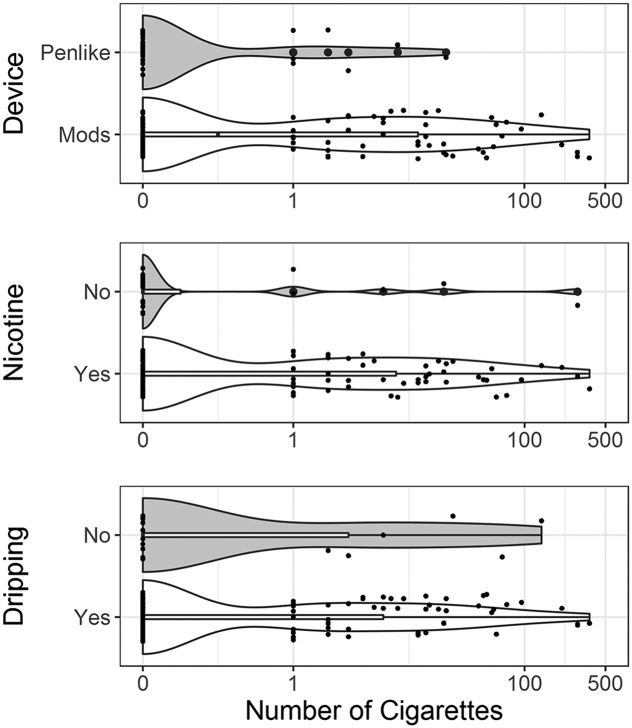
Methods: Data were collected via an online survey of participants in the Southern California Children's Health Study from 2015 to 2016 (baseline) and 2016 to 2017 (follow-up) (N = 1312). We evaluated the association of binary categories of 3 nonmutually exclusive characteristics of the e-cigarette used most frequently with the number of cigarettes smoked in the past 30 days at 1-year follow-up. Product characteristics included device (vape pen and/or modifiable electronic cigarette [mod]), use of nicotine in electronic liquid (e-liquid; yes or no), and use for dripping (directly dripping e-liquid onto the device; yes or no).
Results: Relative to never e-cigarette users, past-30-day e-cigarette use was associated with greater frequency of past-30-day cigarette smoking at follow-up. Among baseline past-30-day e-cigarette users, participants who used mods (versus vape pens) smoked >6 times as many cigarettes at follow-up (mean: 20.8 vs 1.3 cigarettes; rate ratio = 6.33; 95% confidence interval: 1.64-24.5) after adjustment for sociodemographic characteristics, baseline frequency of cigarette smoking, and number of days of e-cigarette use. After adjustment for device, neither nicotine e-liquid nor dripping were associated with frequency of cigarette smoking.
Conclusions: Baseline mod users (versus vape pen users) smoked more cigarettes in the past 30 days at follow-up. Regulation of e-cigarette device type warrants consideration as a strategy to reduce cigarette smoking among adolescents and young adults who vape.
Copyright © 2020 by the American Academy of Pediatrics.
Conflict of interest statement
POTENTIAL CONFLICT OF INTEREST: Mr Urman began a position at Amgen on April 15, 2019, and did not contribute to the article after that date; the other authors have indicated they have no potential conflicts of interest to disclose.
Figures
References
-
- Soneji S, Barrington-Trimis JL, Wills TA, et al. Association between initial use of e-cigarettes and subsequent cigarette smoking among adolescents and young adults: a systematic review and meta-analysis [published correction appears in JAMA Pediatr. 2018;172(1):92–93, 98]. JAMA Pediatr. 2017;171(8):788–797 - PMC - PubMed
Publication types
MeSH terms
Grants and funding
LinkOut - more resources
Full Text Sources
Medical
Miscellaneous
