


Dietary Alcohol and Fat Differentially Affect Plasma Cholesteryl Ester Transfer Activity and Triglycerides in Normo- and Hypertriglyceridemic Subjects
- PMID: 32255209
- PMCID: PMC8353970
- DOI: 10.1002/lipd.12237
Dietary Alcohol and Fat Differentially Affect Plasma Cholesteryl Ester Transfer Activity and Triglycerides in Normo- and Hypertriglyceridemic Subjects
Abstract
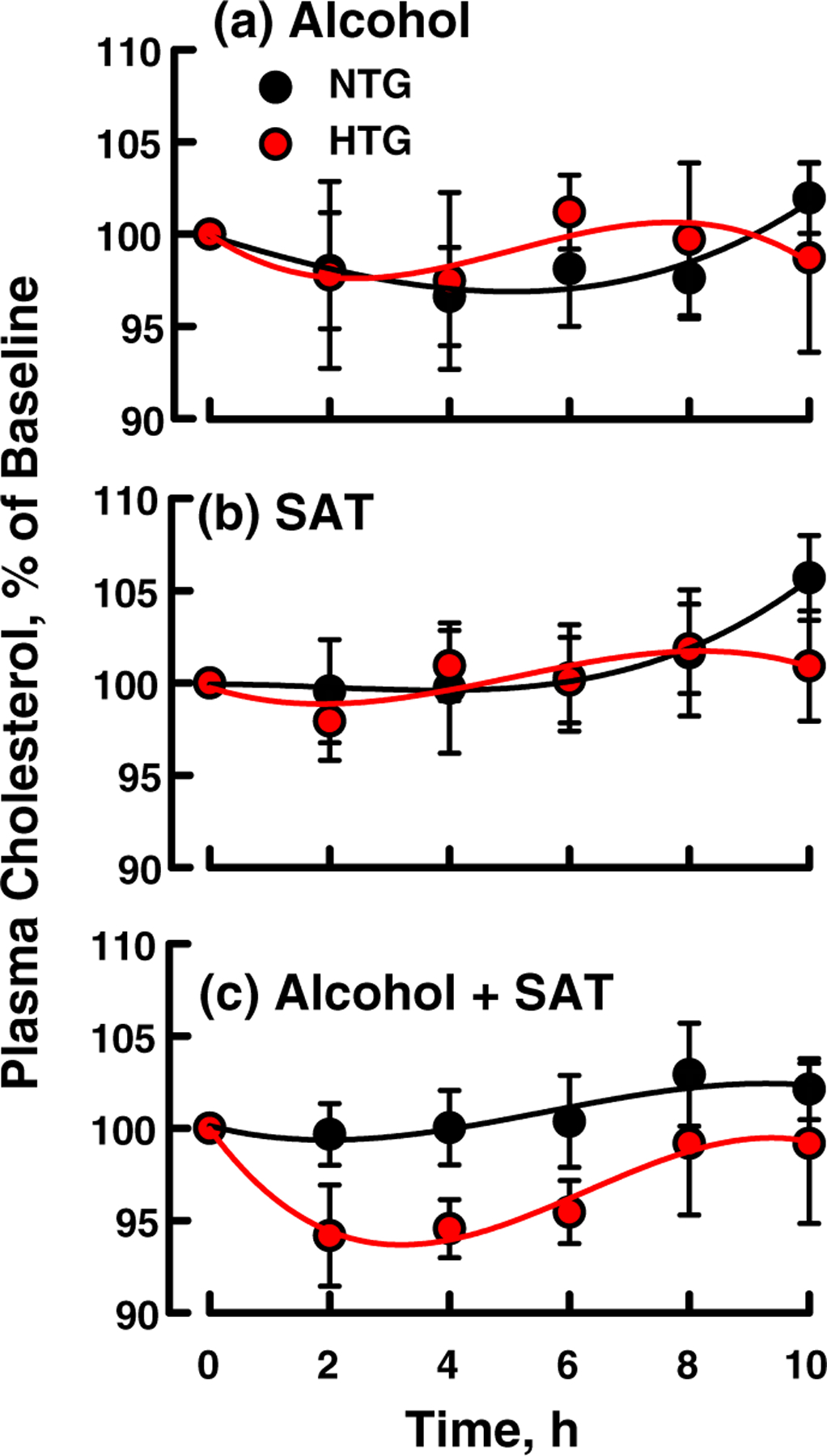
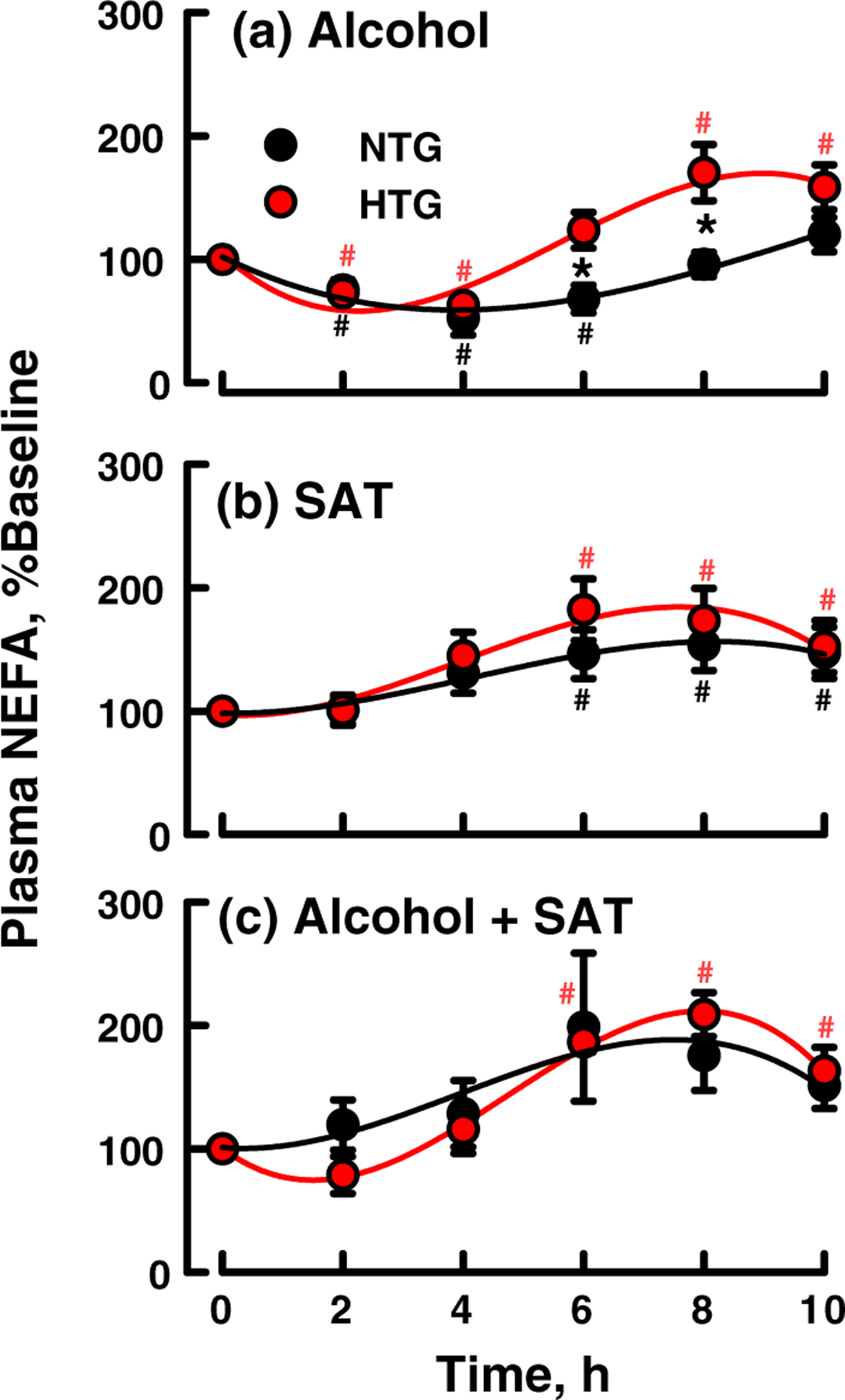
Moderate alcohol consumption is associated with increased plasma high-density lipoprotein (HDL)-cholesterol concentrations and reduced risk for cardiovascular disease. Plasma cholesteryl ester transfer activity (CETA) mediates the exchange of HDL-cholesteryl ester (CE) for the triacylglycerol (TAG) of very-low-density lipoproteins. We compared the effects of oral challenges of Alcohol, saturated fat (SAT), and (Alcohol + SAT) on plasma CETA, cholesterol, nonesterified fatty acids (NEFA), and TAG among normo-triglyceridemic (NTG) and mildly hypertriglyceridemic (HTG) volunteers having a range of plasma TAG concentrations. The major changes were (1) CETA increased more after ingestion of SAT and (Alcohol + SAT) in the HTG group versus the NTG group; (2) after all three challenges, elevation of plasma TAG concentration persisted longer in the HTG versus NTG group. Plasma cholesterol was not affected by the three dietary challenges, while Alcohol increased NEFA more in the HTG group than the NTG group. Plasma TAG best predicted plasma CETA, suggesting that intestinally derived lipoproteins are acceptors of HDL-CE. Unexpectedly, ingestion of (Alcohol + SAT) reduced the strength of the correlation between plasma TAG and CETA, that is the effects of (SAT and Alcohol) on plasma CETA are not synergistic nor additive but rather mutually suppressive. The alcohol-mediated inhibition of CE-transfer to chylomicrons maintains a higher plasma HDL-cholesterol concentration, which is athero-protective, although the suppressive metabolite underlying this correlation could be acetate, the terminal alcohol metabolite, other factors, including CETA inhibitors, are also likely important.
Keywords: Alcohol; Cholesteryl ester transfer; Dietary fat; Metabolism.
© 2020 AOCS.
Conflict of interest statement
Figures



References
-
- Abramson EA, & Arky RA (1968) Acute antilipolytic effects of ethyl alcohol and acetate in man. The Journal of Laboratory and Clinical Medicine, 72:105–117. - PubMed
-
- Arii K, Suehiro T, Yamamoto M, Ito H, & Hashimoto K (1997) Suppression of plasma cholesteryl ester transfer protein activity in acute hyperinsulinemia and effect of plasma nonesterified fatty acid. Metabolism, 46:1166–1170. - PubMed
-
- Barter PJ, Chang LB, & Rajaram OV (1990) Sodium oleate promotes a redistribution of cholesteryl esters from high to low density lipoproteins. Atherosclerosis, 84:13–24. - PubMed
-
- Cohn JS, Johnson EJ, Millar JS, Cohn SD, Milne RW, Marcel YL, … Schaefer EJ (1993) Contribution of apoB-48 and apoB-100 triglyceride-rich lipoproteins (TRL) to postprandial increases in the plasma concentration of TRL triglycerides and retinyl esters. Journal of Lipid Research, 34:2033–2040. - PubMed
-
- van der Gaag MS, van Tol A, Scheek LM, James RW, Urgert R, Schaafsma G, & Hendriks HF (1999) Daily moderate alcohol consumption increases serum paraoxonase activity; a diet-controlled, randomised intervention study in middle-aged men. Atherosclerosis, 147:405–410. - PubMed
Publication types
MeSH terms
Substances
Grants and funding
LinkOut - more resources
Full Text Sources
Medical
Research Materials
