Review
. 2020 Jul 20;59(30):12293-12307.
doi: 10.1002/anie.202003115. Epub 2020 May 25.

The Huisgen Reaction: Milestones of the 1,3-Dipolar Cycloaddition

Affiliations
Review

The Huisgen Reaction: Milestones of the 1,3-Dipolar Cycloaddition

Martin Breugst et al. Angew Chem Int Ed Engl. .

Abstract

The concept of 1,3-dipolar cycloadditions was presented by Rolf Huisgen 60 years ago. Previously unknown reactive intermediates, for example azomethine ylides, were introduced to organic chemistry and the (3+2) cycloadditions of 1,3-dipoles to multiple-bond systems (Huisgen reaction) developed into one of the most versatile synthetic methods in heterocyclic chemistry. In this Review, we present the history of this research area, highlight important older reports, and describe the evolution and further development of the concept. The most important mechanistic and synthetic results are discussed. Quantum-mechanical calculations support the concerted mechanism always favored by R. Huisgen; however, in extreme cases intermediates may be involved. The impact of 1,3-dipolar cycloadditions on the click chemistry concept of K. B. Sharpless will also be discussed.

Keywords: 1,3-dipolar cycloadditions; click chemistry; computational chemistry; heterocycles; reaction mechanisms.


Conflict of interest statement

The authors declare no conflict of interest.

Figures
Scheme 1
Scheme 1
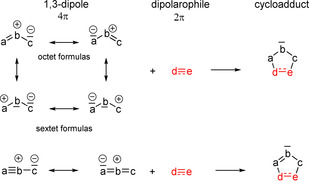
(3+2) Cycloadditions of 1,3‐dipoles “abc” to dipolarophiles “de” to give five‐membered heterocycles (only lone pairs relevant for the 4π system are drawn).
Scheme 2
Scheme 2
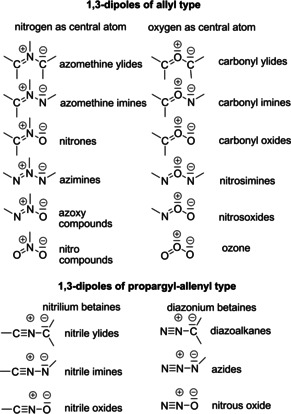
Classification of 1,3‐dipoles (the Lewis structures show only lone pairs relevant for the 4π system).
Figure 1
Figure 1
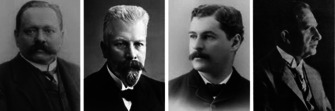
Theodor Curtius, Eduard Buchner, Arthur Michael, and Otto Dimroth.
Scheme 3
Scheme 3
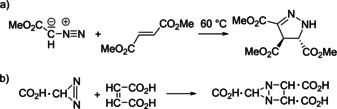
a) The first 1,3‐dipolar cycloaddition of methyl diazoacetate with fumaric acid diester; b) reaction as published by E. Buchner (Erlangen, 1888).
Scheme 4
Scheme 4
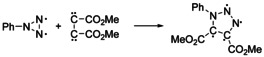
A. Michael′s equation for the first azide–alkyne cycloaddition providing a 1,2,3‐triazole (Torwood Bonchurch, Isle of Man, 1893).
Scheme 5
Scheme 5
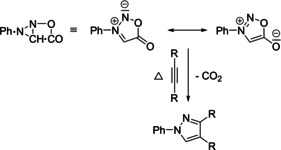
A “Sydnone” as depicted by J. C. Earl and A. W. Mackney (left); actual structure of this mesoionic compound and its reaction with alkynes to afford pyrazoles by cycloaddition/cycloreversion according to R. Huisgen and H. Gotthardt.
Scheme 6
Scheme 6
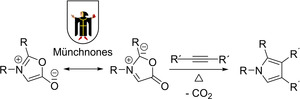
(3+2) Cycloaddition of “Münchnones” to alkynes according to R. Huisgen and H. Gotthardt.
Figure 2
Figure 2
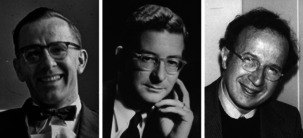
Rolf Huisgen (ca. 1960), Robert B. Woodward (1955), and Roald Hoffmann (1973).
Scheme 7
Scheme 7
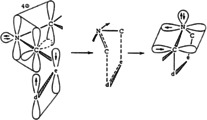
Approach of an azomethine ylide to a dipolarophile during a 1,3‐dipolar cycloaddition (reproduction of the orbital illustration in ref. 39).
Scheme 8
Scheme 8
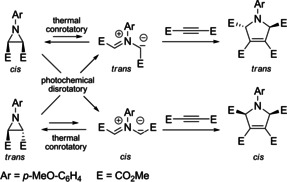
Stereospecific electrocyclic ring‐openings of aziridine derivatives to give azomethine ylides and their (3+2) cycloadditions.
Figure 3
Figure 3
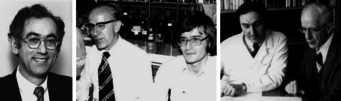
To be concerted, or not to be: that is the question. Raymond A. Firestone (1984), Rolf Huisgen with Hans‐Ulrich Reissig (1975), and with Grzegorz Mlostón (1991).
Scheme 9
Scheme 9
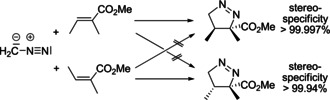
Stereospecific (3+2) cycloadditions of diazomethane to methyl esters of tiglic and angelic acid.
Scheme 10
Scheme 10
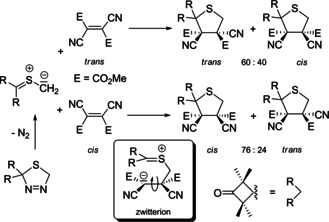
(3+2)‐Cycloadditions of a thiocarbonyl ylide with cis/trans‐isomeric dipolarophiles: the first two‐step 1,3‐dipolar cycloaddition with a zwitterionic intermediate.
Figure 4
Figure 4
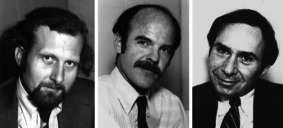
Reiner Sustmann (1974), Kendall N. Houk (1983), and Albert Padwa (1983).
Scheme 11
Scheme 11
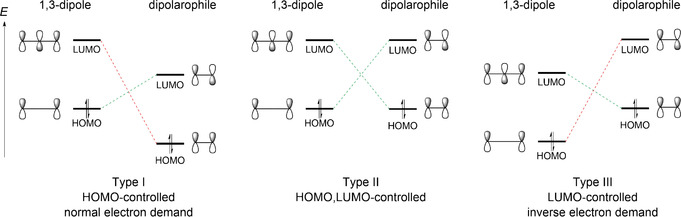
Classification of (3+2) cycloadditions according to the dominant interaction in the frontier molecular orbitals of the 1,3‐dipole. The concept of orbital control refers to the orbital of the 1,3‐dipole.
Scheme 12
Scheme 12
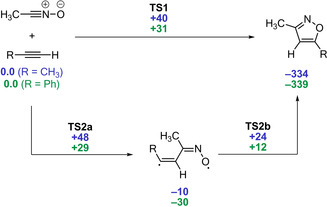
Relative energies of the concerted and stepwise (3+2) cycloaddition of nitrile oxides and alkyl‐substituted (blue) or aryl‐substituted (green) alkynes (CASPT2/def2‐TZVP//B2PLYP‐D2/6‐31G(d) in kJ mol−1).62
Scheme 13
Scheme 13
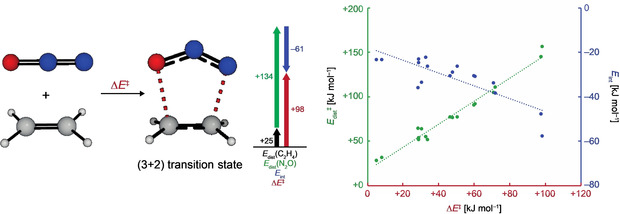
The distortion/interaction model applied to the reaction of ethylene and N2O (left) and a correlation of the activation energies (ΔE ) with the distortion energies (ΔE dist) and interaction energies (ΔE int) for a series of (3+2) cycloadditions (right). Values are taken from ref. 66b.
Scheme 14
Scheme 14
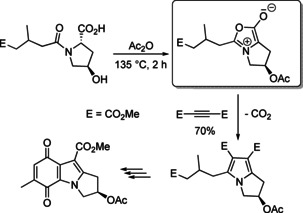
Generation of a “Münchnone” and cycloaddition to provide a pyrrole derivative.
Scheme 15
Scheme 15
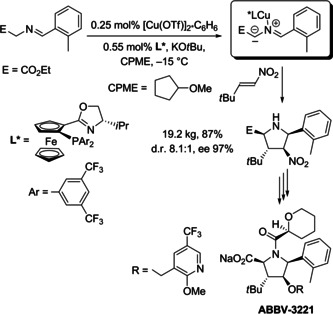
Catalytic enantioselective (3+2) cycloaddition of an in situ generated azomethine ylide with a nitroalkene performed on a multi‐kilogram scale.
Scheme 16
Scheme 16
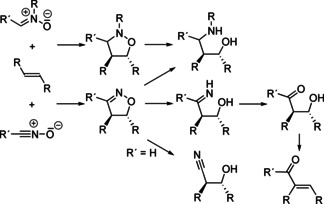
Syntheses and transformations of isoxazole derivatives into synthetically valuable acyclic products.
Scheme 17
Scheme 17
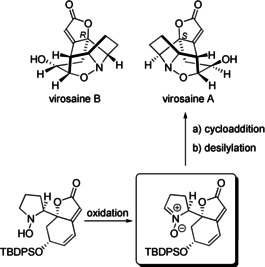
Virosaine A and virosaine B, two natural products with an isoxazolidine substructure and the key step of the synthesis of (−)‐virosaine A by K. Gademann et al.
Scheme 18
Scheme 18
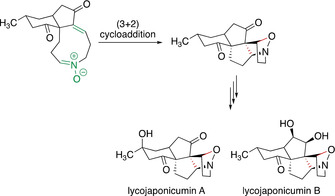
Potential intramolecular (3+2) cycloaddition as a key step in the biosynthesis of lycojaponicumin A and B.
Scheme 19
Scheme 19
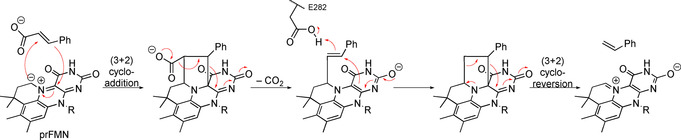
Proposed mechanism for the first enzymatic (3+2) cycloaddition and cycloreversion.
Figure 5
Figure 5
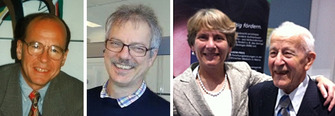
K. Barry Sharpless (1995), Morten Meldal (2016), and Carolyn R. Bertozzi with Rolf Huisgen (2012).
Scheme 20
Scheme 20
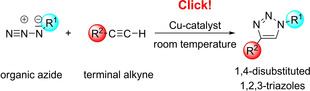
Copper‐catalyzed click reaction of organic azides with terminal alkynes to give 1,4‐disubstituted 1,2,3‐triazoles.
Scheme 21
Scheme 21
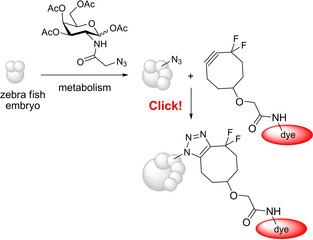
Incorporation of an azido‐substituted carbohydrate into a developing zebrafish embryo (schematic illustration) and Huisgen reaction with a cyclooctyne derivative bearing a fluorescence dye.

References

    1. None
    1. Huisgen R., in Zehnjahresfeier des Fonds der Chemischen Industrie, Düsseldorf, 1960, pp. 73–102 (Reprint in Naturwiss. Rundschau 1961, 1914, 1963);
    1. Huisgen R., Proc. Chem. Soc. London 1961, 357–369.
    1. Looking back, Huisgen was not happy about the choice of the name because it may be misleading. The name 1,3-dipole may imply high dipole moments of these compounds which is not the case for many 1,3-dipoles.
    1. In the first reviews (e.g., in ref. [33]) reactions of 1,3-dipoles without octet stabilization were included, for instance those of keto carbenes. Later it was recognized that they are better regarded as 2π components in cycloadditions.

LinkOut - more resources