


Risk and characteristics of gastric carcinoma in the chow chow dog
- PMID: 32255825
- PMCID: PMC7074117
Risk and characteristics of gastric carcinoma in the chow chow dog
Abstract
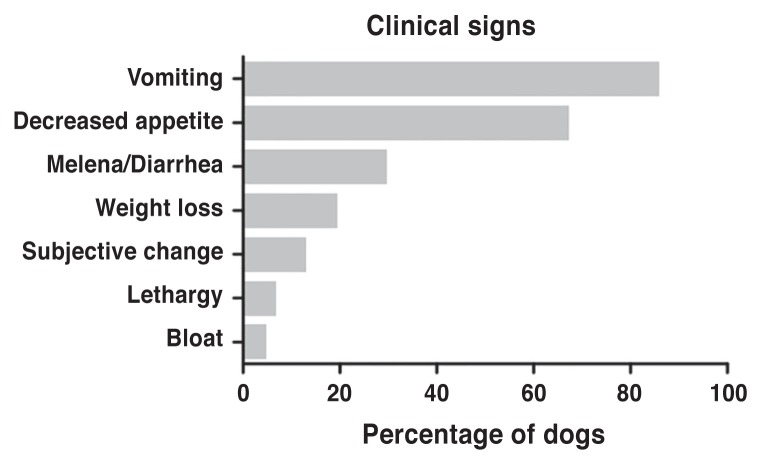
Gastric carcinoma is not commonly reported in dogs. There is an increased risk, however, in certain breeds such as the Belgian Tervuren. Review of the Veterinary Medical Database (VMDB) established an increase in risk for gastric carcinoma in the chow chow breed. In 106 chow chow dogs signs commenced, on average, 3 weeks before definitive diagnosis. The most common clinical signs were vomiting, loss of appetite, diarrhea, and melena. Most affected dogs were euthanized, without treatment, within 2 weeks of diagnosis. Two dogs which were treated aggressively (surgery and chemotherapy) survived a considerably longer time (12 and 36 months). Histologically, these chow chow dogs comprised a similar histologic type as familial gastric carcinoma in humans; diffuse-type carcinoma that was enriched in the signet ring and mucinous variants. Understanding the pathogenesis of diffuse gastric carcinoma in the chow chow dog may provide insight into the biology of this aggressive cancer in humans.
Risques et caractéristiques d’un carcinome gastrique chez le chien de race chow-chow. Le carcinome gastrique n’est par rapporté fréquemment chez les chiens. Il y a toutefois une augmentation du risque chez certaines espèces telle que le Tervuren belge. Une revue de la base de données Veterinary Medical Database (VMDB) a établi une augmentation dans le risque pour le carcinome gastrique chez la race chow chow. Chez 106 chiens chow chow les signes débutèrent, en moyenne, 3 semaines avant le diagnostic définitif. Les signes cliniques les plus fréquents étaient vomissement, perte d’appétit, diarrhée et méléna. La plupart des chiens affectés furent euthanasiés, sans traitement, à l’intérieur de 2 semaines du diagnostic. Deux chiens furent traités de manière agressive (chirurgie et chimiothérapie) ont survécu beaucoup plus longtemps (12 et 36 mois). Histologiquement, ces chiens chow chow comprennent un type histologique similaire aux carcinomes gastrique familiaux chez les humains; le carcinome de type-diffus qui s’est développé dans les variants de cellules en bague à chatons et mucineux. Comprendre la pathogénie du carcinome gastrique diffus chez le chien chow chow pourrait fournir des informations sur la biologie de ce cancer agressif chez l’humain.(Traduit par Dr Serge Messier).
Copyright and/or publishing rights held by the Canadian Veterinary Medical Association.
Figures
References
MeSH terms
LinkOut - more resources
Full Text Sources
Medical