


Outcome measures in pediatric polypharmacy research: a scoping review
- PMID: 32256042
- PMCID: PMC7123381
- DOI: 10.1007/s40267-019-00650-8
Outcome measures in pediatric polypharmacy research: a scoping review
Abstract
Introduction: Various methods have been used to interpret the reports of pediatric polypharmacy across the literature. This is the first scoping review that explores outcome measures in pediatric polypharmacy research.
Objectives: The aim of our study was to describe outcome measures assessed in pediatric polypharmacy research.
Methods: A search of electronic databases was conducted in July 2017, including Ovid Medline, PubMed, Elsevier Embase, Wiley Cochrane Central Register of Controlled Trials (CENTRAL), EBSCO CINAHL, Ovid PsyclNFO, Web of Science Core Collection, ProQuest Dissertations and Thesis A&I. Data were extracted about study characteristics and outcome measures, and also synthesized by harms or benefits mentioned.
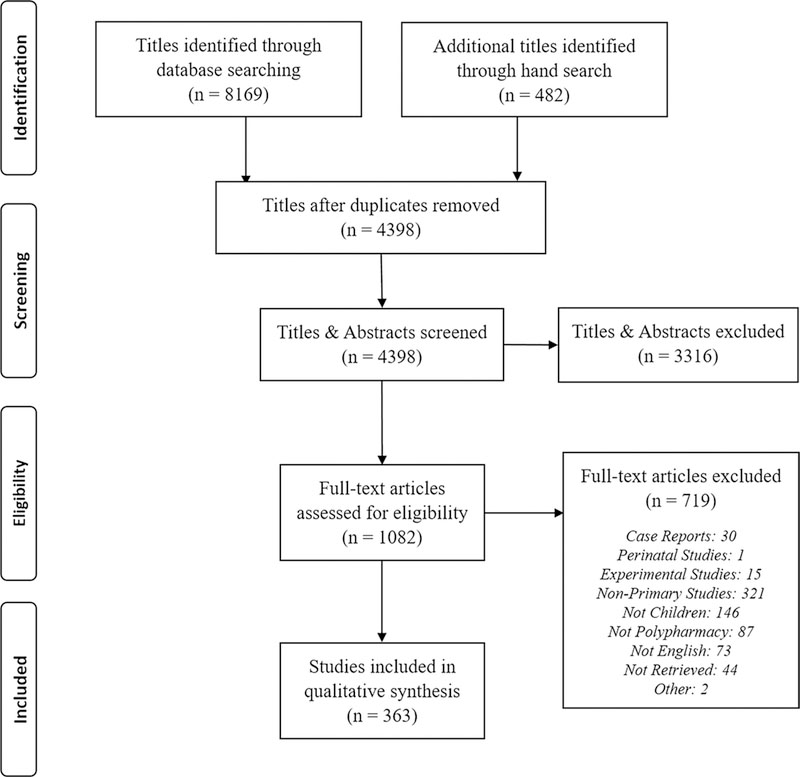
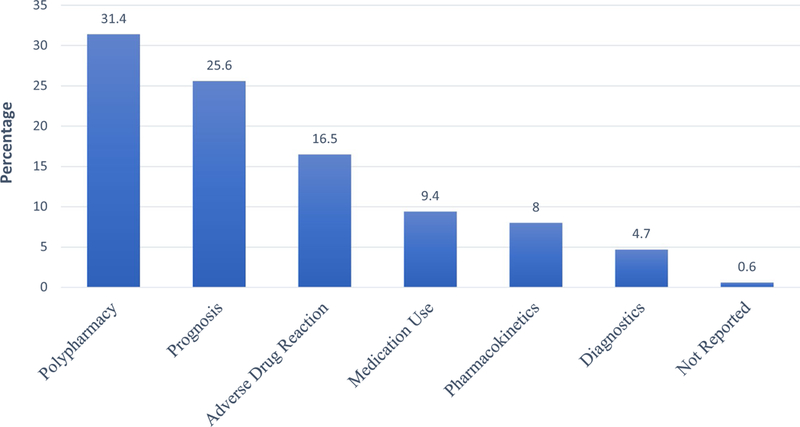
Results: The search strategy initially identified 8169 titles and screened 4398 using the inclusion criteria after de-duplicating. After the primary screening, a total of 363 studies were extracted for the data analysis. Polypharmacy (prevalence) was identified as an outcome in 31.4% of the studies, prognosis-related outcomes in 25.6%, and adverse drug reactions in 16.5%. A total of 265 articles (73.0%) mentioned harms, including adverse drug reactions (26.4%), side effects (24.2%), and drug-drug interactions (20.9%). A total of 83 studies (22.9%) mentioned any benefit, 48.2% of which identified combination for efficacy, 24.1% combination for treatment of complex diseases, and 19.3% combination for treatment augmentation. Thirty-eight studies reported adverse drug reaction as an outcome, where polypharmacy was a predictor, with various designs.
Conclusions: Most studies of pediatric polypharmacy evaluate prevalence, prognosis, or adverse drug reaction-related out-comes, and underscore harms related to polypharmacy. Clinicians should carefully weigh benefits and harms when introducing medications to treatment regimens.
Figures
References
-
- Gnjidic D, Hilmer SN, Blyth FM, et al. Polypharmacy cutoff and outcomes: five or more medicines were used to identify community-dwelling older men at risk of different adverse out-comes. J Clin Epidemiol. 2012;65(9):989–95. - PubMed
-
- Helal SI, Megahed HS, Salem SM, et al. Monotherapy versus polytherapy in epileptic adolescents. Maced J Med Sci. 2013;6(2):174–7.
Publication types
Grants and funding
LinkOut - more resources
Full Text Sources