


Ongoing improvements in postoperative survival of glioblastoma in the temozolomide era: a population-based data linkage study
- PMID: 32257281
- PMCID: PMC7104886
- DOI: 10.1093/nop/npz021
Ongoing improvements in postoperative survival of glioblastoma in the temozolomide era: a population-based data linkage study
Abstract
Background: Translating outcomes achieved by clinical trials into routine care is crucial to improving outcomes of glioblastoma (GBM). This study examines the extent to which an advance in treatment for GBM has translated into meaningful, population-level survival benefits in New South Wales (NSW), Australia.
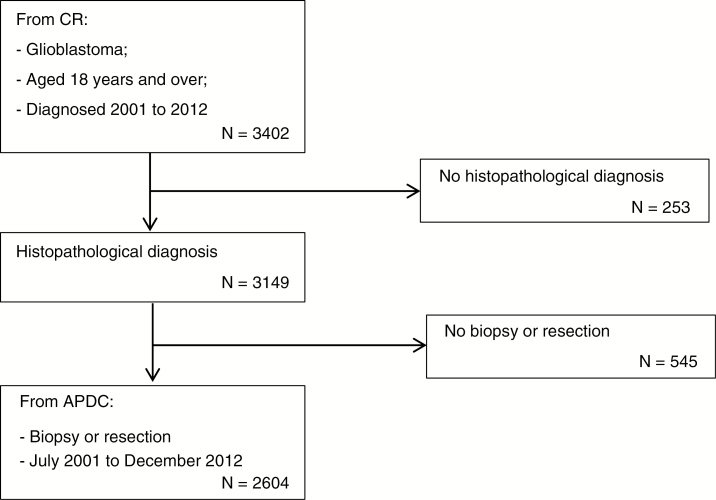
Methods: This retrospective cohort study used linked population-based cancer registry, admitted patient, and mortality datasets. The cohort (n = 2604) included NSW residents aged ≥18 years with a histologically confirmed GBM and a surgical resection between July 2001 and December 2012. The study outcome was all-cause survival, examined using multivariable proportional hazard models. The main study factor was period of surgery, categorized into 4 periods corresponding to different eras in temozolomide (TMZ) use. Survival was examined over time by age (≤70 and >70 years) and for a subcohort selected to approximate the seminal European Organisation for Research and Treatment of Cancer (Stupp) protocol trial cohort. TMZ use was estimated using aggregate prescription claims data.
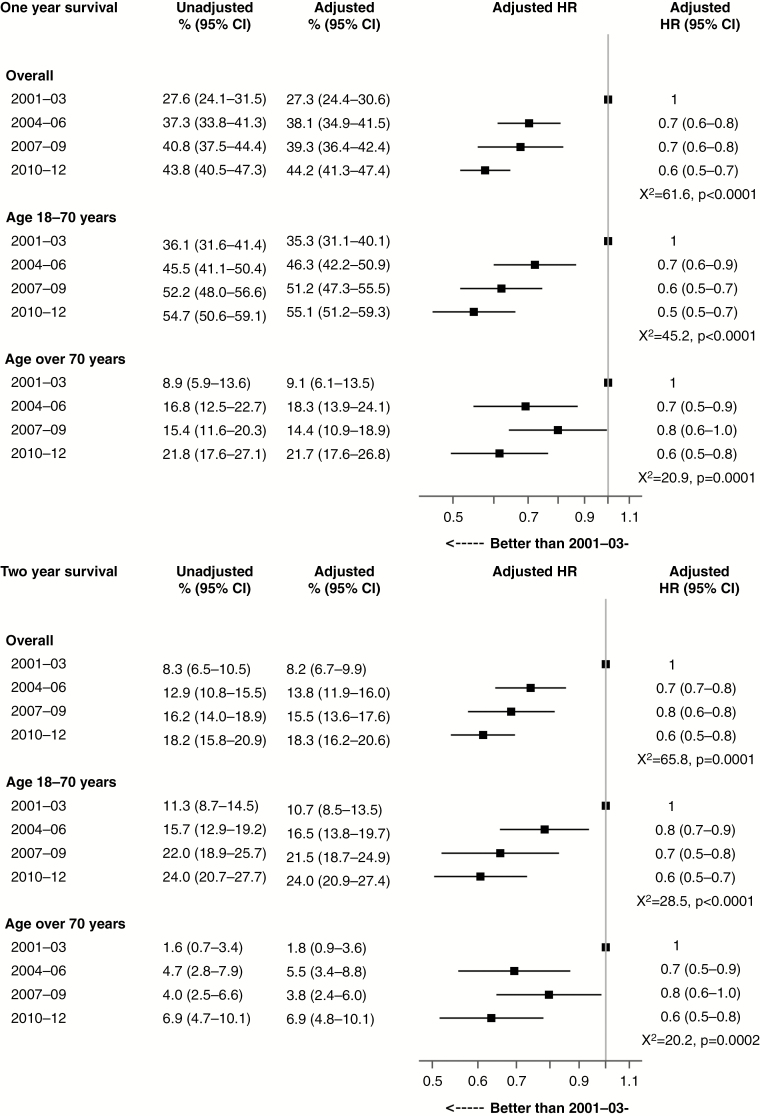
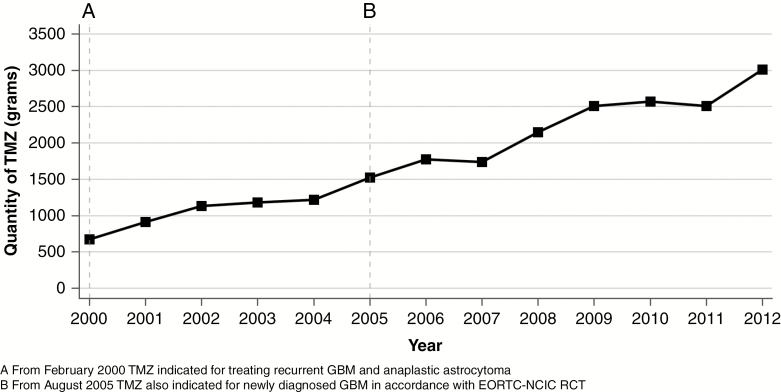
Results: Median survival in 2001-2003, 2004-2006, 2007-2009, and 2010-2012 was 7.4, 9.0, 9.8, and 10.6 months, and risk-adjusted 2-year survival was 8.2%, 13.8%, 15.5%, and 18.3%, respectively. Survival improved for those aged ≤70 years and those aged >70 years. In the proxy trial subcohort, median and 2-year survival were 14.3 months and 27.3%, respectively. The volume of TMZ prescribed annually increased rapidly from 2005.
Conclusions: Introduction of TMZ into standard care in 2005 coincided with improvements in survival and a rapid increase in TMZ prescribing. Optimization of care has continued to improve survival of people with GBM in subsequent years.
Keywords: glioblastoma; population-based; survival; temozolomide.
© The Author(s) 2019. Published by Oxford University Press on behalf of the Society for Neuro-Oncology and the European Association of Neuro-Oncology. All rights reserved. For permissions, please e-mail: journals.permissions@oup.com.
Figures
References
-
- Australian Institute of Health and Welfare. Brain and Other Central Nervous System Cancers. Canberra: AIHW;2017.
