


Novel alternative transplantation therapy for orthotopic liver transplantation in liver failure: A systematic review
- PMID: 32257850
- PMCID: PMC7109592
- DOI: 10.5500/wjt.v10.i3.64
Novel alternative transplantation therapy for orthotopic liver transplantation in liver failure: A systematic review
Abstract
Background: Orthotopic liver transplantation (OLT) is the only treatment for end-stage liver failure; however, graft shortage impedes its applicability. Therefore, studies investigating alternative therapies are plenty. Nevertheless, no study has comprehensively analyzed these therapies from different perspectives.
Aim: To summarize the current status of alternative transplantation therapies for OLT and to support future research.
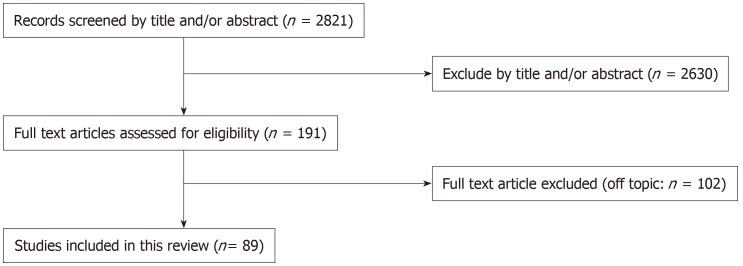
Methods: A systematic literature search was performed using PubMed, Cochrane Library and EMBASE for articles published between January 2010 and 2018, using the following MeSH terms: [(liver transplantation) AND cell] OR [(liver transplantation) AND differentiation] OR [(liver transplantation) AND organoid] OR [(liver transplantation) AND xenotransplantation]. Various types of studies describing therapies to replace OLT were retrieved for full-text evaluation. Among them, we selected articles including in vivo transplantation.
Results: A total of 89 studies were selected. There are three principle forms of treatment for liver failure: Xeno-organ transplantation, scaffold-based transplantation, and cell transplantation. Xeno-organ transplantation was covered in 14 articles, scaffold-based transplantation was discussed in 22 articles, and cell transplantation was discussed in 53 articles. Various types of alternative therapies were discussed: Organ liver, 25 articles; adult hepatocytes, 31 articles; fetal hepatocytes, three articles; mesenchymal stem cells (MSCs), 25 articles; embryonic stem cells, one article; and induced pluripotent stem cells, three articles and other sources. Clinical applications were discussed in 12 studies: Cell transplantation using hepatocytes in four studies, five studies using umbilical cord-derived MSCs, three studies using bone marrow-derived MSCs, and two studies using hematopoietic stem cells.
Conclusion: The clinical applications are present only for cell transplantation. Scaffold-based transplantation is a comprehensive treatment combining organ and cell transplantations, which warrants future research to find relevant clinical applications.
Keywords: Cell transplantation; Liver transplantation; Organ transplantation; Scaffold; Tissue engineering; Xenotransplantation.
©The Author(s) 2020. Published by Baishideng Publishing Group Inc. All rights reserved.
Conflict of interest statement
Conflict-of-interest statement: The authors have no conflicts of interest to declare.
References
-
- Mazza G, Rombouts K, Rennie Hall A, Urbani L, Vinh Luong T, Al-Akkad W, Longato L, Brown D, Maghsoudlou P, Dhillon AP, Fuller B, Davidson B, Moore K, Dhar D, De Coppi P, Malago M, Pinzani M. Decellularized human liver as a natural 3D-scaffold for liver bioengineering and transplantation. Sci Rep. 2015;5:13079. - PMC - PubMed
-
- Takebe T, Zhang RR, Koike H, Kimura M, Yoshizawa E, Enomura M, Koike N, Sekine K, Taniguchi H. Generation of a vascularized and functional human liver from an iPSC-derived organ bud transplant. Nat Protoc. 2014;9:396–409. - PubMed
-
- Navarro-Alvarez N, Machaidze Z, Schuetz C, Zhu A, Liu WH, Shah JA, Vagefi PA, Elias N, Buhler L, Sachs DH, Markmann JF, Yeh H. Xenogeneic Heterotopic Auxiliary Liver transplantation (XHALT) promotes native liver regeneration in a Post-Hepatectomy Liver failure model. PLoS One. 2018;13:e0207272. - PMC - PubMed
LinkOut - more resources
Full Text Sources
Other Literature Sources
