. 2020 Mar 13:17:568-580.
doi: 10.1016/j.omtm.2020.03.009. eCollection 2020 Jun 12.

Sustained Correction of a Murine Model of Phenylketonuria following a Single Intravenous Administration of AAVHSC15-PAH

Affiliations

Sustained Correction of a Murine Model of Phenylketonuria following a Single Intravenous Administration of AAVHSC15-PAH

Seemin S Ahmed et al. Mol Ther Methods Clin Dev. .

Abstract

Phenylketonuria is an inborn error of metabolism caused by loss of function of the liver-expressed enzyme phenylalanine hydroxylase and is characterized by elevated systemic phenylalanine levels that are neurotoxic. Current therapies do not address the underlying genetic disease or restore the natural metabolic pathway resulting in the conversion of phenylalanine to tyrosine. A family of hepatotropic clade F adeno-associated viruses (AAVs) was isolated from human CD34+ hematopoietic stem cells (HSCs) and one (AAVHSC15) was utilized to deliver a vector to correct the phenylketonuria phenotype in Pahenu2 mice. The AAVHSC15 vector containing a codon-optimized form of the human phenylalanine hydroxylase cDNA was administered as a single intravenous dose to Pahenu2 mice maintained on a phenylalanine-containing normal chow diet. Optimization of the transgene resulted in a vector that produced a sustained reduction in serum phenylalanine and normalized tyrosine levels for the lifespan of Pahenu2 mice. Brain levels of phenylalanine and the downstream serotonin metabolite 5-hydroxyindoleacetic acid were restored. In addition, the coat color of treated mice darkened following treatment, indicating restoration of the phenylalanine metabolic pathway. Taken together, these data support the potential of an AAVHSC15-based gene therapy as an investigational therapeutic for phenylketonuria patients.


Figures

Figure 1
Figure 1
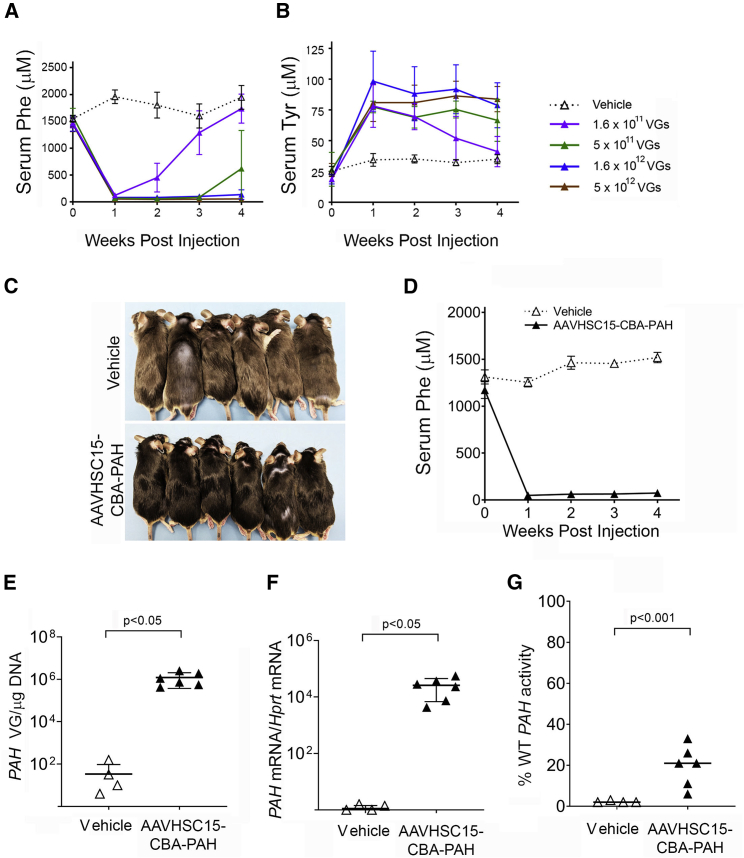
Treatment of Pahenu2 Mice with AAVHSC15-CBA-PAH (A and B) Serum Phe (A) and serum Tyr (B) levels in 7-week-old male Pahenu2 mice following intravenous administration via tail vein injection of vehicle or AAVHSC15-CBA-PAH at various doses. Serum Phe and Tyr concentrations were determined weekly for the duration of the study as described in Materials and Methods. (C) Pigmentation phenotype correction observed in male Pahenu2 mice treated with AAVHSC15-CBA-PAH at 2 × 1012 VG/mouse. (D) Serum Phe levels in 7-week-old male Pahenu2 mice following intravenous administration of vehicle (n = 4) or 2 × 1012 VG/mouse of AAVHSC15-CBA-PAH (n = 6). (E) Vector genome concentrations in liver of Pahenu2 mice treated with vehicle or 2 × 1012 VG of AAVHSC15-CBA-PAH 4 weeks after administration. Vector genomes were determined from genomic DNA extracted from liver samples as described in Materials and Methods. (F) Liver human PAH and murine mRNA Hprt levels in Pahenu2 mice treated with vehicle (n = 4) or 2 × 1012 VG of AAVHSC15-CBA-PAH (n = 6) were determined 4 weeks after administration by qRT-PCR as described in Materials and Methods. Human PAH mRNA levels were normalized to the murine housekeeping Hprt mRNA levels and expressed as human PAH mRNA/Hprt mRNA. (G) Human PAH activity in vehicle and AAVHSC15-CBA-PAH-treated Pahenu2 mice 4 weeks after administration. PAH activity was determined in liver tissue homogenates by LC-MS/MS as described in Materials and Methods. PAH activity levels were expressed as the percentage of PAH activity levels measured in liver homogenates from wild-type mice. Data in (A)–(C) are represented as mean ± SD. Statistical significance between groups in (E)–(G) was determined by the Student’s t test.
Figure 2
Figure 2
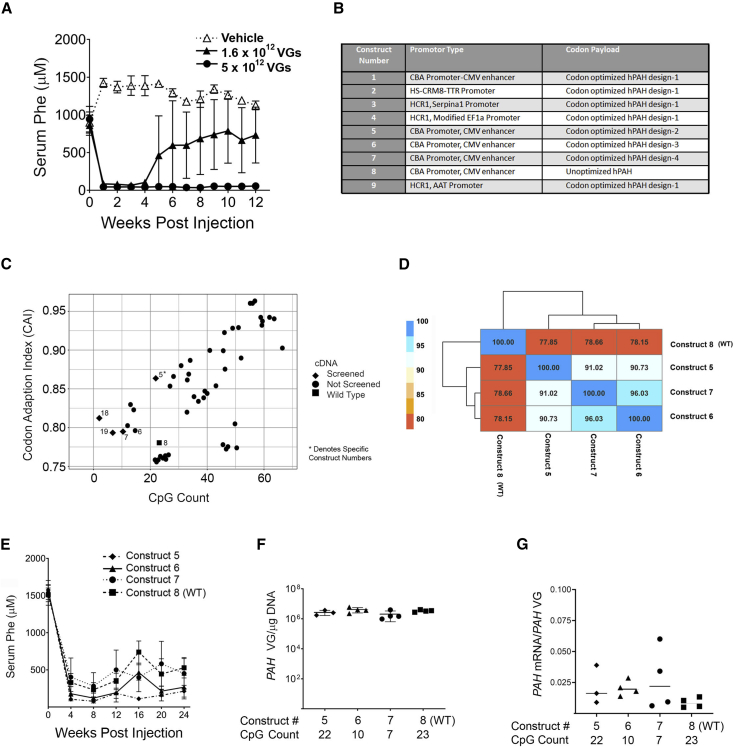
AAVHSC15-CBA-PAH and Codon-Optimized AAVHSC15-CBA-PAH Versions Tested in Pahenu2 Mice (A) Two doses of AAVHSC15-CBA-PAH (1.6 × 1012 and 5 × 1012 VG/mouse) were administered to 7-week-old Pahenu2 mice by single tail vein administration and compared to a vehicle-treated control group. Serum Phe levels were assessed weekly for the duration of the study as described in Materials and Methods. (B) List of constructs designed and tested. (C) Optimization of vector elements to yield new therapeutic vector designs. The human PAH gene was codon optimized bioinformatically to yield an aggregate of usable sequences that were ranked on the codon adaptation index (CAI) and CG count. The plot displays predicted expression (CAI) and CpG count for optimized sequence and the wild-type cDNA as calculated using the COOL program. Higher CAI values indicate higher predicted protein expression. (D) Tested cDNAs were compared for relative identity and clustered. The table displays pairwise sequence identity between each sequence and is superimposed over a heatmap indicating the same. Dendrogram displays relationship between cDNA and was calculated via hierarchical clustering. (E) Effect of codon optimization of the human PAH cDNA on serum Phe levels in Pahenu2 mice. Constructs 5 (♦), 6 (▲), 7 (●), and 8 (▪) were administered at 2 × 1012 VG/mouse intravenously via the tail vein. Serum Phe concentrations were determined every 4 weeks for the duration of the study as described in Materials and Methods. (F) Levels of vector genomes in liver samples from Pahenu2 mice treated with the various codon-optimized human PAH vectors. Vector genomes were determined from genomic DNA extracted from liver samples as described in Materials and Methods. (G) Human PAH mRNA was determined in liver samples by qRT-PCR as described in Materials and Methods. Human PAH mRNA levels are expressed as a ratio of the amount of VGs presents in the same liver samples. Data for (A) and (E) are represented as mean ± SD.
Figure 3
Figure 3
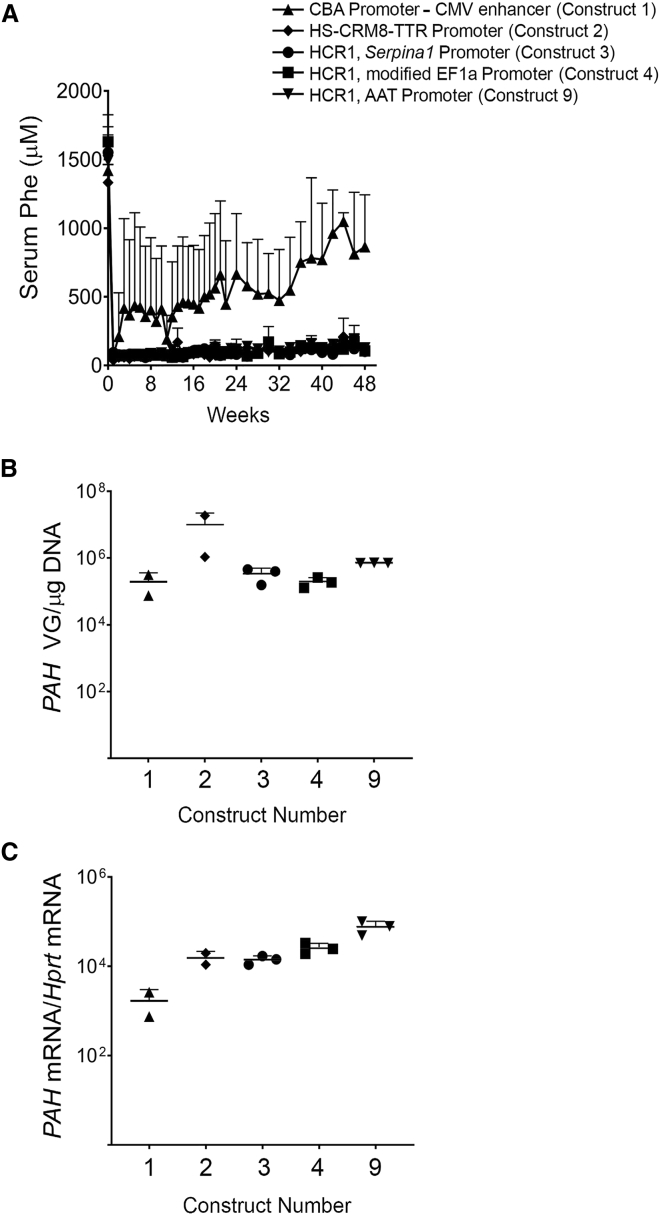
Optimization of AAVHSC15-CBA-PAH (A) Male Pahenu2 mice were treated by single tail vein administration of AAVHSC15-CBA-PAH (construct 1) or four additional designs containing liver-specific promoters (constructs 2, 3, 4, and 9). Serum Phe levels were determined as described in Materials and Methods for the duration of the study. Data are represented as mean ± SD. (B) Liver VG levels for all constructs tested. Vector genome levels were determined as described in Materials and Methods. (C) Human PAH mRNA and murine Hprt levels were determined by RT-PCR as described in Materials and Methods.
Figure 4
Figure 4
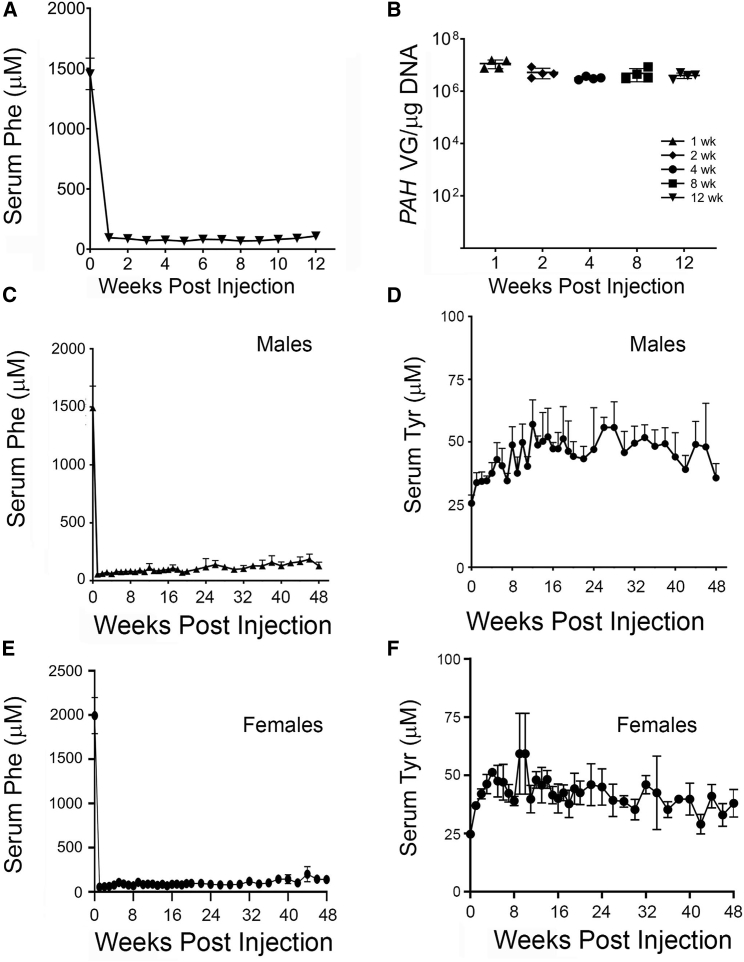
Efficacy of Optimized AAVHSC15-PAH Vector in Pahenu2 Mice (A) Male Pahenu2 mice were administered a single intravenous dose of AAVHSC15-PAH via tail vein, and cohorts of four mice were sacrificed at 1, 2, 4, 8, and 12 weeks after administration. Serum Phe was determined as described in Materials and Methods. (B) Vector genomes levels in liver at 1, 2, 4, 8, and 12 weeks after administration of AACHSC15-PAH in male Pahenu2 mice. Vector genomes were determined as described in Materials and Methods and expressed as VG/μg of DNA. (C and D) Serum Phe (C) and Tyr (D) concentrations in male Pahenu2 mice were determined as described in Materials and Methods throughout the lifespan of male Pahenu2 mice. (E and F) Serum Phe (E) and Tyr (F) concentrations in female Pahenu2 mice were determined as described in Materials and Methods throughout the lifespan of female Pahenu2 mice. Data in (A), (C), and (D)–(F) are represented as mean ± SD.
Figure 5
Figure 5
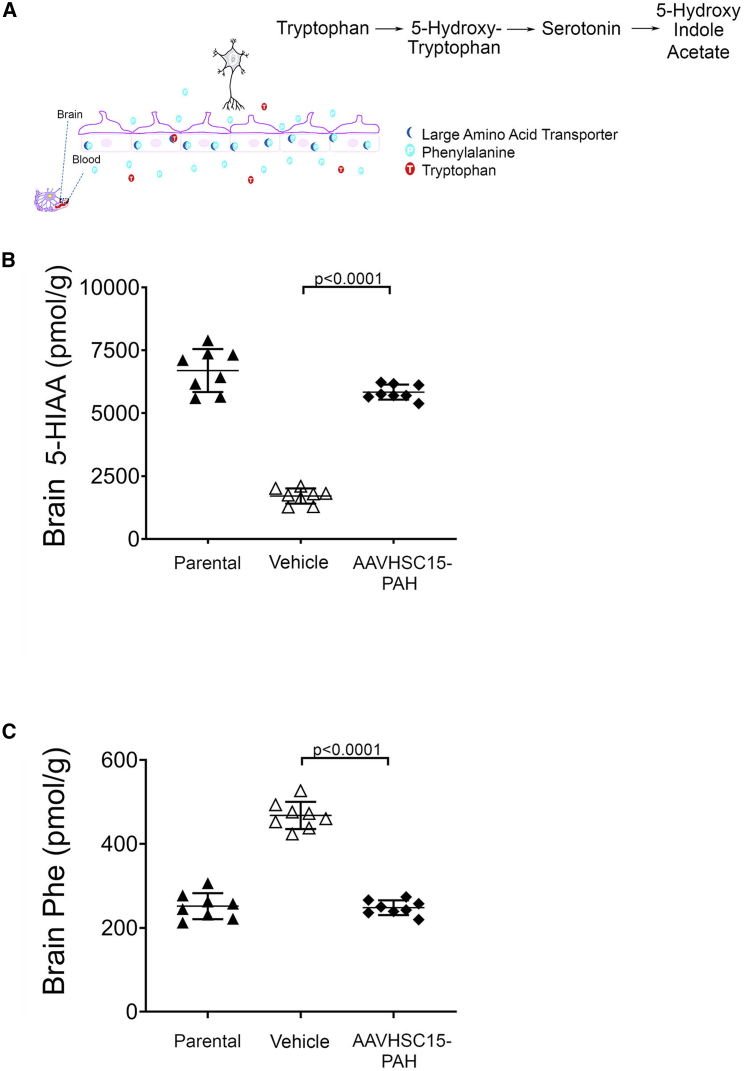
Restoration of Phe and 5-HIAA Levels in the Brain of Pahenu2 Mice (A) Tryptophan metabolic pathway leading to the formation of 5-HIAA. (B) Brain levels of the serotonin metabolite 5-HIAA in vehicle or AAVHSC15-treated Pahenu2 mice and parental BTBR mice. Brain 5-HIAA levels were determined as described in Materials and Methods. (C) Brain Phe levels in the brain tissue of vehicle- or AAVHSC15-treated Pahenu2 and parental BTBR mice. Statistically significant differences were determined by the Students’ t test. p < 0.0001, vehicle versus AAVHSC15-PAH treated PAHenu2 mice.
Figure 6
Figure 6
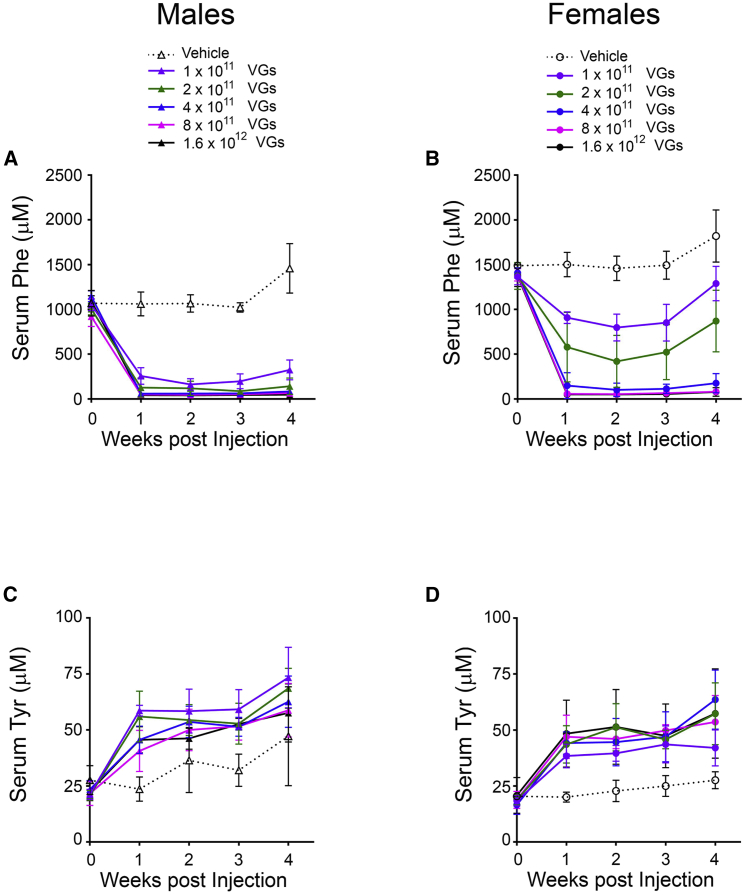
Dose Range Efficacy Study in Male and Female Pahenu2 Mice following Administration of AAVHSC15-PAH (A–D) Serum Phe (A and B) and Tyr levels in male (A and C) and female (B and D) Pahenu2 mice following single tail vein injection of a range of doses of AAVHSC15-PAH (n = 5 mice/group) as described in Materials and Methods. Data in (A)–(D) are represented as mean ± SD.
Figure 7
Figure 7
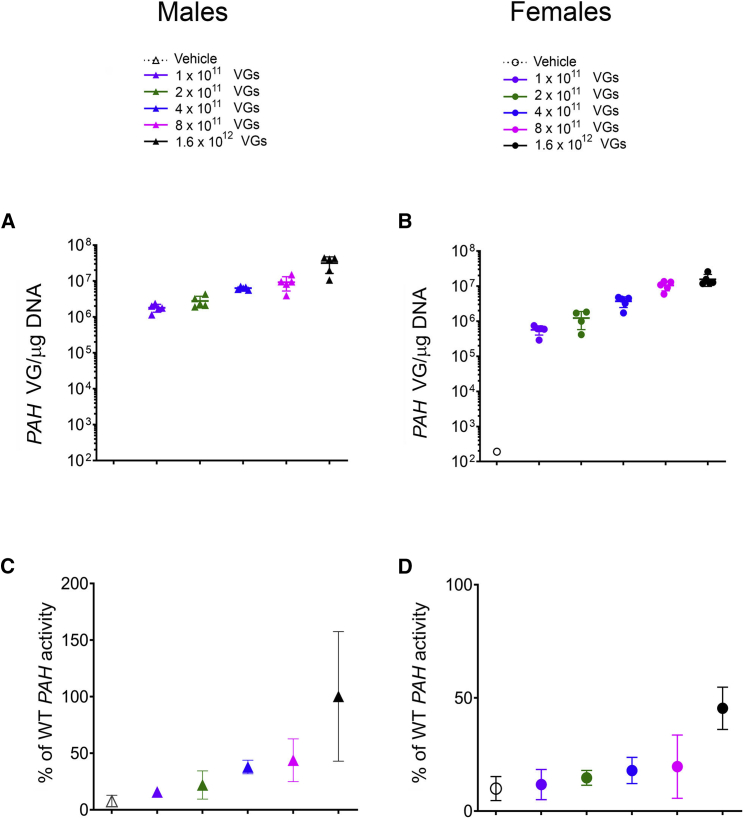
Vector Genomes and PAH Enzyme Activity in Male and Female Pahenu2 Mice following Administration of AAVHSC15-PAH (A and B) Liver VG concentrations in males (A) and females (B) at all doses tested in the dose range efficacy study were determined following the protocol described in Materials and Methods. (C and D) PAH activity levels in males (C) and females (D) were determined from liver homogenates as described in Materials and Methods and expressed as percentage of the PAH activity measured in the wild-type BTBR parental strain. Data in (C) and (D) are expressed as mean ± SD.

References

    1. Curtius H.C., Niederwieser A., Viscontini M., Leimbacher W., Wegmann H., Blehova B., Rey F., Schaub J., Schmidt H. Serotonin and dopamine synthesis in phenylketonuria. Adv. Exp. Med. Biol. 1981;133:277–291. - PubMed
    1. Williams R.A., Mamotte C.D., Burnett J.R. Phenylketonuria: an inborn error of phenylalanine metabolism. Clin. Biochem. Rev. 2008;29:31–41. - PMC - PubMed
    1. Blau N., Hennermann J.B., Langenbeck U., Lichter-Konecki U. Diagnosis, classification, and genetics of phenylketonuria and tetrahydrobiopterin (BH4) deficiencies. Mol. Genet. Metab. 2011;104(Suppl):S2–S9. - PubMed
    1. Burgard P., Rey F., Rupp A., Abadie V., Rey J. Neuropsychologic functions of early treated patients with phenylketonuria, on and off diet: results of a cross-national and cross-sectional study. Pediatr. Res. 1997;41:368–374. - PubMed
    1. Oh H.J., Park E.S., Kang S., Jo I., Jung S.C. Long-term enzymatic and phenotypic correction in the phenylketonuria mouse model by adeno-associated virus vector-mediated gene transfer. Pediatr. Res. 2004;56:278–284. - PubMed

LinkOut - more resources