


Clinical patterns and early outcomes of burn injuries in patients admitted at the Moi Teaching and Referral Hospital in Eldoret, Western Kenya
- PMID: 32258478
- PMCID: PMC7096742
- DOI: 10.1016/j.heliyon.2020.e03629
Clinical patterns and early outcomes of burn injuries in patients admitted at the Moi Teaching and Referral Hospital in Eldoret, Western Kenya
Abstract
Background: Burns are the fourth most common type of trauma worldwide and a major cause of mortality and disability in developing countries. Although burns are common in Kenya, the mortality and morbidity patterns are yet to be well studied and documented comprehensively.
Objective: To evaluate burn clinical patterns, early outcomes and their associations among patients admitted with burn injuries at Moi Teaching and Referral Hospital (MTRH).
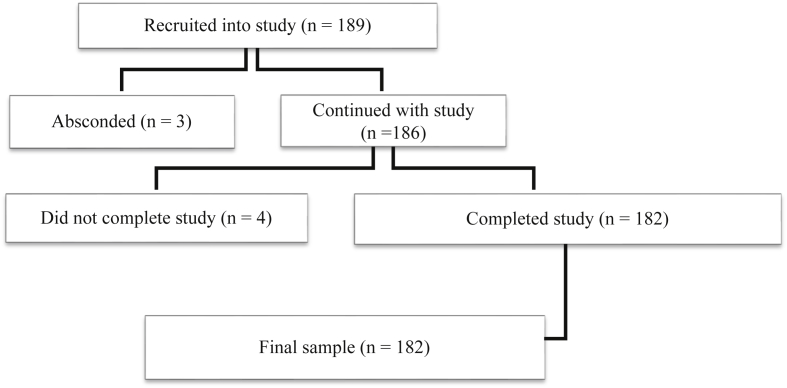
Methods: A cross-sectional descriptive study was conducted at MTRH between January 2016 and June 2017. A total of 189 patients admitted to the hospital with burns were recruited into the study. An interviewer-administered structured questionnaire and chart reviews were used to collect data on sociodemographic variables, burn clinical characteristics and early burn outcomes. Associations between patient characteristics and early burn outcomes were assessed by multivariable logistic regression.
Results: Of the 182 burn patients whose data was analyzed, the median age was 2.4 years (IQR = 5.8) years and 149 (82%) were children below 18 years. Majority (76%) of burns were due to scalds. The commonest burn locations were the trunk and upper limbs (56%). Only 40% of patients received prehospital intervention. The median Total Burn Surface Area (TBSA) was 14.5% and 74% of the patients had 2nd degree burns. The median length of hospital stay was 16 days (IQR = 28) and commonest complication was wound infection. Proportion of deaths due to burns accounted for 9.3% of the patients. A TBSA of 20%-30% (p = 0.01) was associated with presence of burn complications while a TBSA of >10% (p = 0.03) and time from burn to admission (p = 0.03) were associated with the length of hospital stay.
Conclusions: In our study, death was likely to occur in one in ten patients admitted with burns and TBSA was a predictor of presence of burn complications and length of hospital stay. There is a need for continued health education of the public on fire safety within the home environment for children and other vulnerable persons. Timely hospital intervention would also reduce burn complications as well as length of hospital stay.
Keywords: Burns; Clinical research; Complications; Critical care; Emergency medicine; Kenya; Length of stay; Public health; Surgery; TBSA.
© 2020 The Author(s).
Figures
References
-
- World Health Organization . April 2014. Burns.www.who.int/mediacentre/factsheets/fs365/en/ update. 2014.
-
- Peck M.D. Epidemiology of burns throughout the world. Part I: distribution and risk factors. Burns. 2011;37(7):1087–1100. - PubMed
-
- Nthumba P.M., Oliech J.S. Outcomes of moderate and severe thermal injuries at Kenyatta National Hospital. East Cent. Afr. J. Surg. 2005;10(2):37–42.
LinkOut - more resources
Full Text Sources
