


Lerisetron Analogues with Antimalarial Properties: Synthesis, Structure-Activity Relationship Studies, and Biological Assessment
- PMID: 32258933
- PMCID: PMC7114883
- DOI: 10.1021/acsomega.0c00327
Lerisetron Analogues with Antimalarial Properties: Synthesis, Structure-Activity Relationship Studies, and Biological Assessment
Abstract
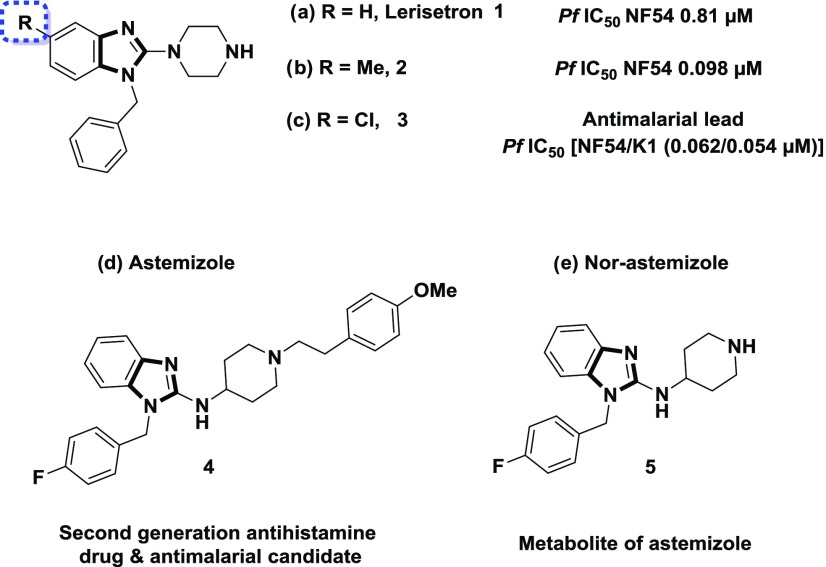
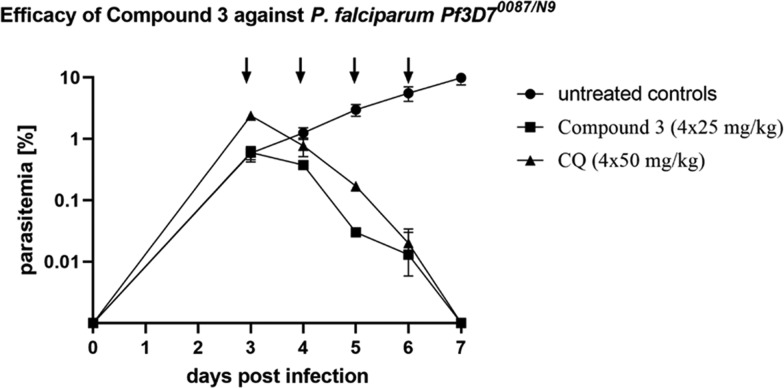
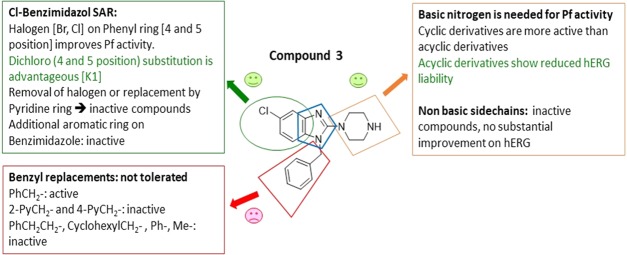
A phenotypic whole cell high-throughput screen against the asexual blood and liver stages of the malaria parasite identified a benzimidazole chemical series. Among the hits were the antiemetic benzimidazole drug Lerisetron 1 (IC50 NF54 = 0.81 μM) and its methyl-substituted analogue 2 (IC50 NF54 = 0.098 μM). A medicinal chemistry hit to lead effort led to the identification of chloro-substituted analogue 3 with high potency against the drug-sensitive NF54 (IC50 NF54 = 0.062 μM) and multidrug-resistant K1 (IC50 K1 = 0.054 μM) strains of the human malaria parasite Plasmodium falciparum. Compounds 2 and 3 gratifyingly showed in vivo efficacy in both Plasmodium berghei and P. falciparum mouse models of malaria. Cardiotoxicity risk as expressed in strong inhibition of the human ether-a-go-go-related gene (hERG) potassium channel was identified as a major liability to address. This led to the synthesis and biological assessment of around 60 analogues from which several compounds with improved antiplasmodial potency, relative to the lead compound 3, were identified.
Copyright © 2020 American Chemical Society.
Conflict of interest statement
The authors declare no competing financial interest.
Figures

References
-
- Orth H.; Jensen B. O.; Holtfreter M. C.; Kocheril S. J.; Mallach S.; McKenzie C.; Muller-Stover I.; Henrich B.; Imwong M.; White N. J.; Haussinger D.; Richter J. Plasmodium knowlesi Infection Imported to Germany, January 2013. Euro Surveill. 2013, 20603 10.2807/1560-7917.es2013.18.40.20603. - DOI - PubMed
- de Koning-Ward T. F.; Dixon M. W. A.; Tilley L.; Gilson P. R. Plasmodium Species: Master Renovators of Their Host Cells. Nat. Rev. Microbiol. 2016, 14, 494–507. 10.1038/nrmicro.2016.79. - DOI - PubMed
-
- Burrows J. N.; Chibale K.; Wells T. N. C. The State of the Art in Anti-malarial Drug Discovery and Development. Curr. Top. Med. Chem. 2011, 11, 1226–1254. 10.2174/156802611795429194. - DOI - PubMed
- Chin W.; Contacos P. G.; Coatney G. R.; Kimball H. R. A Naturally Acquired Quotidian-Type Malaria in Man Transferable to Monkeys. Science 1965, 149, 865 10.1126/science.149.3686.865. - DOI - PubMed
- Vythilingam I.; NoorAzian Y. M.; Huat T. C.; Ida Jiram A.; Yusri Y. M.; Azahari A. H.; NorParnia I.; NoorRain A.; LokmanHakim S. Plasmodium knowlesi in Humans, Macaques and Mosquitoes in Peninsular Malaysia. Parasites Vectors 2008, 1, 26 10.1186/1756-3305-1-26. - DOI - PMC - PubMed
-
- World Health Organization (WHO). World Malaria Report, 2018. http://www.who.int/malaria/publications/world-malaria-report-2018/en/ (accessed Sept 30, 2019).
LinkOut - more resources
Full Text Sources
