


Sex differences in response to short-term high fat diet in mice
- PMID: 32259599
- PMCID: PMC7285373
- DOI: 10.1016/j.physbeh.2020.112894
Sex differences in response to short-term high fat diet in mice
Abstract
Background: Consumption of high-fat diet (HF) leads to hyperphagia and increased body weight in male rodents. Female rodents are relatively resistant to hyperphagia and weight gain in response to HF, in part via effects of estrogen that suppresses food intake and increases energy expenditure. However, sex differences in energy expenditure and activity levels with HF challenge have not been systemically described. We hypothesized that, in response to short-term HF feeding, female mice will have a higher energy expenditure and be more resistant to HF-induced hyperphagia than male mice.
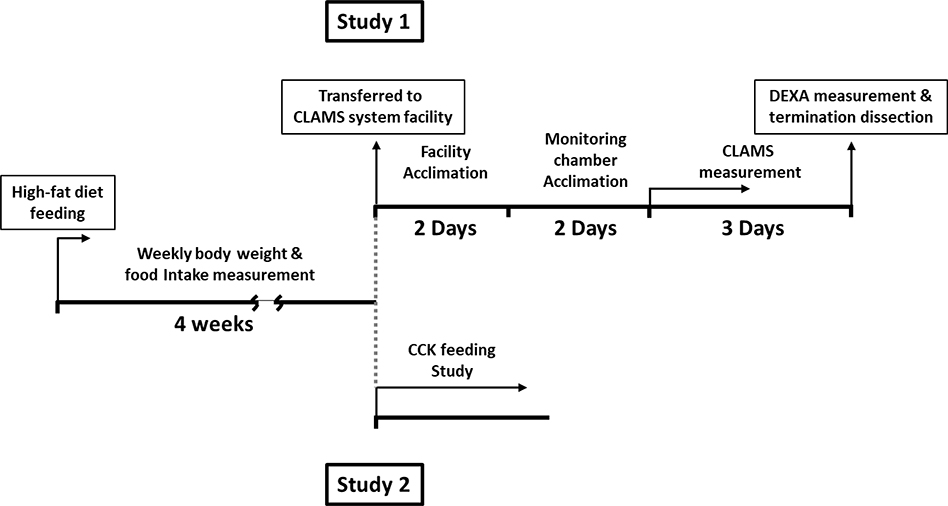
Methods: Six-week-old male and female C57BL/6 J mice were fed either low fat (LF, 10% fat) or moderate HF (45% fat) for 5 weeks, and energy expenditure, activity and meal pattern measured using comprehensive laboratory animal monitoring system (CLAMS).
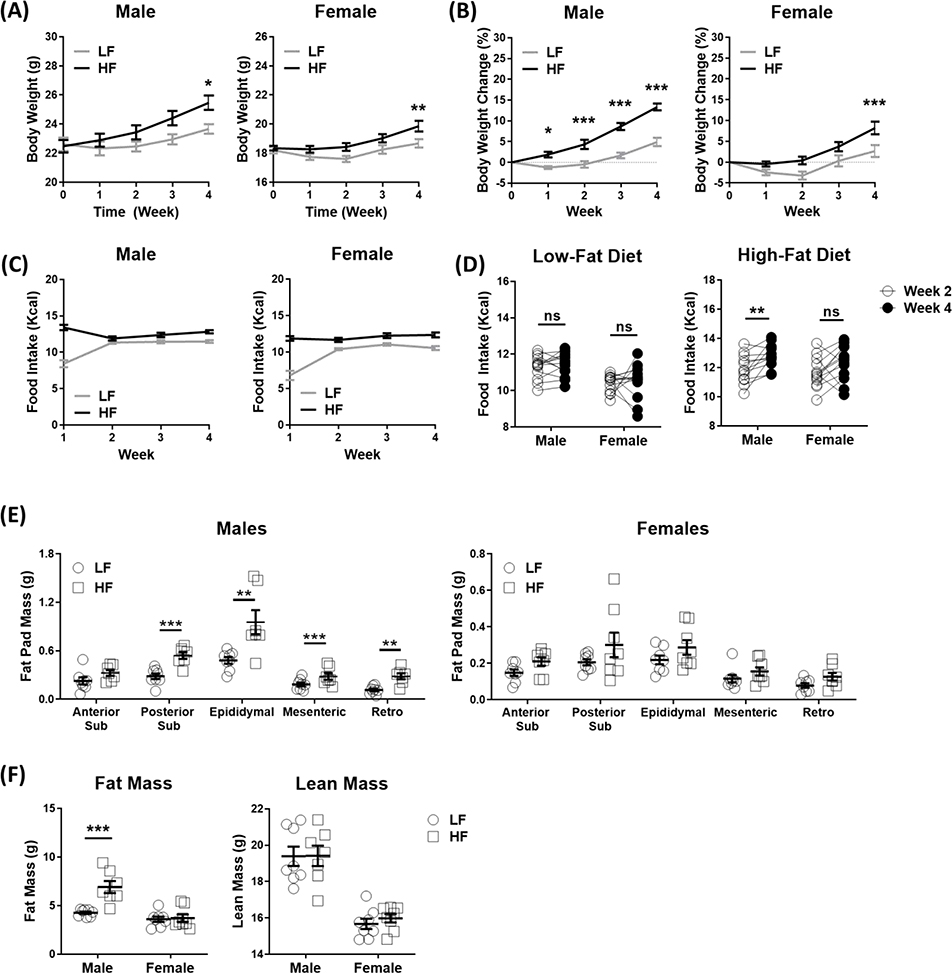
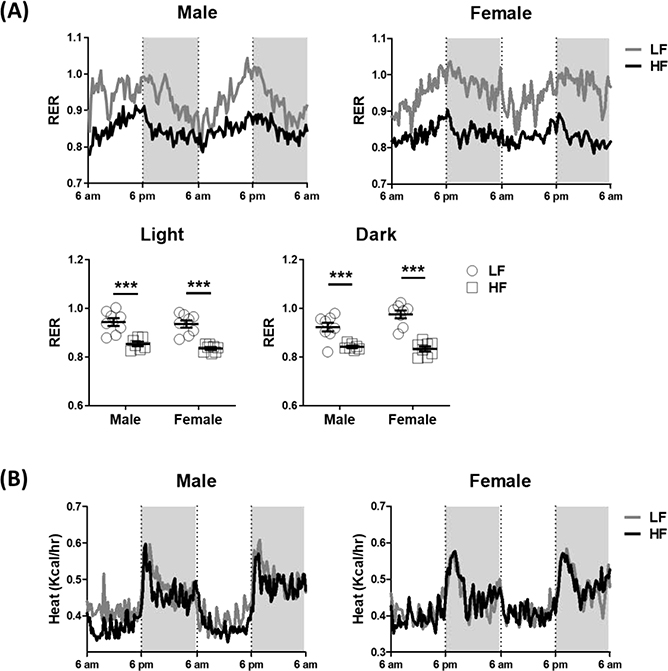
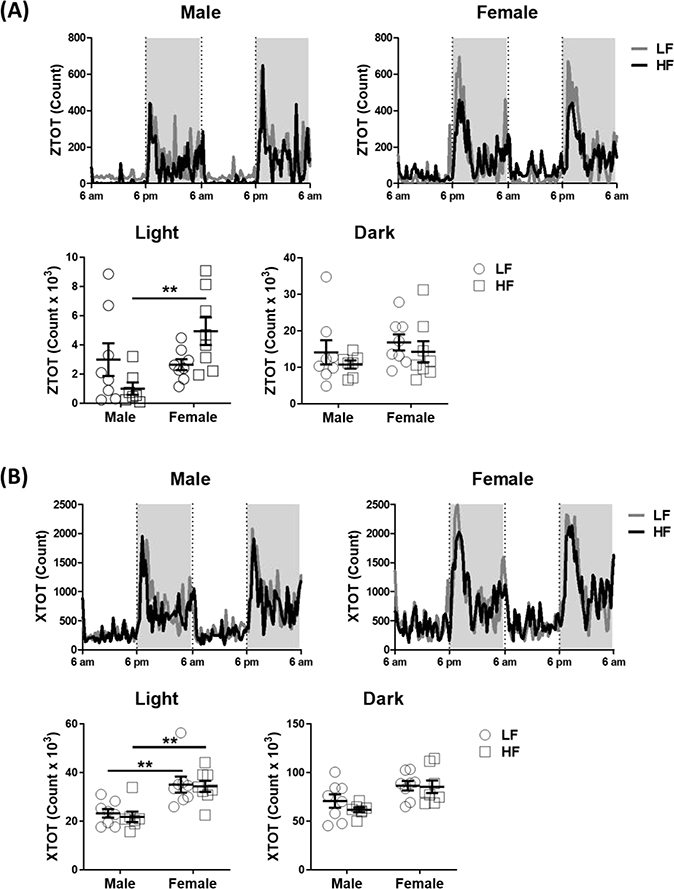
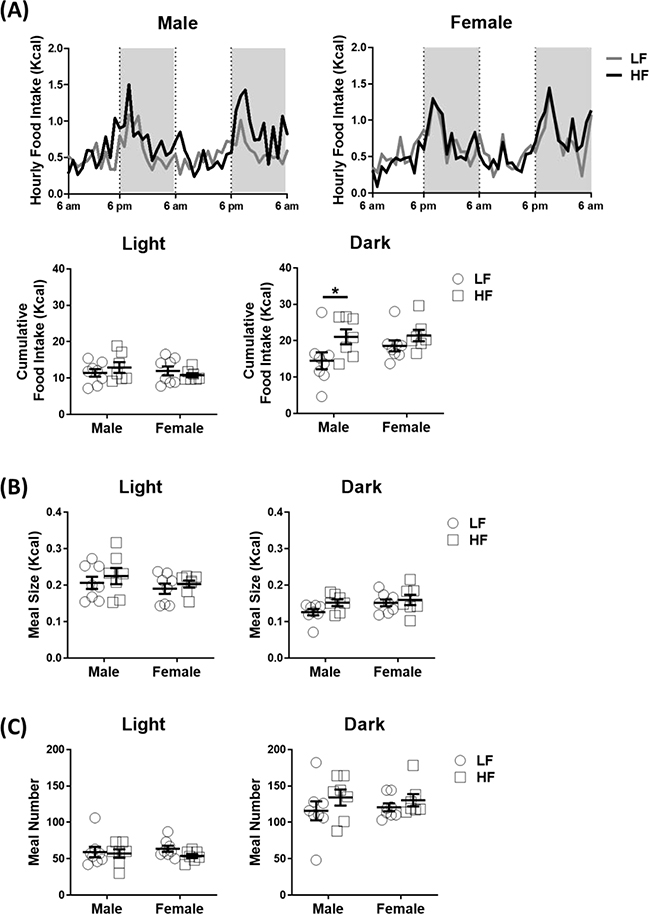
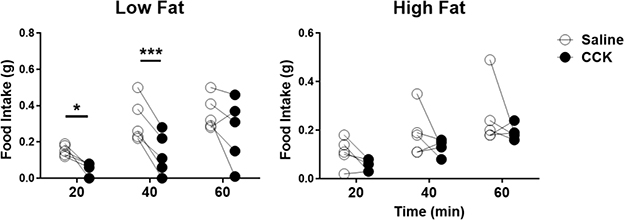
Results: After 5 weeks, HF-fed male mice had a significant increase in body weight and fat mass, compared with LF-fed male mice. HF-fed female had a significant increase in body weight compared with LF-fed female mice, but there was no significant difference in fat mass. HF-fed male mice had lower energy expenditure compared to HF-fed female mice, likely due in part to reduced physical activity in the light phase. HF-fed male mice also had increased energy intake in the dark phase compared to LF-fed male mice and a reduced response to exogenous cholecystokinin-induced inhibition of food intake. In contrast, there was no difference in energy intake between LF-fed and HF-fed female mice.
Conclusions: The data show that female mice are generally protected from short-term HF-induced alterations in energy balance, possibly by maintaining higher energy expenditure and an absence of hyperphagia. However, HF-feeding in male mice induced weight and fat mass gain and hyperphagia. These findings suggest that there is a sex difference in the response to short-term HF-feeding in terms of both energy expenditure and control of food intake.
Keywords: Energy expenditure; Energy intake; High-fat diet; Meal patterns; Physical activity; Sex differences.
Copyright © 2020 Elsevier Inc. All rights reserved.
Conflict of interest statement
Declaration of Competing Interest The authors have no financial or non-financial competing interests to declare.
Figures
References
-
- Hales CM, Carroll MD, Fryar CD, Ogden CL, Prevalence of Obesity Among Adults and Youth: United States, 2015–2016., NCHS Data Brief. (2017) 1–8. - PubMed
-
- Pan WW, Myers MG Jr, Leptin and the maintenance of elevated body weight, Nat. Rev. Neurosci. 19 (2018)95. - PubMed
-
- Choi M-S, Kim Y-J, Kwon E-Y, Ryoo JY, Kim SR, Jung UJ, High-fat diet decreases energy expenditure and expression of genes controlling lipid metabolism, mitochondrial function and skeletal system development in the adipose tissue, along with increased expression of extracellular matrix remodelling- and inflamm, Br. J. Nutr. 113 (2015) 867–877. doi: 10.1017/S0007114515000100. - DOI - PubMed
Publication types
MeSH terms
Substances
Grants and funding
LinkOut - more resources
Full Text Sources
Research Materials
Miscellaneous
