Bridging the Gap Among Clinical Practice Guidelines for Pain Management in Cancer and Sickle Cell Disease
- PMID: 32259777
- PMCID: PMC9764961
- DOI: 10.6004/jnccn.2019.7379
Bridging the Gap Among Clinical Practice Guidelines for Pain Management in Cancer and Sickle Cell Disease
Abstract
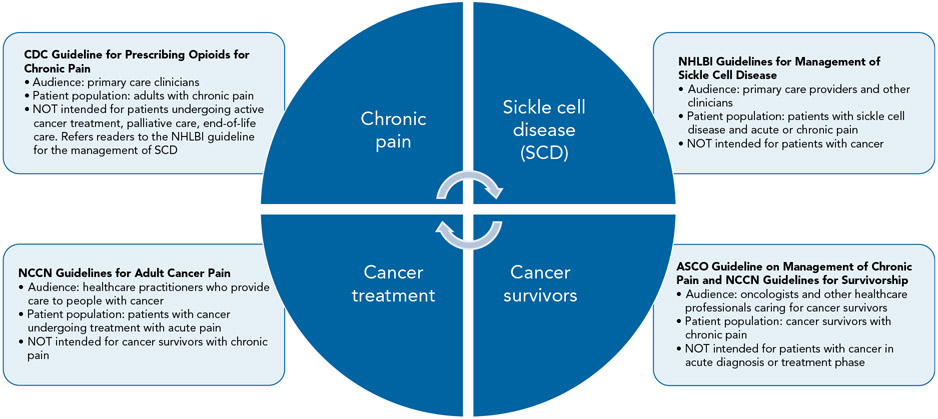
Opioids are a critical component of pain relief strategies for the management of patients with cancer and sickle cell disease. The escalation of opioid addiction and overdose in the United States has led to increased scrutiny of opioid prescribing practices. Multiple reports have revealed that regulatory and coverage policies, intended to curb inappropriate opioid use, have created significant barriers for many patients. The Centers for Disease Control and Prevention, National Comprehensive Cancer Network, and American Society of Clinical Oncology each publish clinical practice guidelines for the management of chronic pain. A recent JAMA Oncology article highlighted perceived variability in recommendations among these guidelines. In response, leadership from guideline organizations, government representatives, and authors of the original article met to discuss challenges and solutions. The meeting featured remarks by the Commissioner of Food and Drugs, presentations on each clinical practice guideline, an overview of the pain management needs of patients with sickle cell disease, an overview of perceived differences among guidelines, and a discussion of differences and commonalities among the guidelines. The meeting revealed that although each guideline varies in the intended patient population, target audience, and methodology, there is no disagreement among recommendations when applied to the appropriate patient and clinical situation. It was determined that clarification and education are needed regarding the intent, patient population, and scope of each clinical practice guideline, rather than harmonization of guideline recommendations. Clinical practice guidelines can serve as a resource for policymakers and payers to inform policy and coverage determinations.
Figures
References
-
- Page R, Blanchard E. Opioids and cancer pain: patients’ needs and access challenges. J Oncol Pract 2019;15:229–231. - PubMed
-
- Meghani SH, Vapiwala N. Bridging the critical divide in pain management guidelines from the CDC, NCCN, and ASCO for cancer survivors. JAMA Oncol 2018;4:1323–1324. - PubMed
-
- Dowell D, Haegerich TM, Chou R. CDC guideline for prescribing opioids for chronic pain – United States, 2016. MMWR Recomm Rep 2016;65:1–49. - PubMed
Publication types
MeSH terms
Substances
Grants and funding
LinkOut - more resources
Full Text Sources
Medical
Miscellaneous