


A Brief Informant Screening Instrument for Dementia in the ICU: The Diagnostic Accuracy of the AD8 in Critically Ill Adults Suspected of Having Pre-Existing Dementia
- PMID: 32259825
- PMCID: PMC9528182
- DOI: 10.1159/000490379
A Brief Informant Screening Instrument for Dementia in the ICU: The Diagnostic Accuracy of the AD8 in Critically Ill Adults Suspected of Having Pre-Existing Dementia
Abstract
Background/aim: The diagnostic accuracy of brief informant screening instruments to detect dementia in critically ill adults is unknown. We sought to determine the diagnostic accuracy of the 2- to 3-min Ascertain Dementia 8 (AD8) completed by surrogates in detecting dementia among critically ill adults suspected of having pre-existing dementia by comparing it to the Clinical Dementia Rating Scale (CDR).
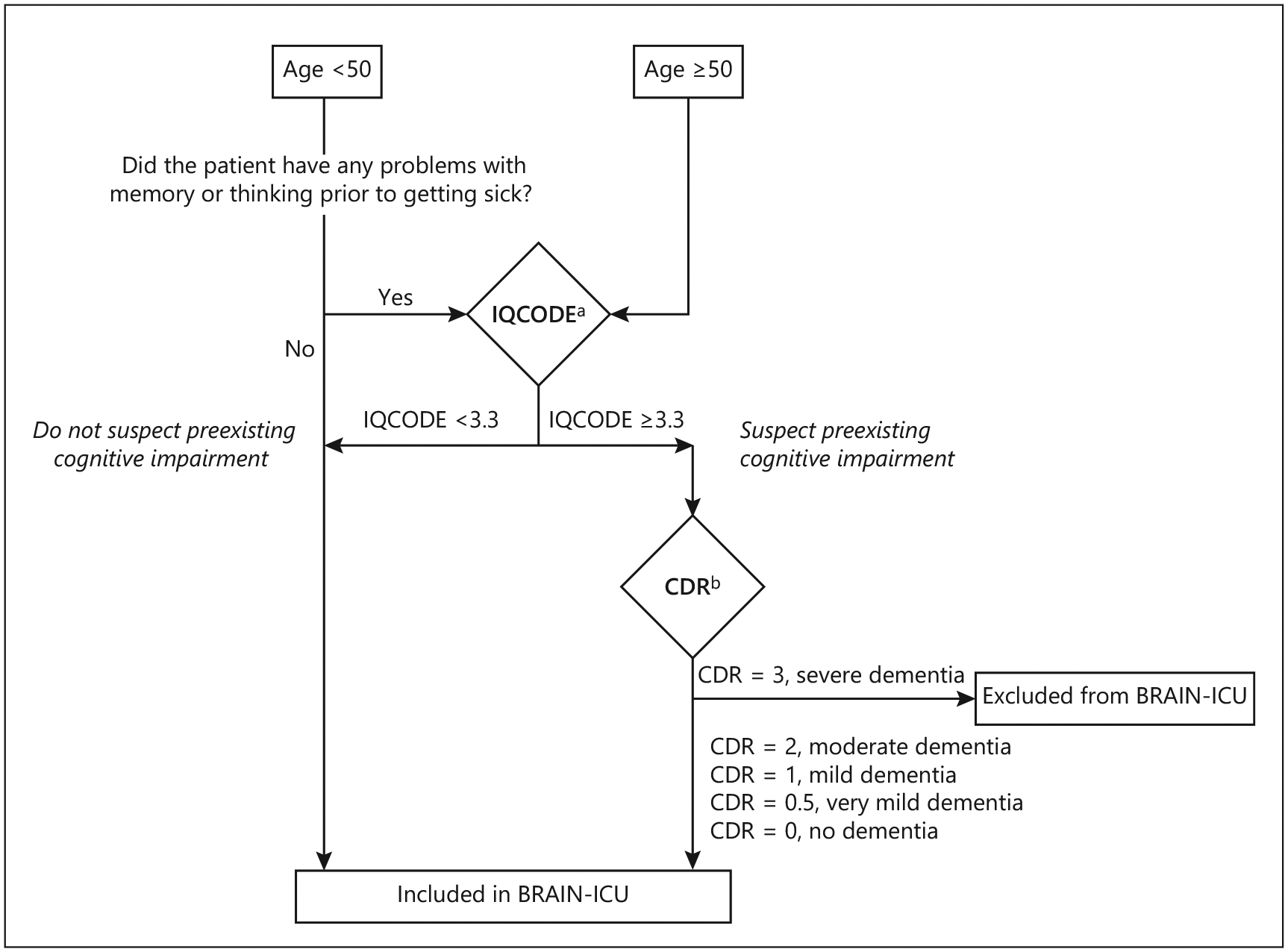
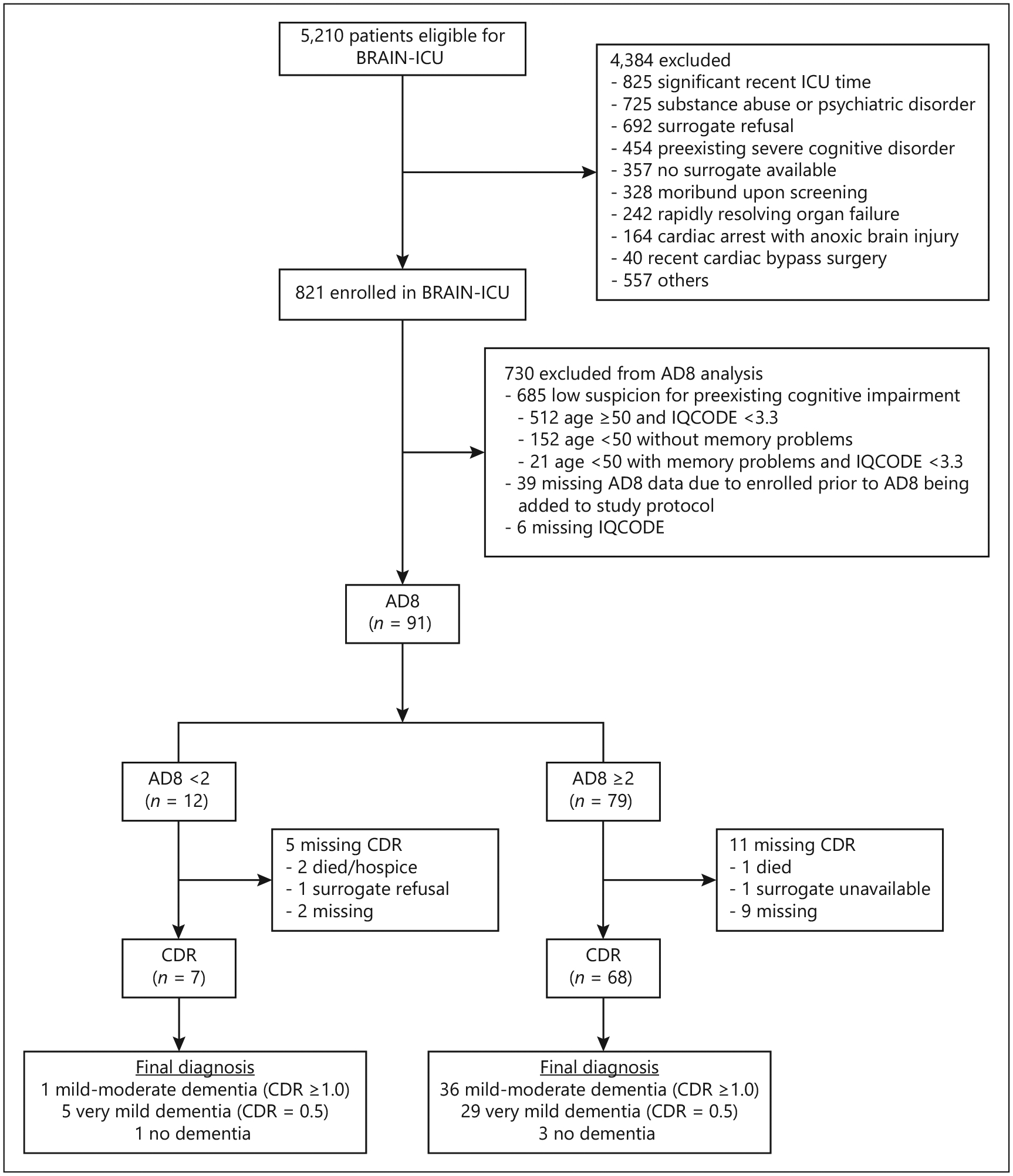
Methods: This substudy of BRAIN-ICU included a subgroup of 75 critically ill medical/surgical patients determined to be at medium risk of having pre-existing dementia (Informant Questionnaire on Cognitive Decline in the Elderly [IQCODE] score ≥3.3). We calculated the sensitivity, specificity, positive and negative predictive values (PPV and NPV), and AUC for the standard AD8 cutoff of ≥2 versus the reference standard CDR score of ≥1 for mild dementia.
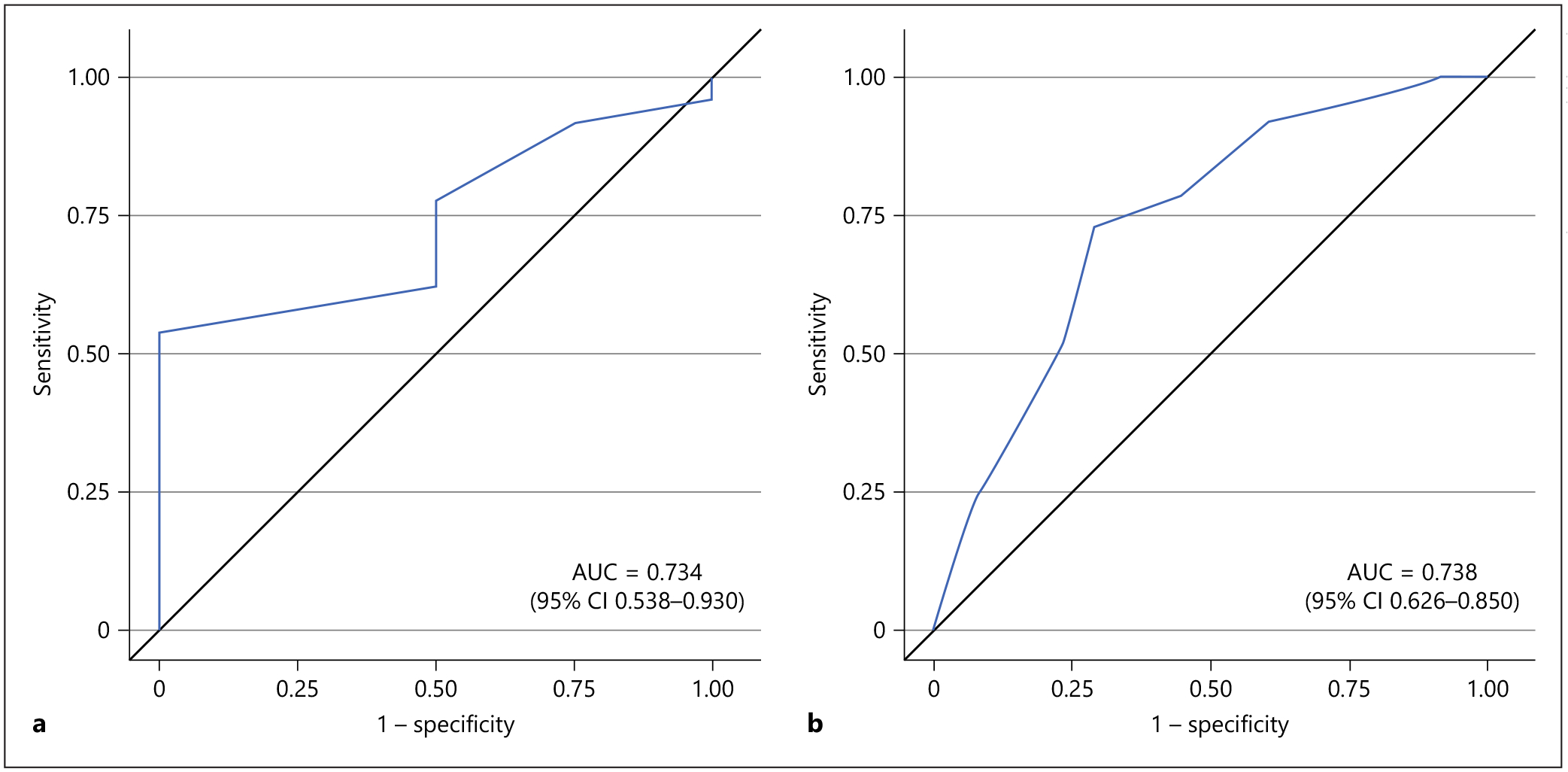
Results: By the CDR, 38 patients had very mild or no dementia and 37 had mild dementia or greater. For diagnosing mild dementia, the AD8 had a sensitivity of 97% (95% CI 86-100), a specificity of 16% (6-31), a PPV of 53% (40-65), an NPV of 86% (42-100), and an AUC of 0.738 (0.626-0.850).
Conclusions: Among critically ill patients judged at risk for pre-existing dementia, the 2- to 3-min AD8 is highly sensitive and has a high NPV. These data indicate that the brief tool can serve to rule out dementia in a specific patient population.
Trial registration: ClinicalTrials.gov NCT00392795.
Keywords: Ascertain Dementia 8; Clinical Dementia Rating Scale; Cognitive disorders; Cognitive screening test; Critical illness; Delirium; Dementia; Diagnosis; Sensitivity; Specificity.
© 2020 S. Karger AG, Basel.
Conflict of interest statement
Disclosure Statement
The authors declare no conflicts of interest.
Figures
References
-
- Pisani MA, Inouye SK, McNicoll L, Redlich CA. Screening for preexisting cognitive impairment in older intensive care unit patients: use of proxy assessment. J Am Geriatr Soc. 2003. May;51(5):689–93. - PubMed
-
- Pisani MA, Redlich C, McNicoll L, Ely EW, Inouye SK. Underrecognition of preexisting cognitive impairment by physicians in older ICU patients. Chest. 2003. Dec;124(6):2267–74. - PubMed
-
- Cherbuin N, Jorm AF. The IQCODE: using informant reports to assess cognitive change in the clinic and in older individuals living in the community. In: Larner AJ, editor. Cognitive screening instruments. London: Springer; 2013. pp. 165–82.
Publication types
MeSH terms
Associated data
Grants and funding
LinkOut - more resources
Full Text Sources
Medical
