


Statin Use Decreases the Incidence of Hepatocellular Carcinoma: An Updated Meta-Analysis
- PMID: 32260179
- PMCID: PMC7225931
- DOI: 10.3390/cancers12040874
Statin Use Decreases the Incidence of Hepatocellular Carcinoma: An Updated Meta-Analysis
Abstract
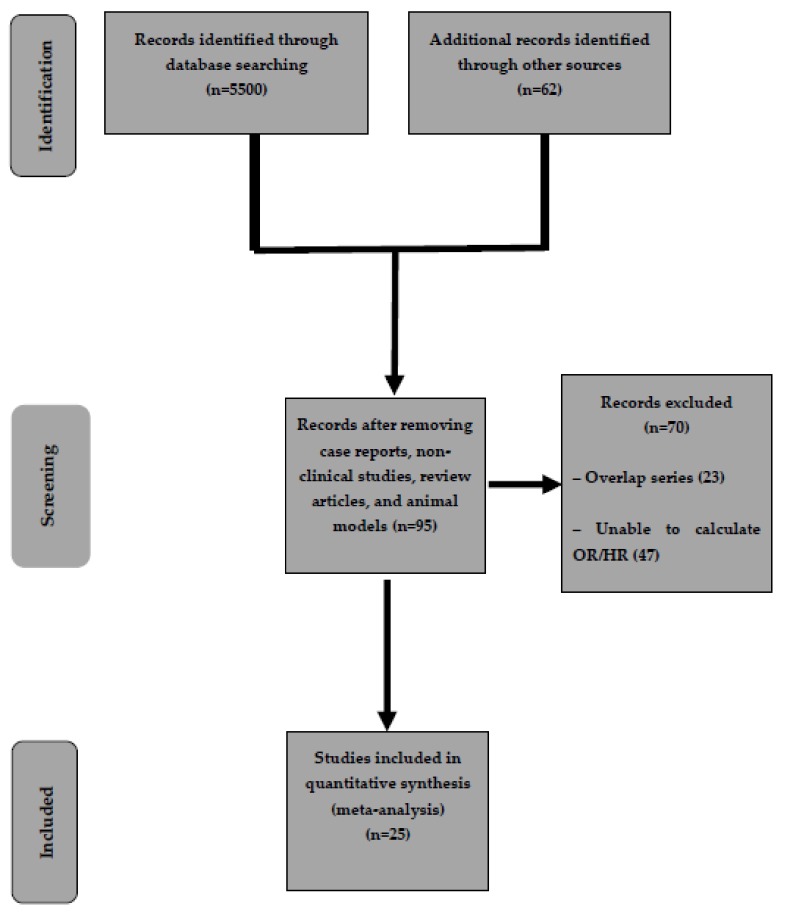
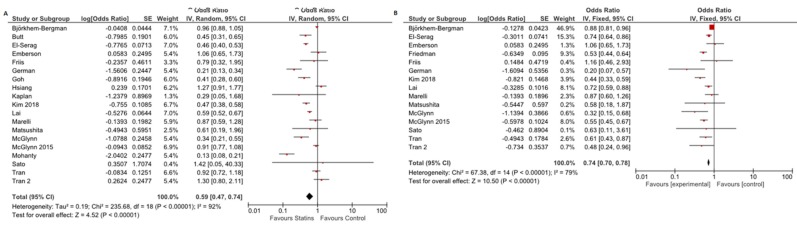
Statins can decrease hepatocellular carcinoma (HCC) occurrence, but the magnitude and the predictors of these effects remain unclear. This meta-analysis provides a pooled estimate of the impact of statin use on HCC occurrence. Pooled effects were calculated using a random-effects model by means of the DerSimonian and Laird test. Primary endpoint was the time-dependent correlation between statin use and HCC incidence expressed as hazard ratio (HR), both crude and adjusted. The crude and adjusted odds ratios (OR) for HCC occurrence between statin users and non-users were analyzed. Twenty-five studies with 1,925,964 patients were included. Crude OR for HCC incidence was 0.59 (95% CI: 0.47-0.74), confirmed in adjusted analysis (OR: 0.74, 95% CI: 0.70-0.78). Adjusted HR was 0.73 (95% CI: 0.69-0.76). This effect was more pronounced in HBV patients (HR: 0.46, 95% CI: 0.36-0.60) and with a cumulative daily dose beyond 365 (HR: 0.27, 95% CI: 0.11-0.67). Lipophilic statins were associated with reduced HCC incidence (HR: 0.49, 95% CI: 0.39-0.62). Atorvastatin determined the greater magnitude of effect (HR: 0.43, 95% CI: 0.28-0.65). This meta-analysis demonstrates the beneficial chemopreventive effect of statins against HCC occurrence. This effect is dose-dependent and more pronounced with lipophilic statins.
Keywords: HCC; cancer; cirrhosis; hazard ratio; survival.
Conflict of interest statement
None of the authors have any relevant financial disclosures.
Figures

References
Grants and funding
LinkOut - more resources
Full Text Sources
