Review
. 2020 Apr 3;25(7):1662.
doi: 10.3390/molecules25071662.

Azides and Porphyrinoids: Synthetic Approaches and Applications. Part 1-Azides, Porphyrins and Corroles

Affiliations
Review

Azides and Porphyrinoids: Synthetic Approaches and Applications. Part 1-Azides, Porphyrins and Corroles

Ana R L Araújo et al. Molecules. .

Abstract

Azides and porphyrinoids (such as porphyrin and corrole macrocycles) can give rise to new derivatives with significant biological properties and as new materials' components. Significant synthetic approaches have been studied. A wide range of products (e.g., microporous organic networks, rotaxane and dendritic motifs, dendrimers as liquid crystals, as blood substitutes for transfusions and many others) can now be available and used for several medicinal and industrial purposes.

Keywords: Azides; Catalysis; Click Chemistry; Corroles; Cycloadditions; Microorganisms Photoinactivation; Photodynamic Therapy; Porphyrinoids; Porphyrins; Supramolecular assembly.


Conflict of interest statement

The authors declare no conflict of interest.

Figures
Scheme 1
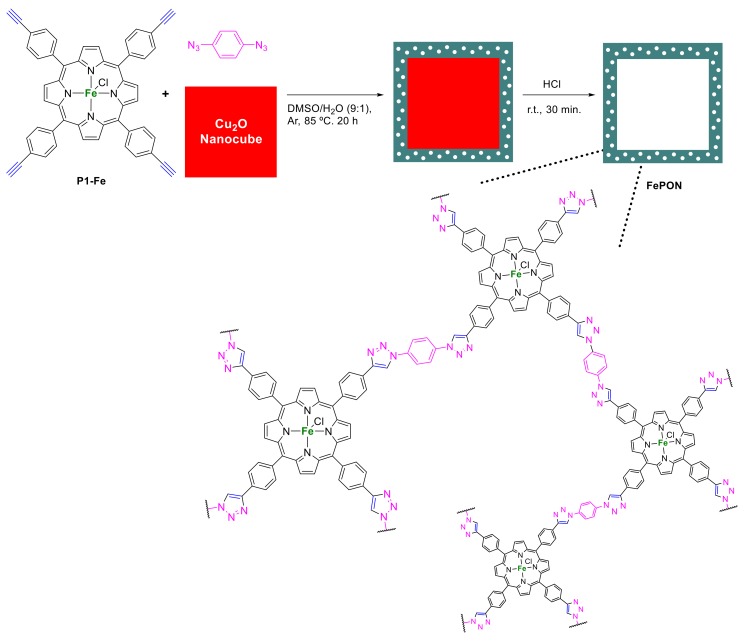
Scheme 1
Schematic preparation of microporous porphyrin-based organic networks (FePON).
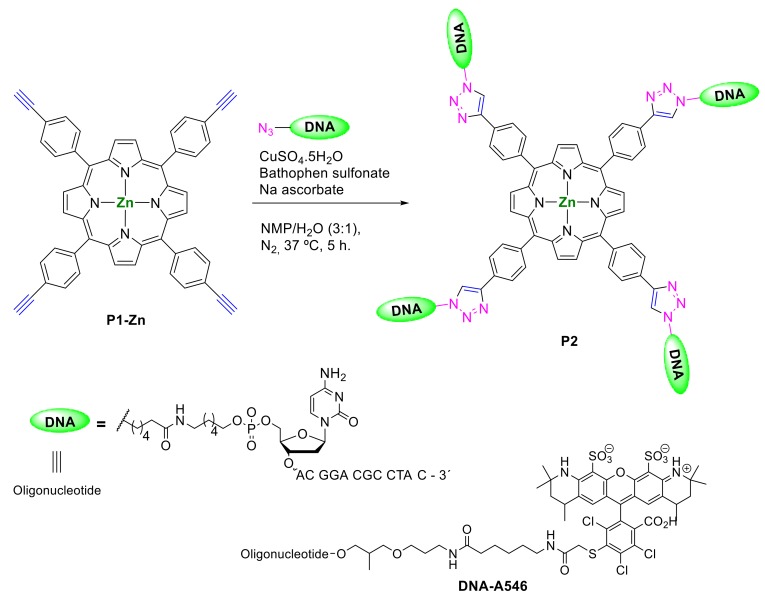
Scheme 2
Scheme 2
Synthesis of porphyrin derivatives bearing triazolyl-DNA oligonucleotides.
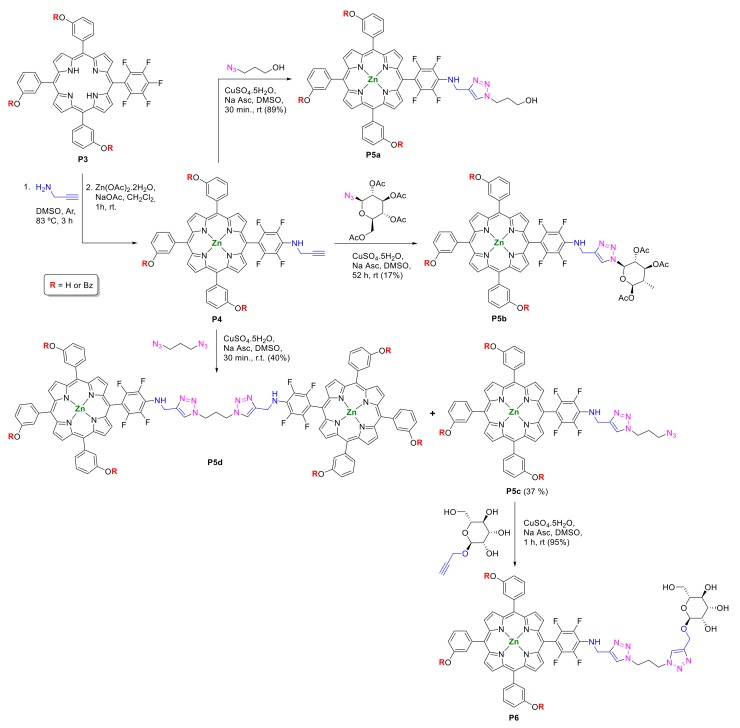
Scheme 3
Scheme 3
Porphyrin P3 as useful template for CuAAC reactions.
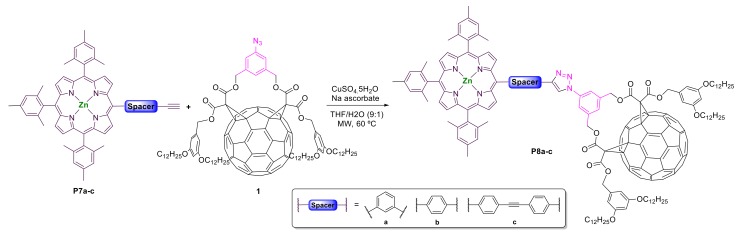
Scheme 4
Scheme 4
Synthesis of porphyrin–fullerene dyads 8a-c by CuAAC reactions.
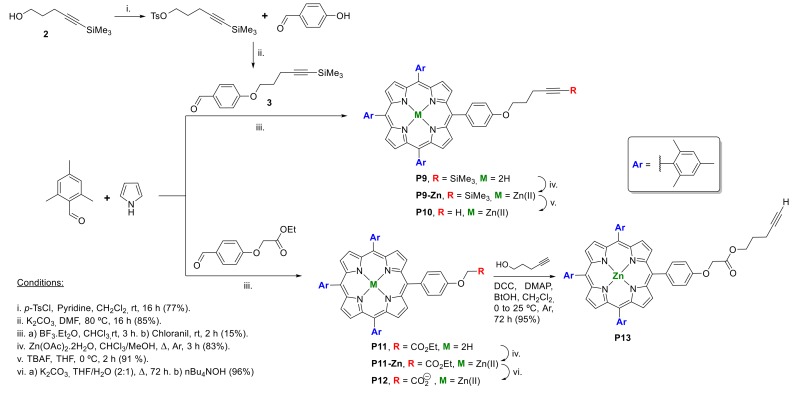
Scheme 5
Scheme 5
Synthetic approaches to prepare mono-substituted alkyne meso-tetraarylporphyrins.
Scheme 6
Scheme 6
Synthesis of pillar[5]arene P14 containing porphyrin–triazolyl motifs.
Scheme 7
Scheme 7
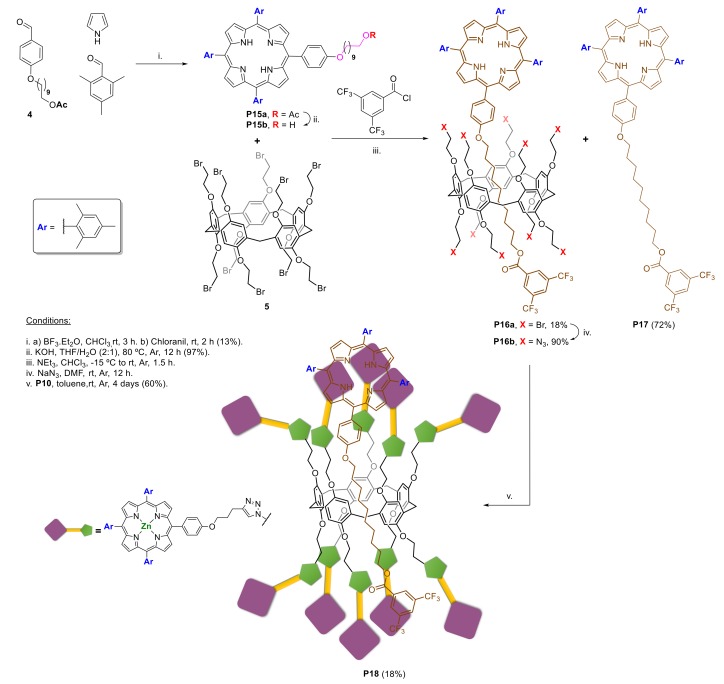
Synthetic approach to porphyrin [2]rotaxane derivative P18.
Scheme 8
Scheme 8
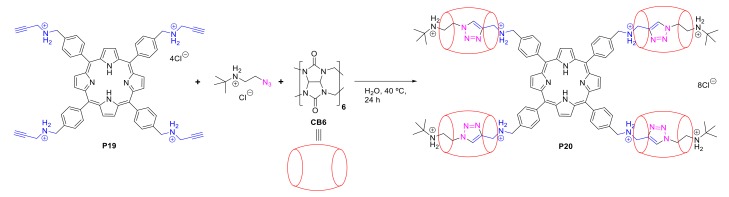
Preparation of porphyrin-based cucurbit[6]uril [5]rotaxane P20.
Figure 1
Figure 1
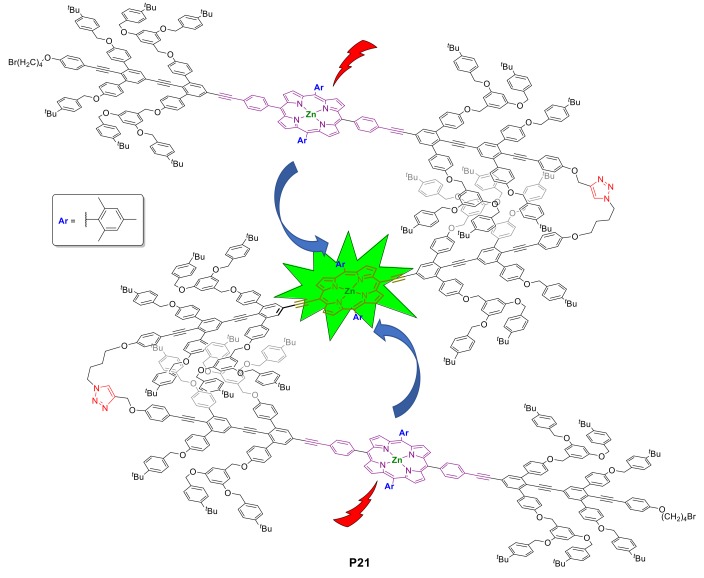
Structure of trimeric porphyrin—dendritic derivative P21.
Scheme 9
Scheme 9
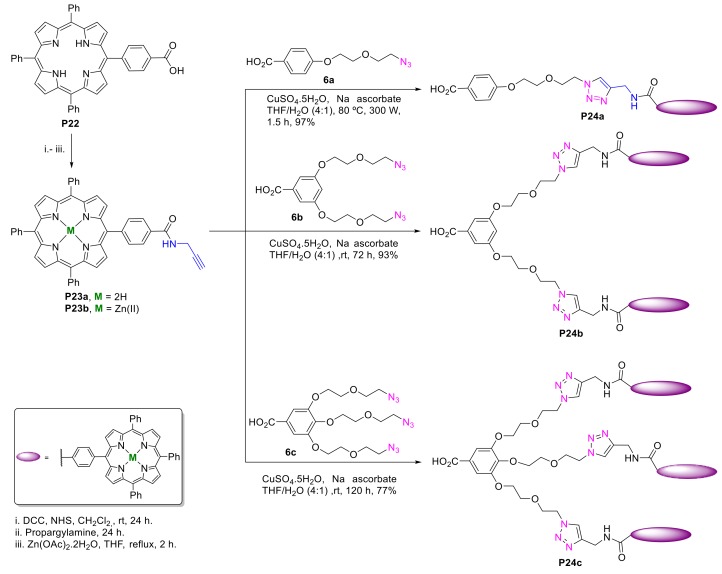
Synthetic approach to prepare mono-, di- and tri-substituted porphyrin-triazolyl entities P24.
Figure 2
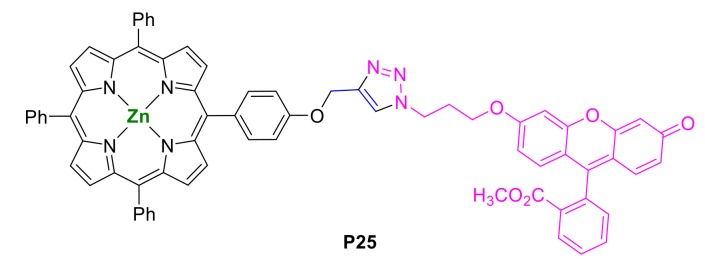
Figure 2
Structure of the porphyrin-fluorescein dyad P25.
Scheme 10
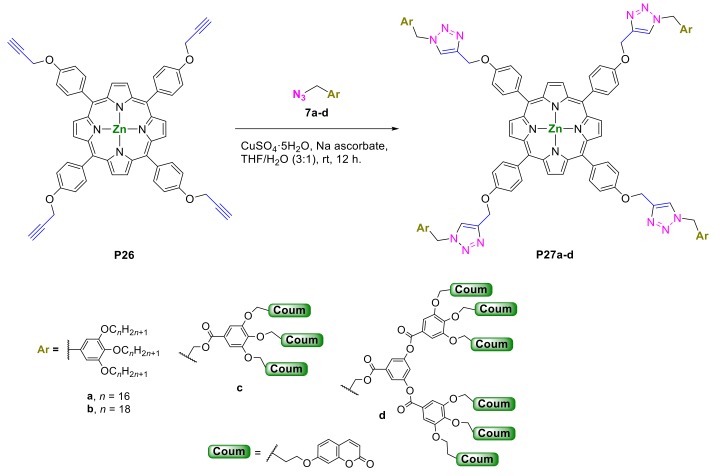
Scheme 10
Porphyrin-based dendrimers P27 with liquid crystal behavior.
Scheme 11
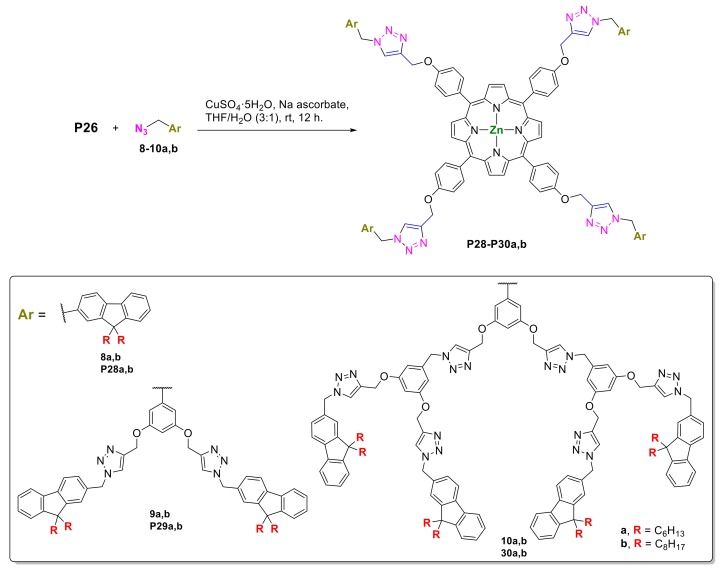
Scheme 11
Synthesis of porphyrin–fluorenodendrimers conjugates P28P30a,b.
Figure 3
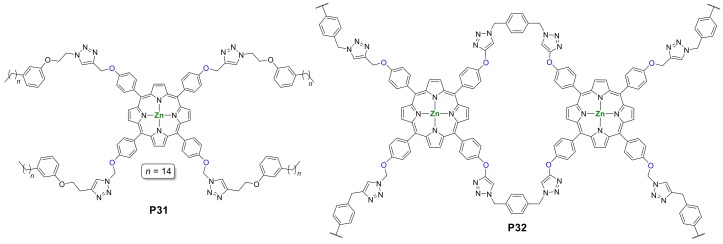
Figure 3
Structures of porphyrin-cardanol hybrid P31 and porphyrin-based polymer P32.
Scheme 12
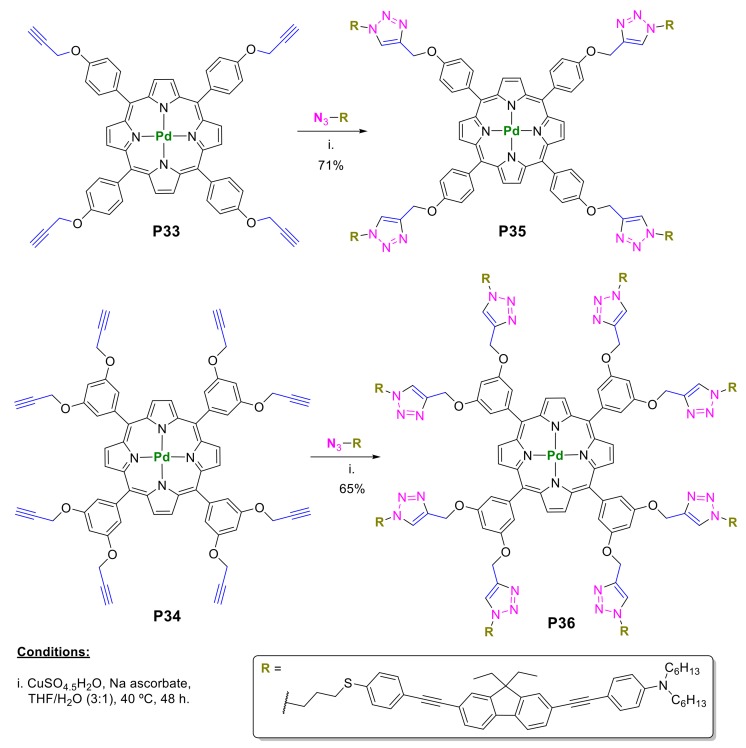
Scheme 12
Synthesis of porphyrin derivatives P35 and P36 bearing four or eight 9,9-diethylfluorene groups, respectively.
Scheme 13
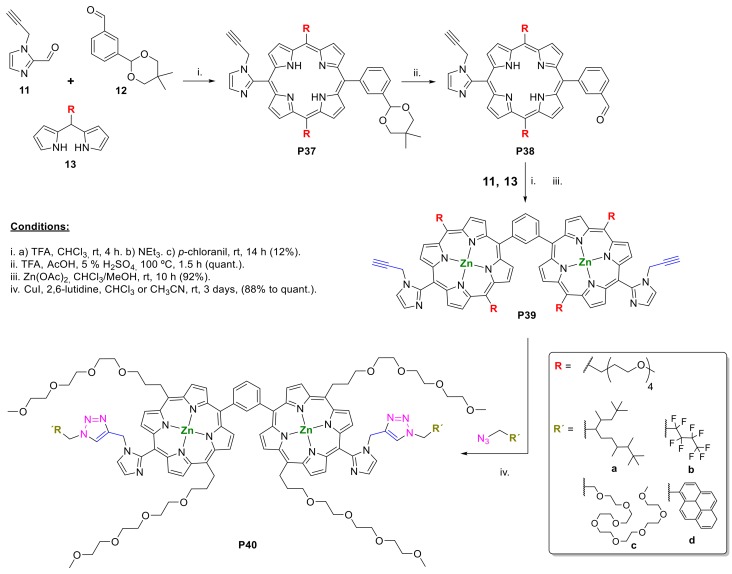
Scheme 13
Modification of Gable-type porphyrins via CuAAC reactions.
Scheme 14
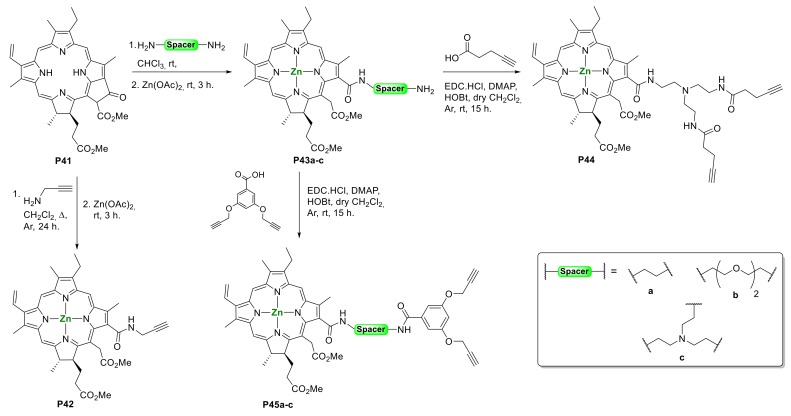
Scheme 14
Synthesis of chlorin-amides P42, P44 and P45ac bearing alkyne moieties.
Scheme 15
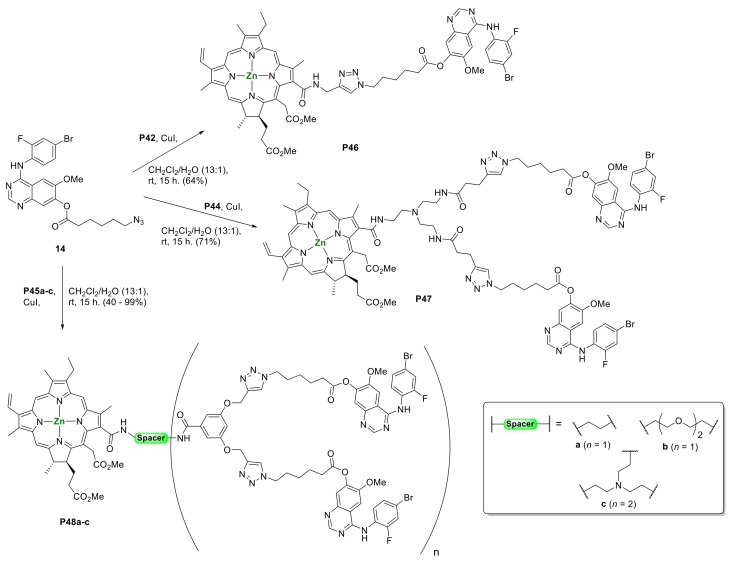
Scheme 15
Synthesis of chlorin-triazole-quinazoline conjugates.
Figure 4
Figure 4
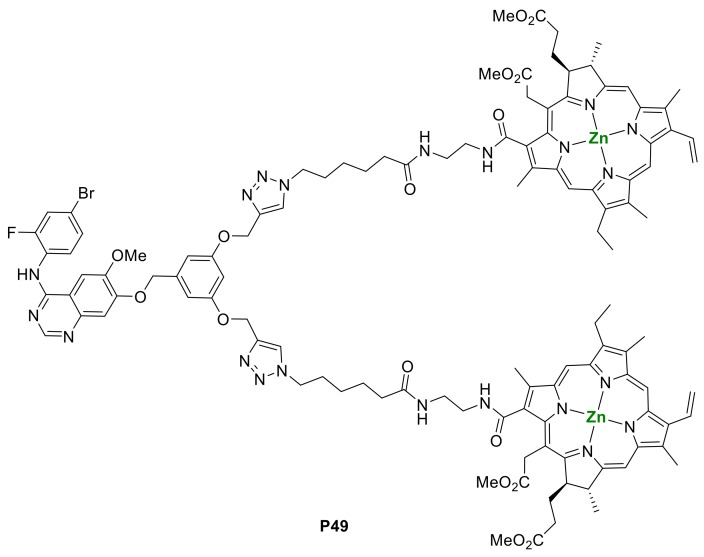
Structure of bis(chlorin)-quinazoline derivative P49.
Scheme 16
Scheme 16
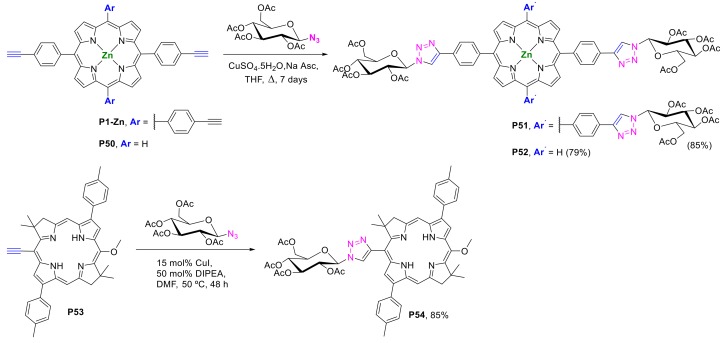
Synthesis of glucosylated porphyrins P51 and P52 and glucosylated bacteriochlorin P54.
Scheme 17
Scheme 17
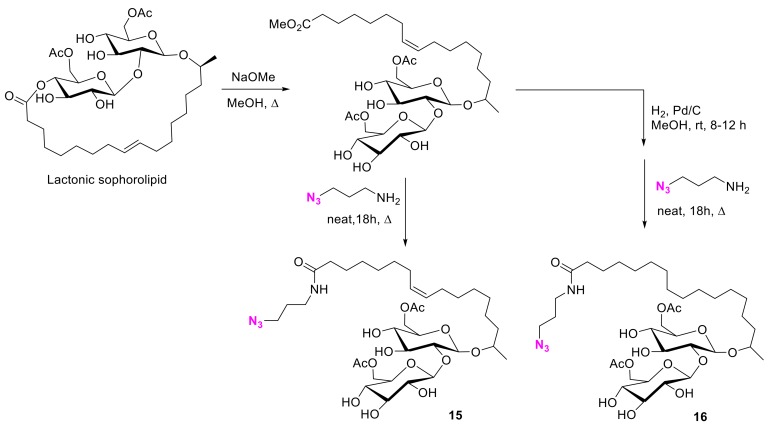
Synthesis of glycolipid surfactants’ moieties 15 and 16.
Scheme 18
Scheme 18
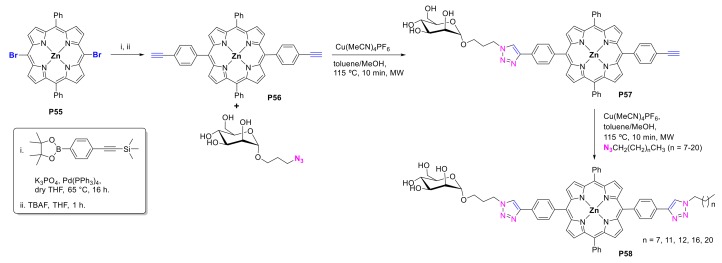
Synthetic approach to prepare the amphiphilic porphyrin derivatives P58 to be used in PDT.
Figure 5
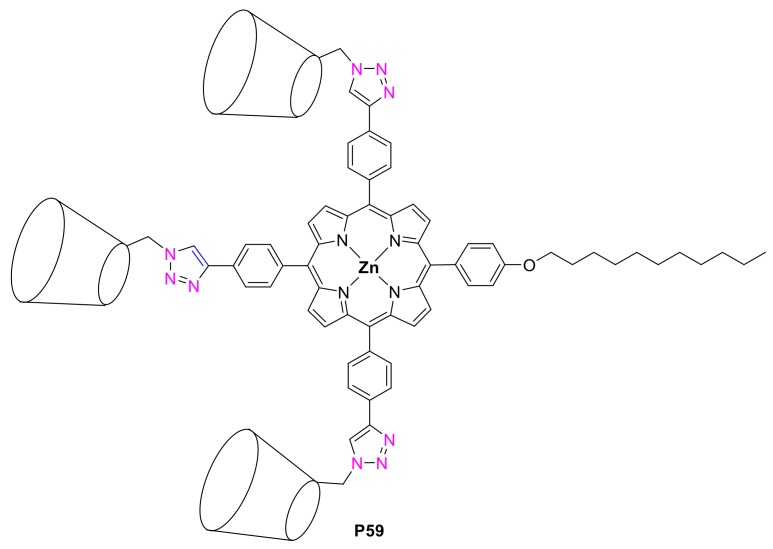
Figure 5
Structure of the amphiphilic porphyrin-cyclodextrin conjugate P59.
Figure 6
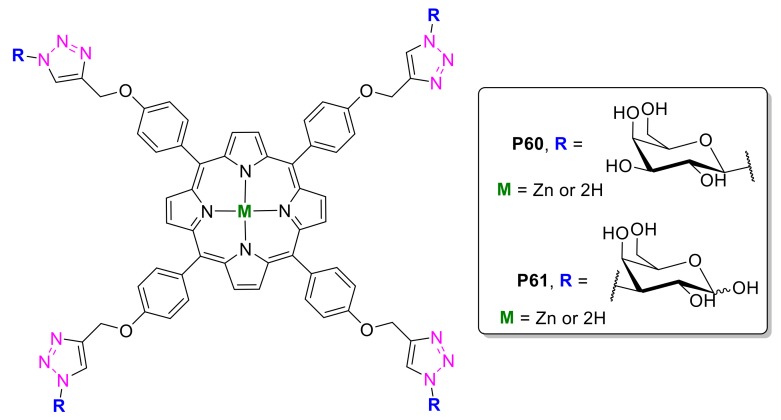
Figure 6
Structures of porphyrin–carbohydrate conjugates P60 and P61.
Scheme 19
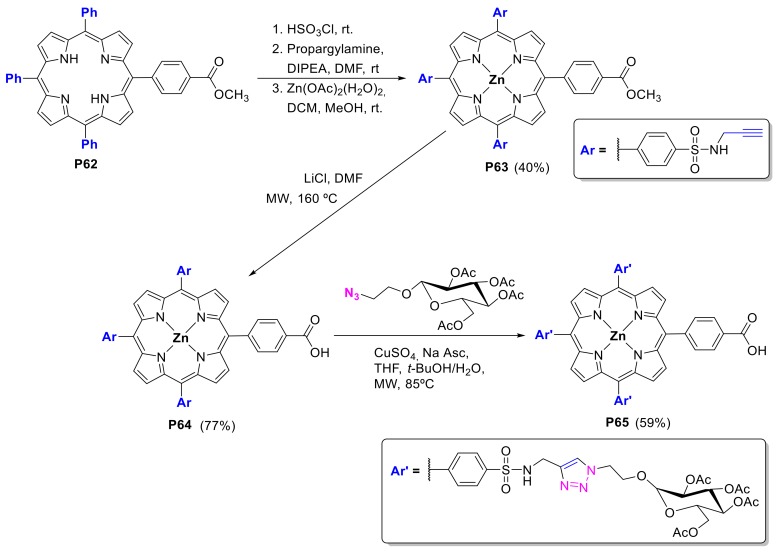
Scheme 19
Synthetic strategy used in the preparation of P65.
Scheme 20
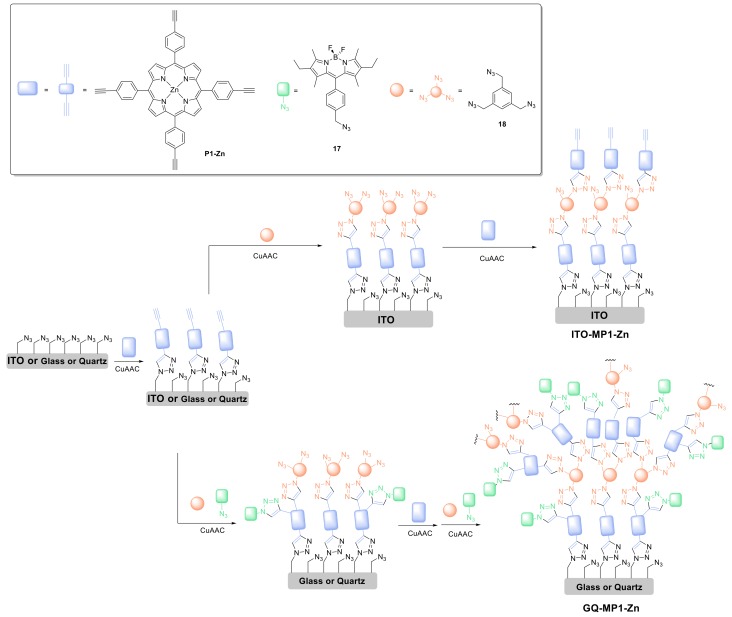
Scheme 20
Strategy used to immobilize P1-Zn, 17 and/or 18 in glass, quartz or ITO surface by LbL.
Scheme 21
Scheme 21
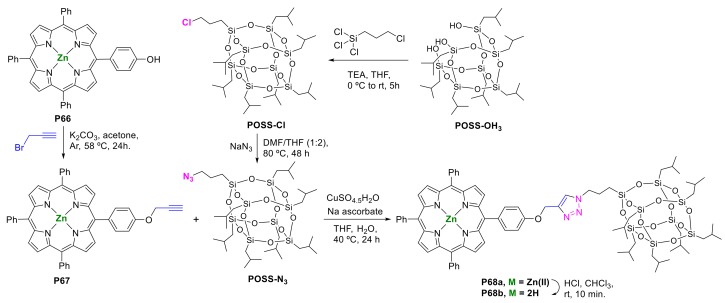
Preparation of organic-inorganic porphyrin-POSS hybrids P68.
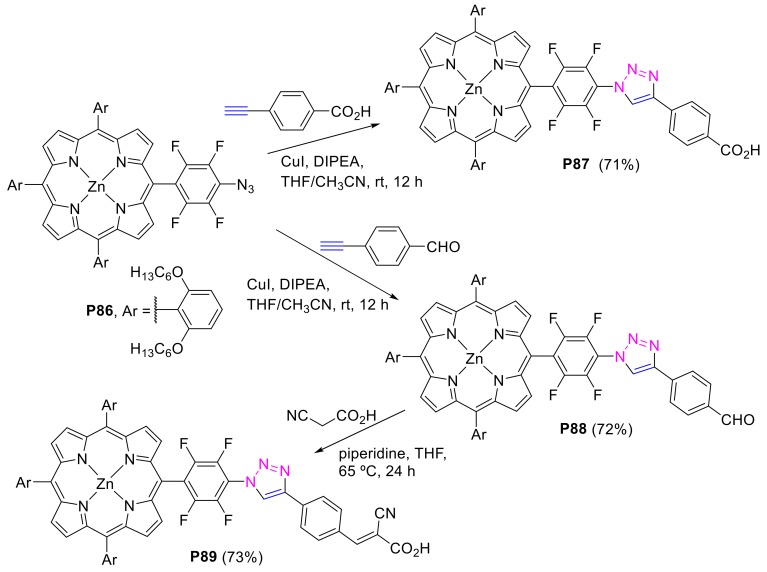
Figure 7
Figure 7
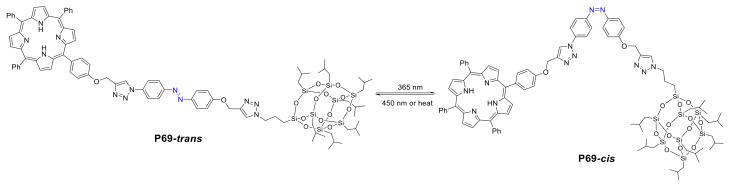
trans and cis configurations of P69 switching induced by light or heat.
Scheme 22
Scheme 22
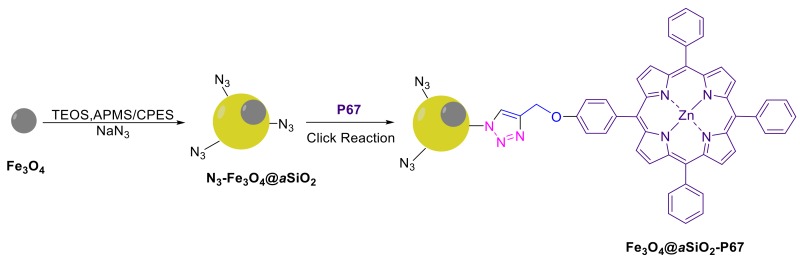
P67 immobilized in magnetic nanoparticles with the magnetic off-centered core.
Figure 8
Figure 8
Magnetic nanoparticle NP-P70 prepared via click approach from porphyrin P70-Zn.
Scheme 23
Scheme 23
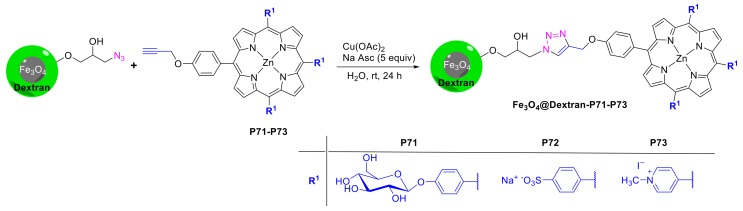
Magnetic nanoparticle coated with native dextran and linked to water-soluble photosensitizers.
Figure 9
Figure 9
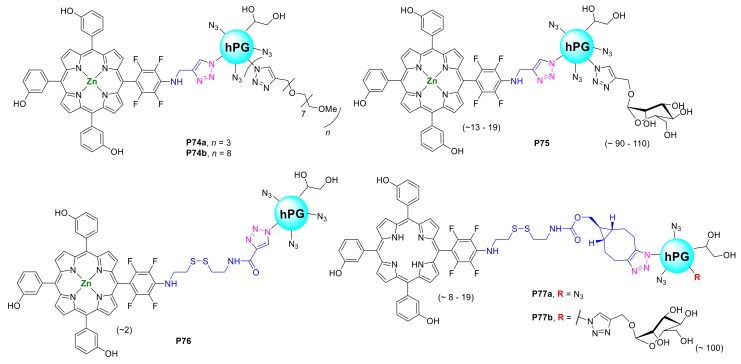
Structure of porphyrin-hPG-PEG conjugates P74a,b, P75, P76 and P77. Numbers in brackets give the approximate loading per polymer with porphyrin molecules and mannose groups, respectively.
Scheme 24
Scheme 24
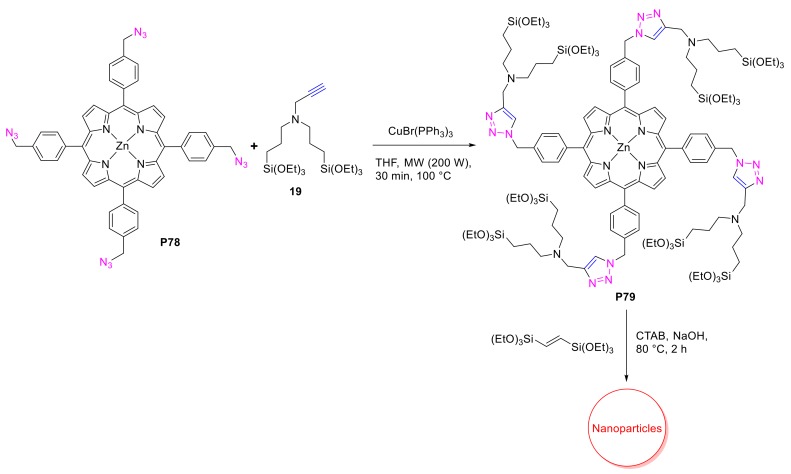
Synthesis of mesoporous organosilica nanoparticles containing Zn(II) porphyrin moieties.
Scheme 25
Scheme 25
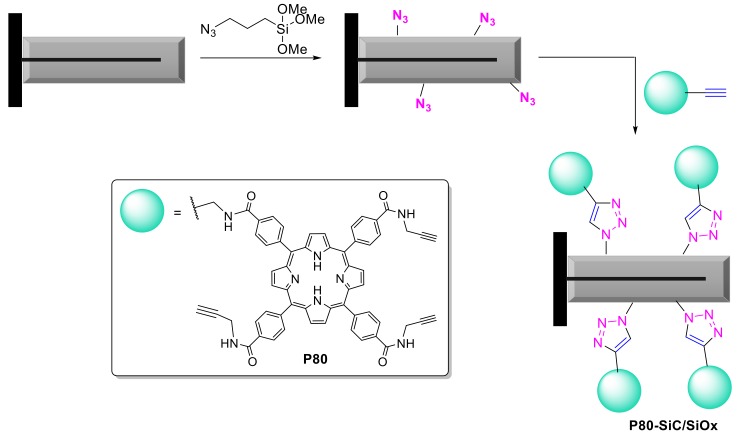
Preparation of P80-SiC/SiOx nanowires via click chemistry.
Scheme 26
Scheme 26
Immobilization of alkynyl-derived protoporphyrin IX P81 on modified cellulose II matrix.
Scheme 27
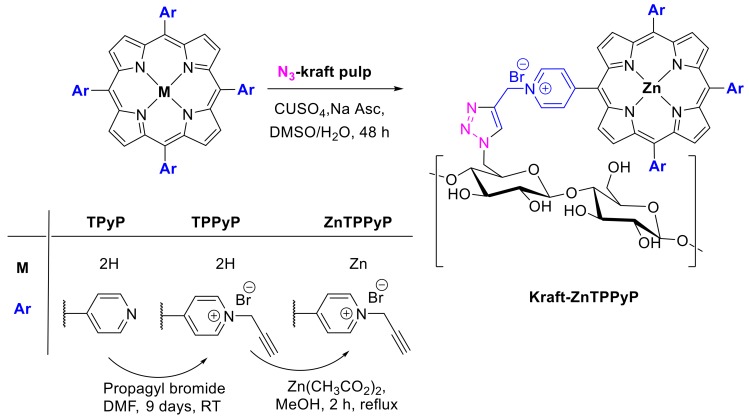
Scheme 27
Cationic porphyrin derivative Kraft-ZnTPPyP and its immobilization into the kraft pulp material.
Scheme 28
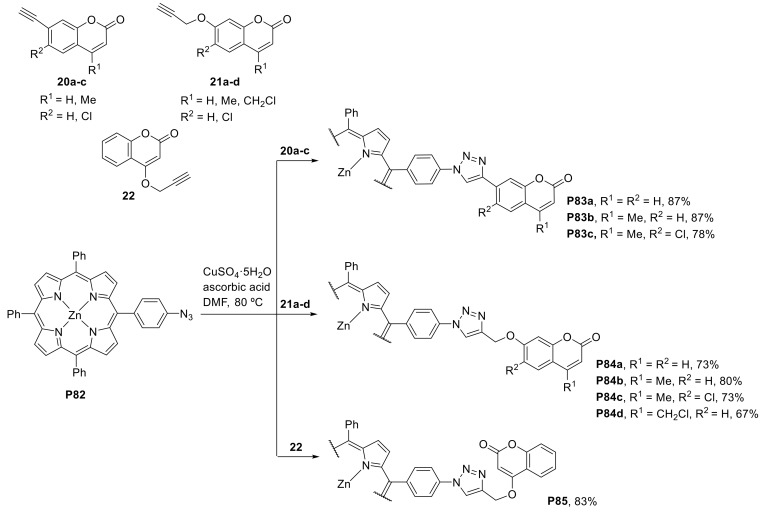
Scheme 28
Synthesis of Zn(II) meso-phenyl-triazole bridged coumarin-porphyrin dyads.
Scheme 29
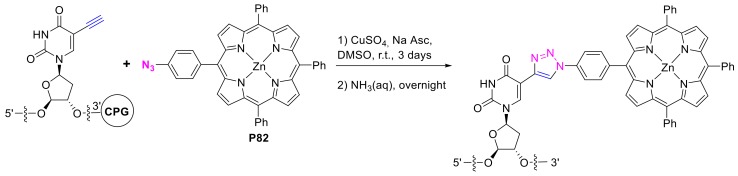
Scheme 29
Synthesis of porphyrin-DNA conjugates.
Scheme 30
Scheme 30
Synthesis of porphyrin–triazole conjugates incorporating carboxyl groups.
Scheme 31
Scheme 31
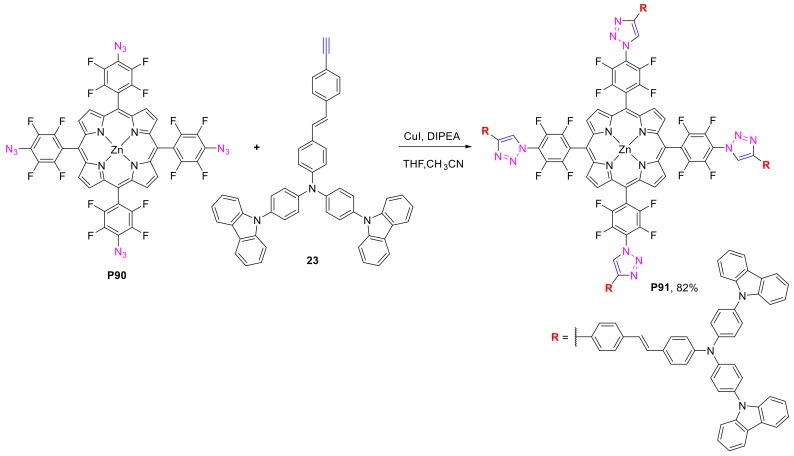
Synthesis of porphyrin-triazole conjugates P91 incorporating bis(carbazolyl)triphenylamine groups.
Scheme 32
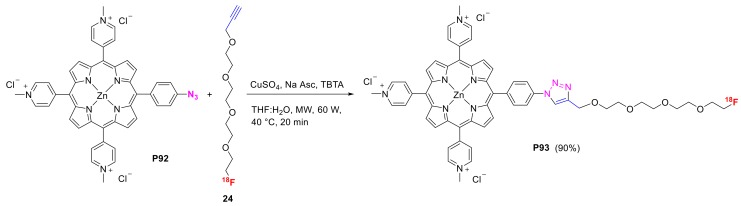
Scheme 32
Synthesis of a water-soluble porphyrin radiolabeled with fluorine-18.
Scheme 33
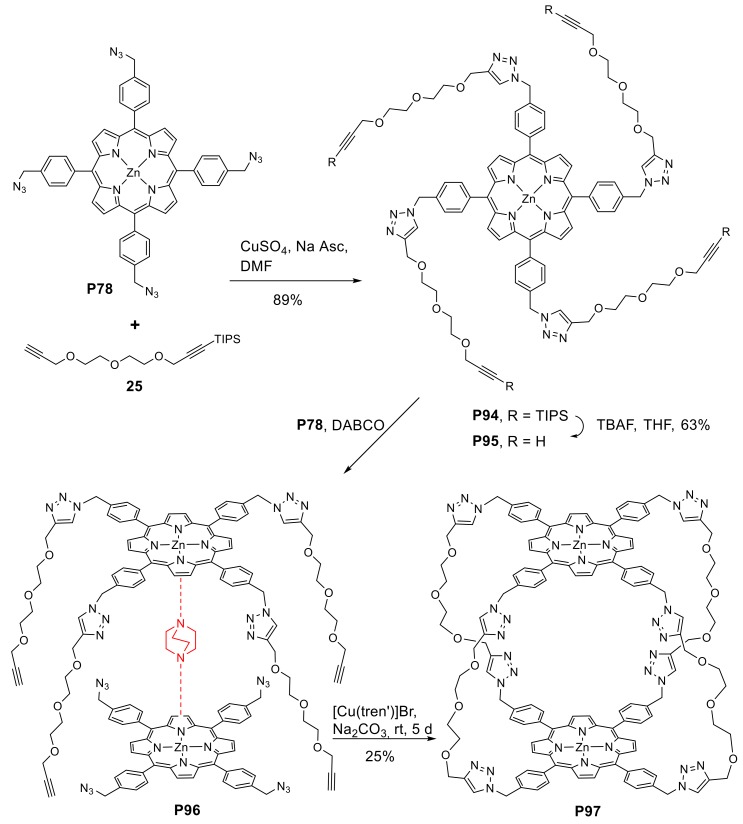
Scheme 33
Synthesis of a porphyrin cage.
Scheme 34
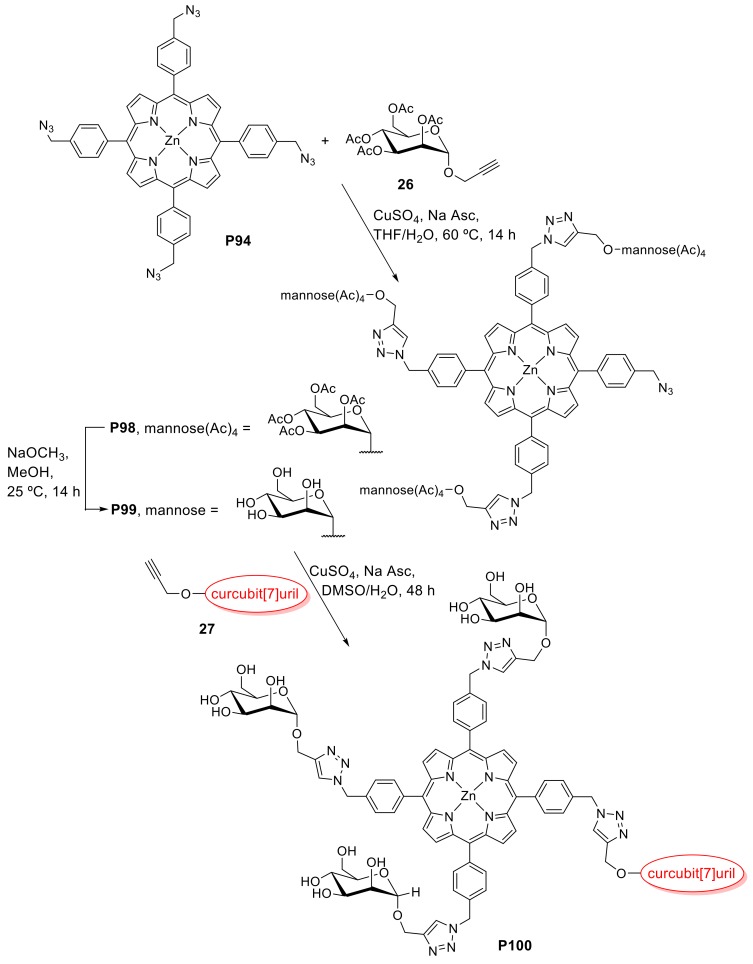
Scheme 34
Synthesis of a glycosylated porphyrin–cucurbituril conjugate.
Scheme 35
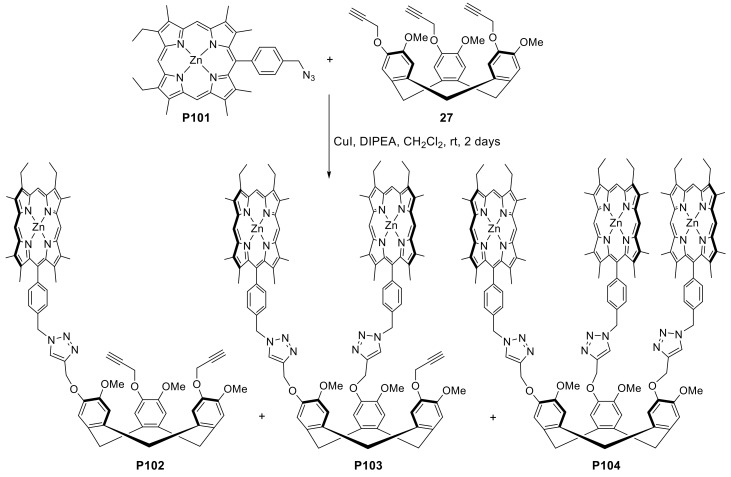
Scheme 35
Synthesis of cyclotriveratrylene derivatives covalently bonded to 1, 2 or 3 Zn(II) porphyrin units.
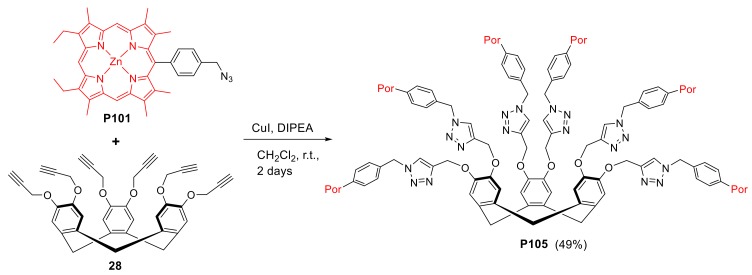
Scheme 36
Scheme 36
Synthesis of a cyclotriveratrylene derivative covalently bonded to six Zn(II) porphyrin units.
Scheme 37
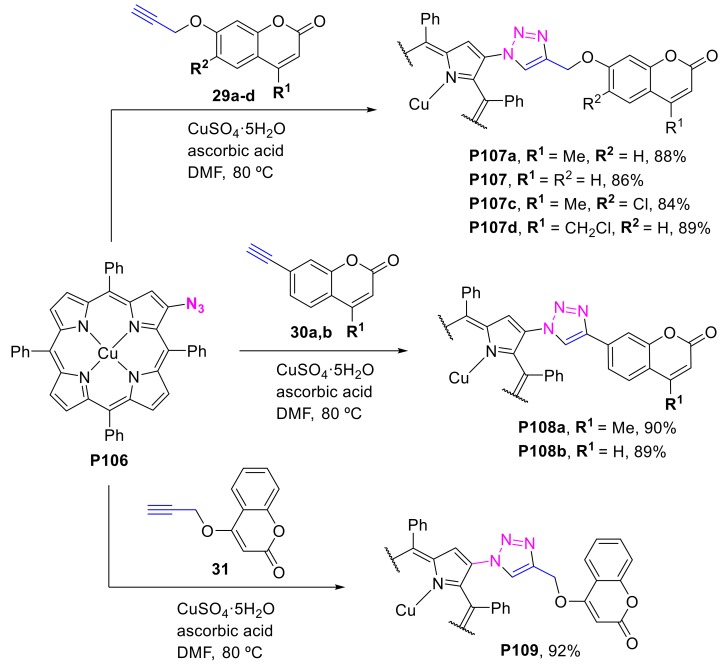
Scheme 37
Synthesis of β-triazole bridged coumarin–Cu(II)porphyrin conjugates.
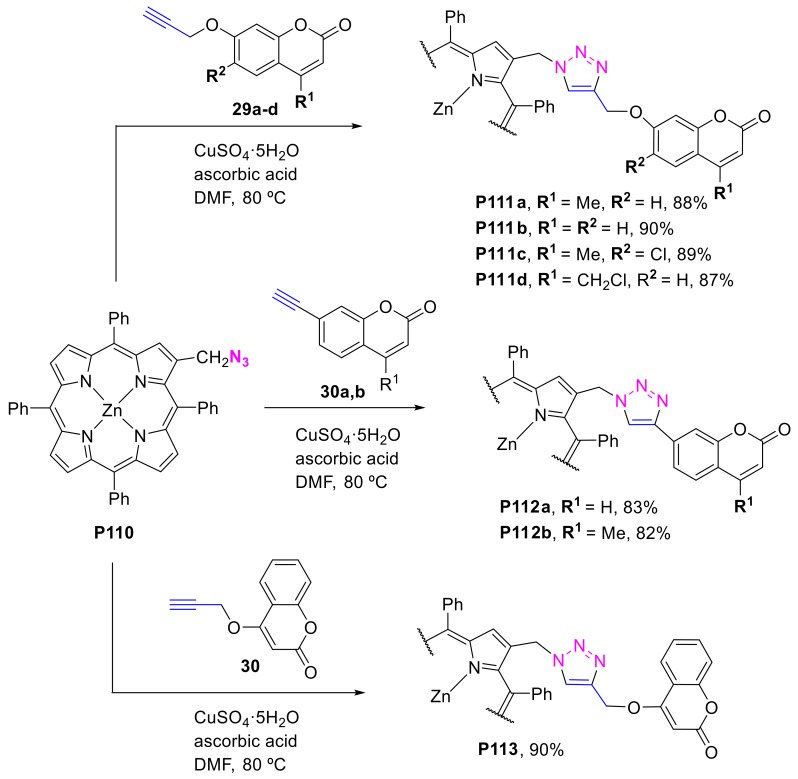
Scheme 38
Scheme 38
Synthesis of Zn(II) β-triazolylmethyl-bridged coumarin–porphyrin dyads.
Scheme 39
Scheme 39
Synthesis of porphyrin-xanthone conjugates.
Scheme 40
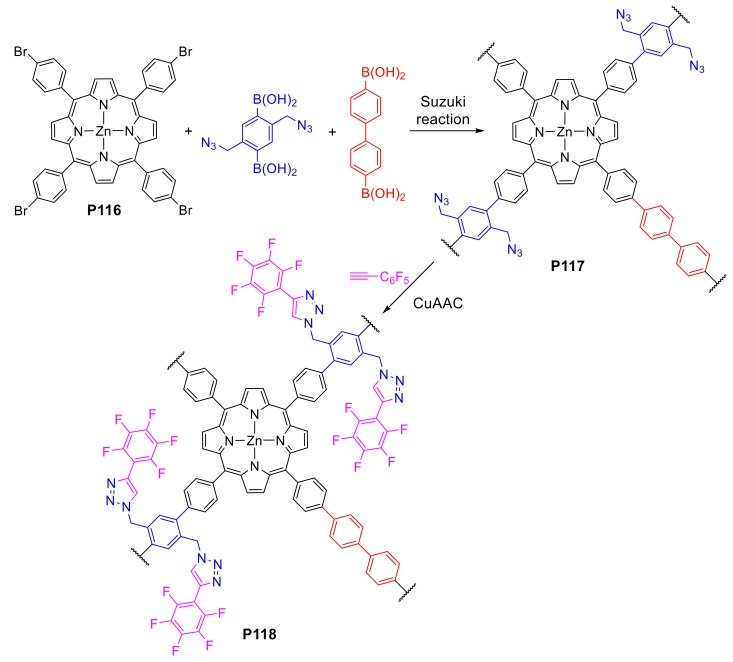
Scheme 40
Synthesis of fluoride functionalized conjugated microporous polymers.
Figure 10
Figure 10
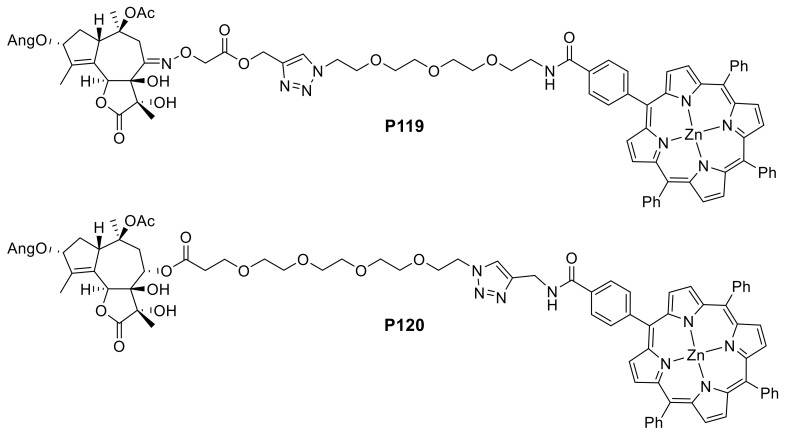
Structures of trilobolide-porphyrin conjugates.
Scheme 41
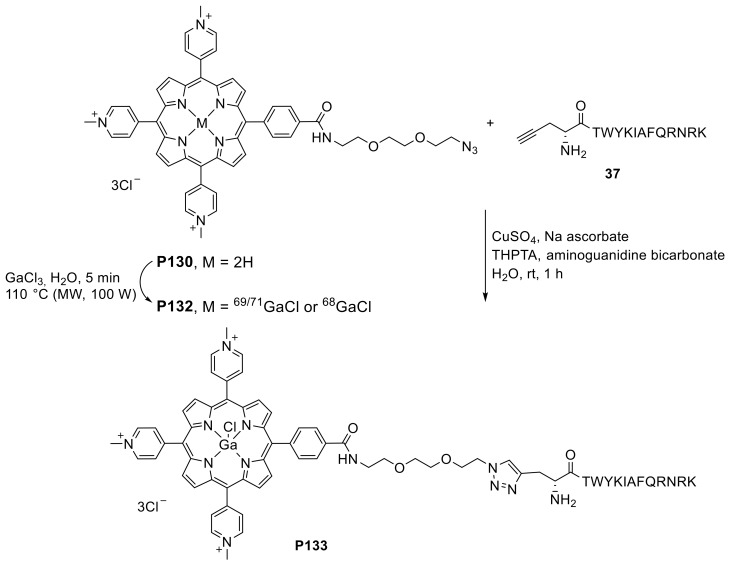
Scheme 41
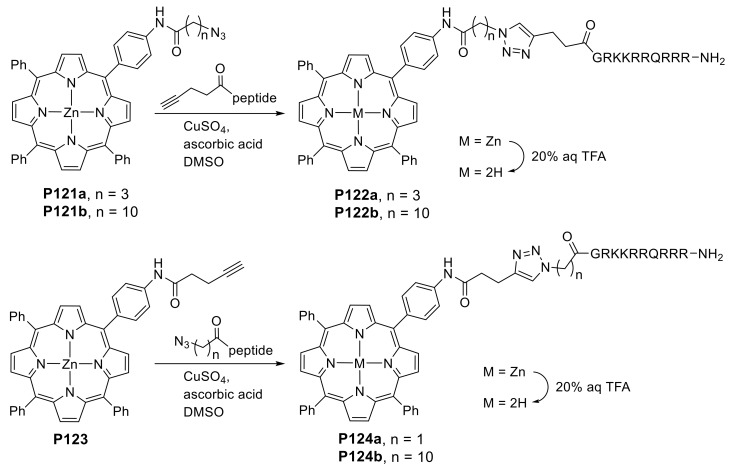
Synthesis of cell-penetrating peptide-porphyrin conjugates.
Scheme 42
Scheme 42
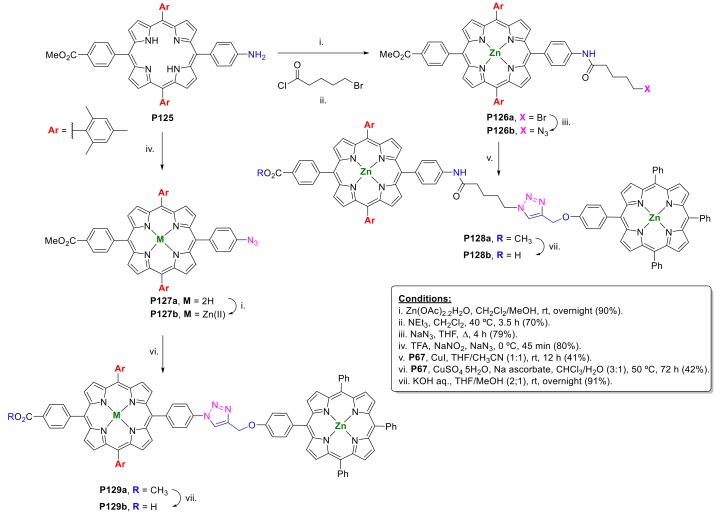
Synthetic approach to porphyrin-based dyads P128 and P129 bearing triazolyl bridge.
Scheme 43
Scheme 43
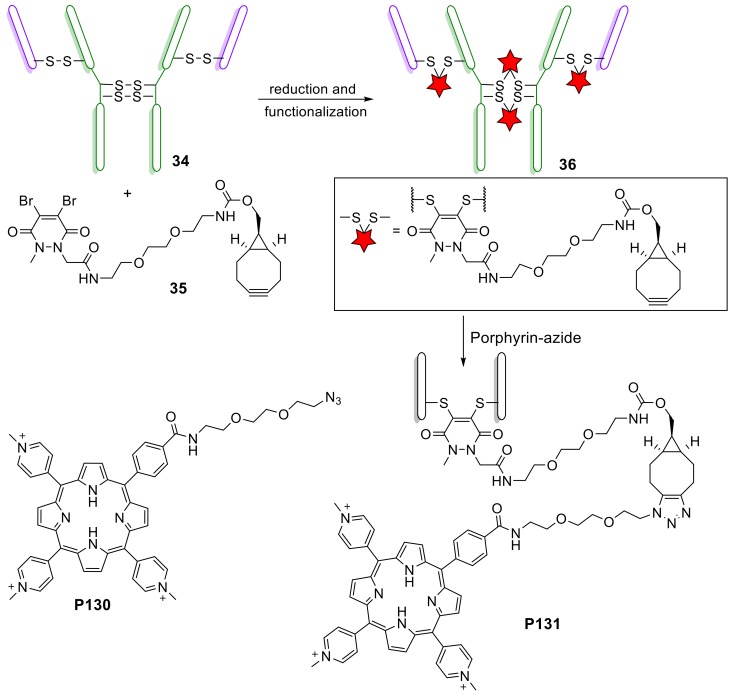
Synthesis of a trastuzumab-porphyrin conjugate.
Scheme 44
Scheme 44
Synthesis of a radiolabeled peptide-porphyrin derivative.
Scheme 45
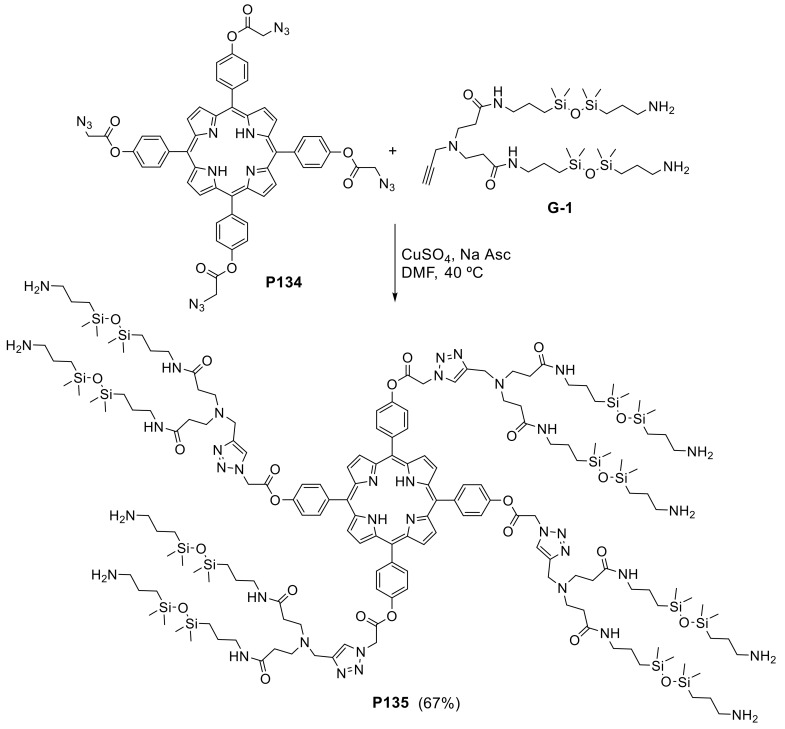
Scheme 45
Synthesis of porphyrin-cored dendrimers containing siloxane-poly(amidoamine) dendron-like arms (shown G-1 only).
Figure 11
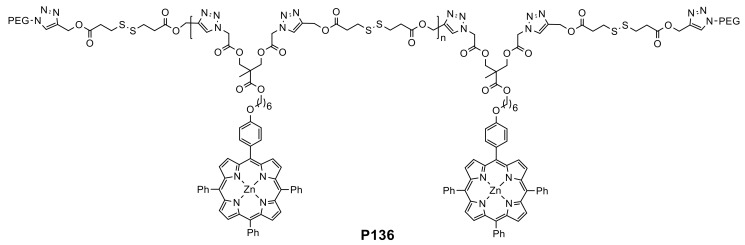
Figure 11
Structure of the PEG-terminated ZnTPPC6-based polymer.
Scheme 46
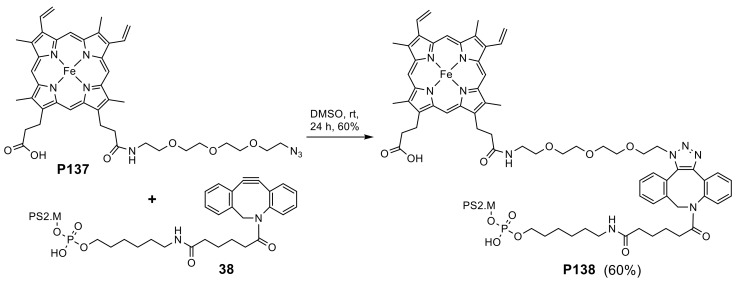
Scheme 46
Synthesis of a PS2.M-hemin conjugate.
Figure 12
Figure 12
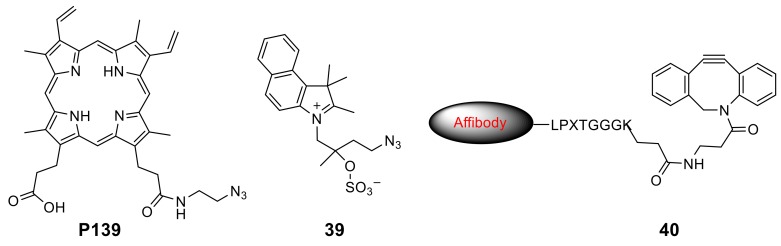
Structures of the azide-dyes and alkyne-affibody used for the preparation of affibody-conjugated nanoclusters.
Scheme 47
Scheme 47
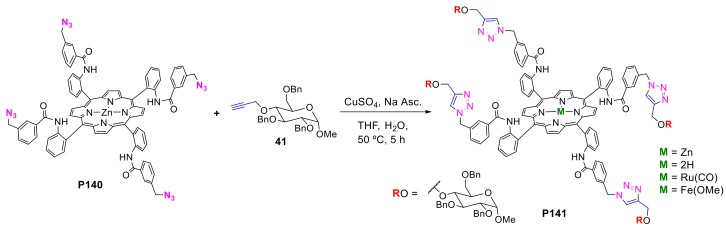
Synthesis of glycoporphyrins used as catalysts in cyclopropanation and aziridination reactions.
Scheme 48
Scheme 48
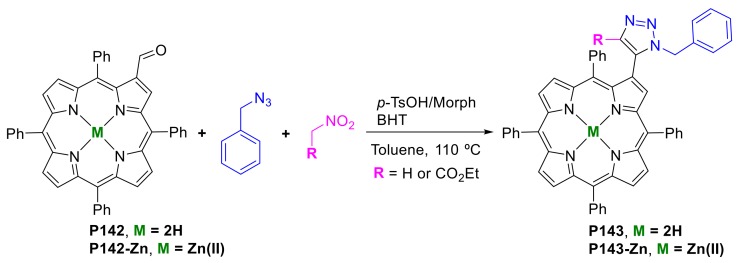
One-pot synthesis of 2-(1,4,5-trisubstituted-1,2,3-triazolyl)porphyrin derivative P143.
Scheme 49
Scheme 49
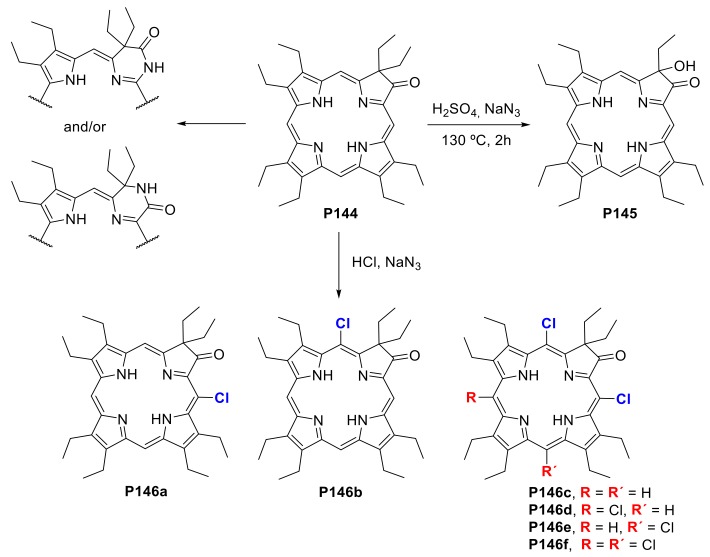
Products resulting from the sodium azide acidic treatment of oxochlorin P144.
Scheme 50
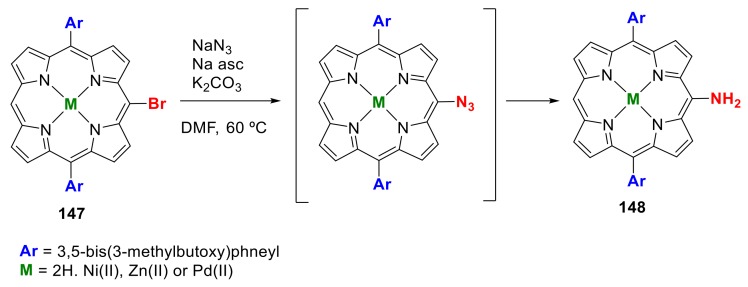
Scheme 50
Preparation of meso-aminoporphyrin P148 by reduction of the corresponding azide intermediate.
Figure 13
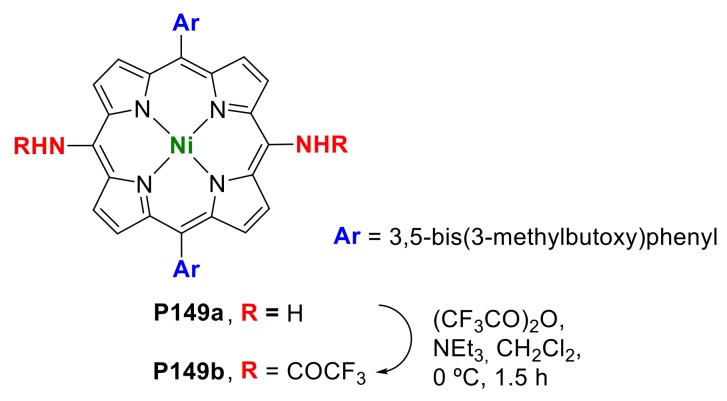
Figure 13
Structures of the Ni(II) complex of meso-substituted diaminoporphyrin P149a and the corresponding bis(trifluoroacetamide) P149b.
Scheme 51
Scheme 51
Synthesis of aziridines catalyzed by iron and ruthenium porphyrin catalysts.
Scheme 52
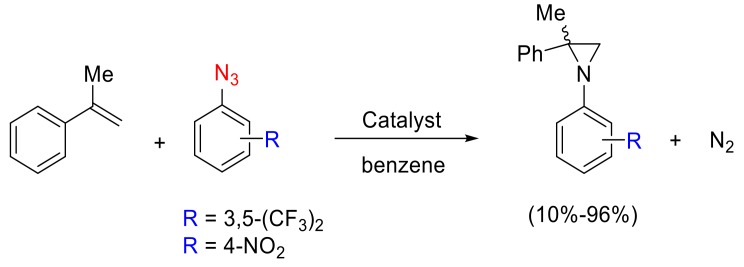
Scheme 52
Aziridination of α-methylstyrene by either 3,5-bis(trifluoromethyl)phenyl azide or 4-nitrophenyl azide catalyzed by cobalt or ruthenium porphyrins.
Scheme 53
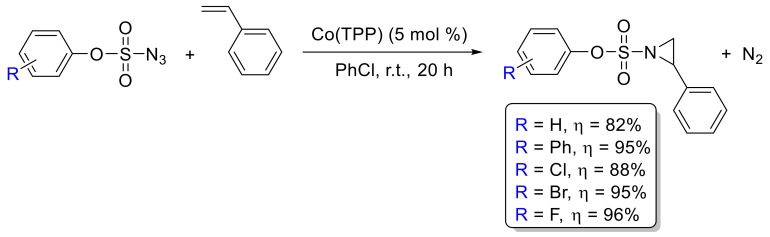
Scheme 53
Aziridination of styrene with arylsulfonyl azides catalyzed by Co(TPP).
Scheme 54
Scheme 54
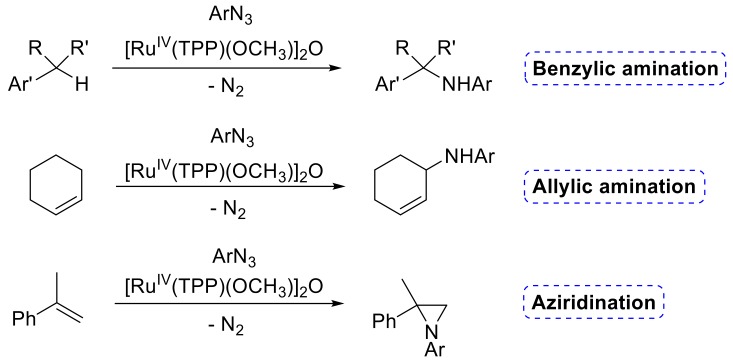
Nitrene transfer reactions catalyzed by [RuIV(TPP)(OCH3)]2O.
Scheme 55
Scheme 55
Synthesis of 1,4-disubstituted 1,2,3-triazoles in the presence of the heterogeneous catalyst (GO-CuPPh).
Scheme 56
Scheme 56
Schematic representation of the azide-alkyne click reactions catalyzed by the heterogeneous porphyrin-MOF catalysts.
Figure 14
Figure 14
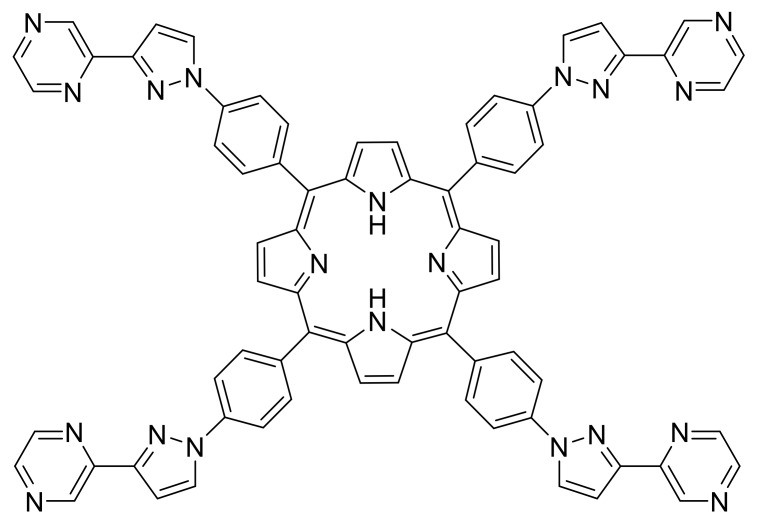
Structure of 5,10,15,20-tetrakis(4-(3-(pyrazin-2-yl)-1H-pyrazo-1-yl)phenyl)porphyrin (H2TPPP).
Scheme 57
Scheme 57
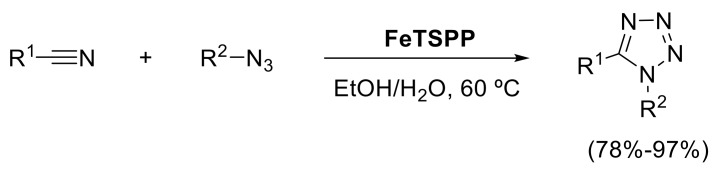
Synthesis of tetrazole derivatives in the presence of the water-soluble FeTSPP catalyst.
Figure 15
Figure 15
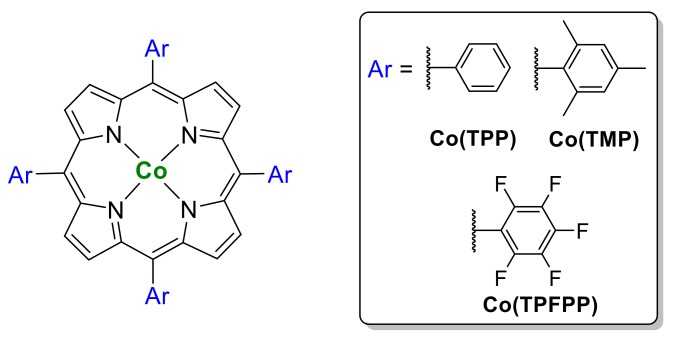
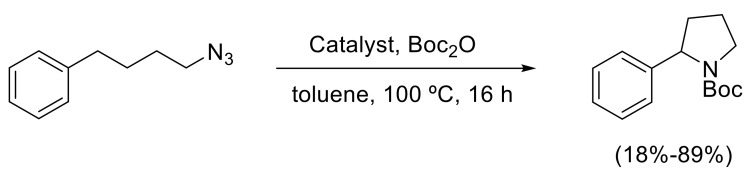
Cobalt(II) complexes used in the intramolecular ring-closing C-H bond amination study: cobalt(II) meso-tetraphenylporphyrin Co(TPP); cobalt(II) meso-tetrakis(pentafluorophenyl)porphyrin Co(TPFPP); cobalt(II) meso-tetramesitylporphyrin Co(TMP).
Scheme 58
Scheme 58
Catalytic intramolecular ring-closing C-H bond amination starting from (4-azidobutyl)benzene as substrate with formation of the corresponding pyrrolidine.
Scheme 59
Scheme 59
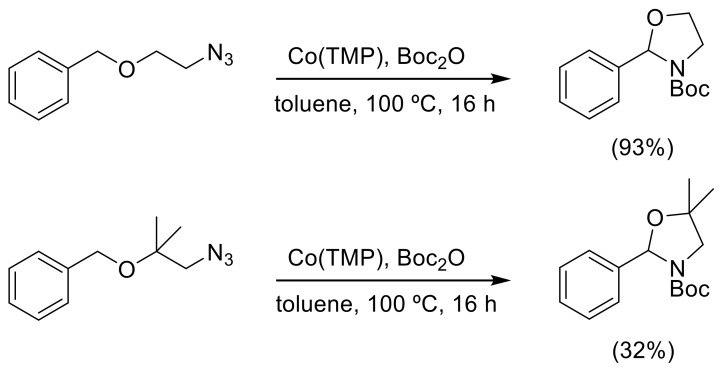
Catalytic formation of oxazolidines.
Scheme 60
Scheme 60
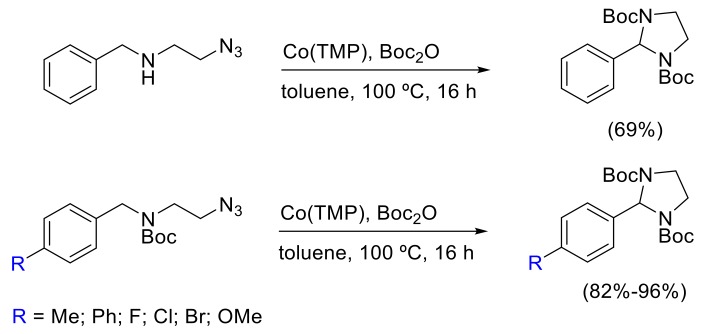
Catalytic formation of imidazolidines.
Scheme 61
Scheme 61
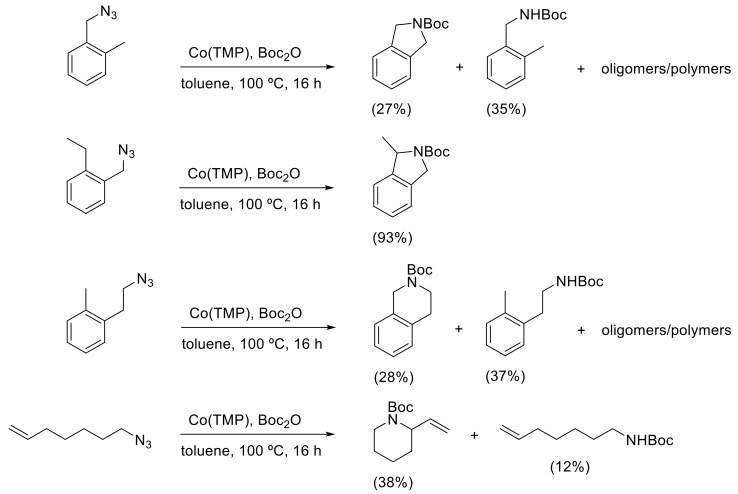
Application of the Co(TMP) catalyzed intramolecular ring-closing C-H bond amination reaction for the synthesis of other heterocycles.
Scheme 62
Scheme 62
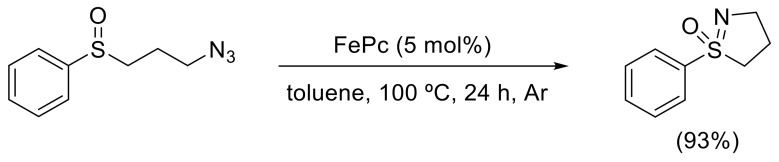
FePc catalyzed intramolecular imidation of (3-azidopropyl)sulfinylbenzene.
Scheme 63
Scheme 63
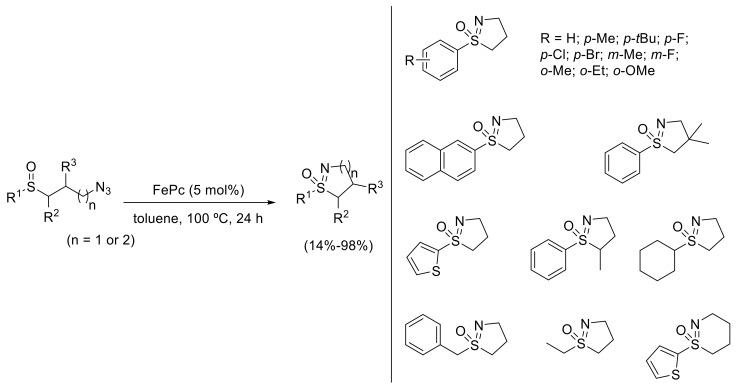
FePc catalyzed intramolecular imidation of several 3-azidosulfoxides and one 4-azidosulfoxide.
Scheme 64
Scheme 64
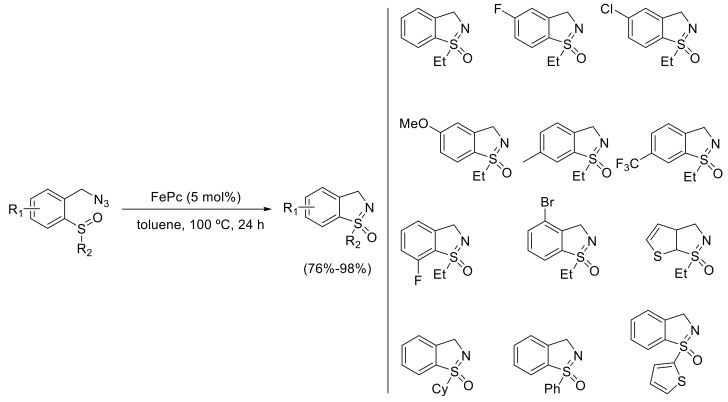
FePc catalyzed intramolecular imidation providing several benzo[d]isothiazole 1-oxides.
Scheme 65
Scheme 65
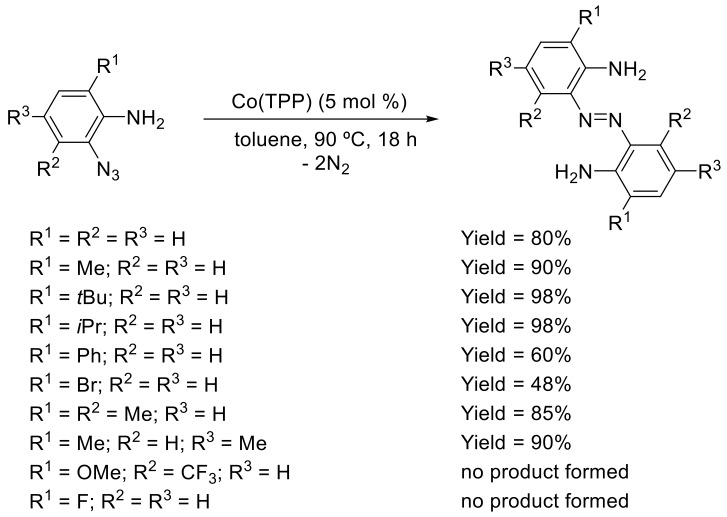
Synthesis of o-aminoazobenzenes catalyzed by the commercially available Co(TPP).
Scheme 66
Scheme 66
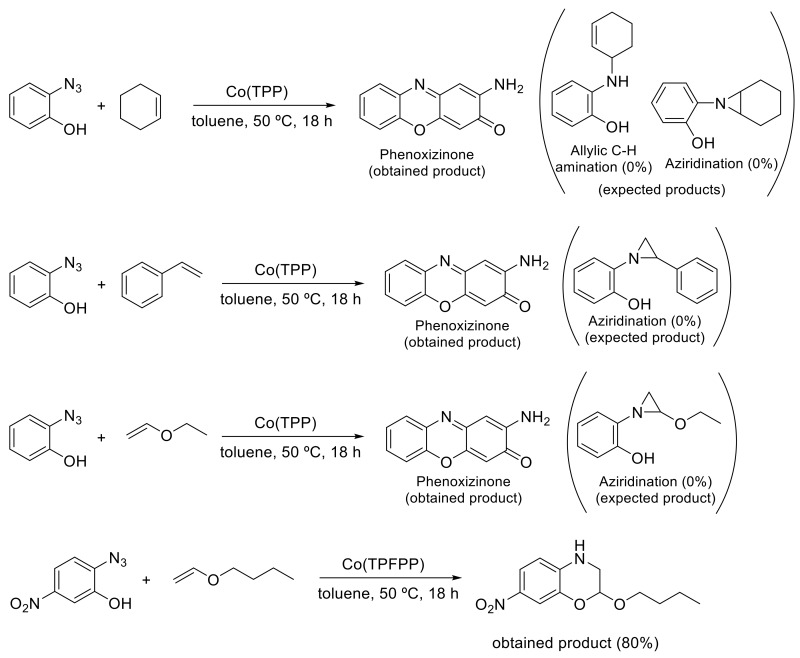
Formation of phenoxyzinone instead of benzoxazine from o-azidophenol in the presence of Co(TPP).
Scheme 67
Scheme 67
Formation of phenoxyzinone from o-azidophenol in the presence of alkenes and catalyzed by cobalt porphyrins.
Figure 16
Figure 16
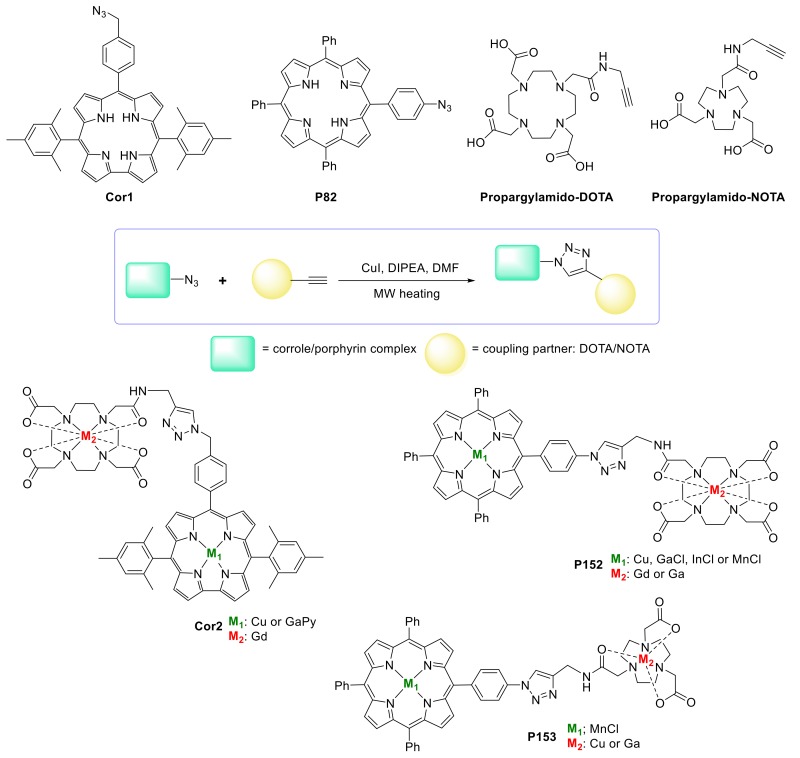
Structure of the heterobimetallic complexes Cor2, P152 and P153, and of the free-base precursors used in their construction.
Scheme 68
Scheme 68
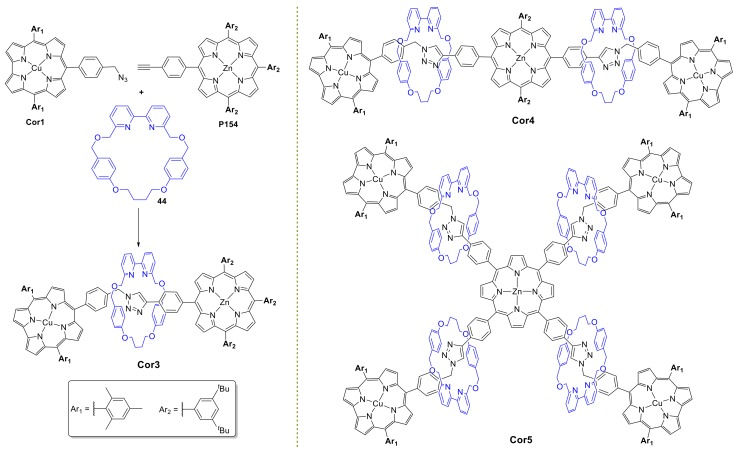
Strategy used to obtain porphyrin-corrole dyad Cor3 and structures of the [3]rotaxane Cor4 and [5]rotaxane Cor5.
Scheme 69
Scheme 69
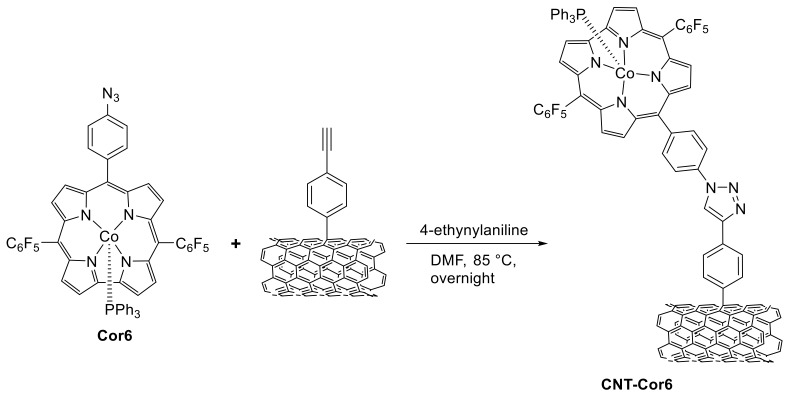
Synthetic strategy used to attach Cor6 to carbon nanotubes.

References

    1. Griess J.P.X.X. On a new class of compounds in which nitrogen is substituted for hydrogen. Proc. R. Soc. Lond. 1864;13:375–384.
    1. Curtius T. Ueber Stickstoffwasserstoffsäure (Azoimid) N3H. Ber. Dtsch. Chem. Ges. 1890;23:3023–3033. doi: 10.1002/cber.189002302232. - DOI
    1. Lerner L. Small-Scale Synthesis of Laboratory Reagents with Reaction Modeling. 1st ed. CRC Press; Boca Raton, FL, USA: 2011.
    1. Pinho e Melo T.M.V.D. Synthesis of Azides. In: Bräse S., Banert K., editors. Organic Azides: Syntheses and Applications. John Wiley & Sons, Ltd; Chichester, UK: 2009. pp. 53–94.
    1. Schilling C., Jung N., Bräse S. Cycloaddition Reactions with Azides: An Overview. In: Bräse S., Banert K., editors. Organic Azides: Syntheses and Applications. John Wiley & Sons, Ltd; Chichester, UK: 2009. pp. 269–284.

LinkOut - more resources