


When gratitude and cooperation between friends affect inter-brain connectivity for EEG
- PMID: 32264825
- PMCID: PMC7137181
- DOI: 10.1186/s12868-020-00563-7
When gratitude and cooperation between friends affect inter-brain connectivity for EEG
Abstract
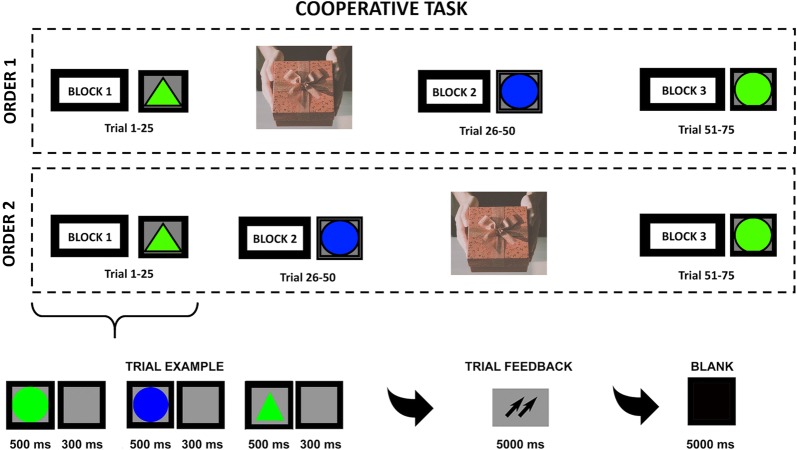
Background: Recently several studies in the psychological and social field have investigated the social function of gift exchange as a useful way for the consolidation of interpersonal and social relationships and the implementation of prosocial behaviors. Specifically, the present research wanted to explore if gift exchange, increased emotional sharing, gratitude and interpersonal cooperation, leading to an improvement in cognitive and behavioral performance. In this regard, neural connectivity and cognitive performance of 14 pairs of friends were recorded during the development of a joint attention task that involved a gift exchange at the beginning or halfway through the task. The moment of gift exchange was randomized within the pairs: for seven couples, it happened at task beginning, for the remaining seven later. Individuals' simultaneous brain activity was recorded through the use of two electroencephalograms (EEG) systems that were used in hyperscanning.
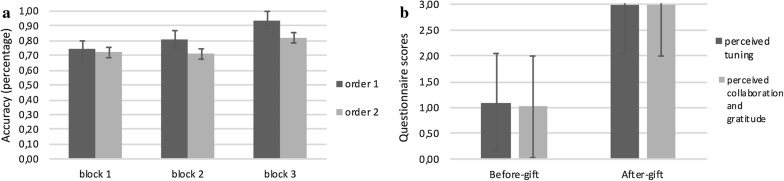
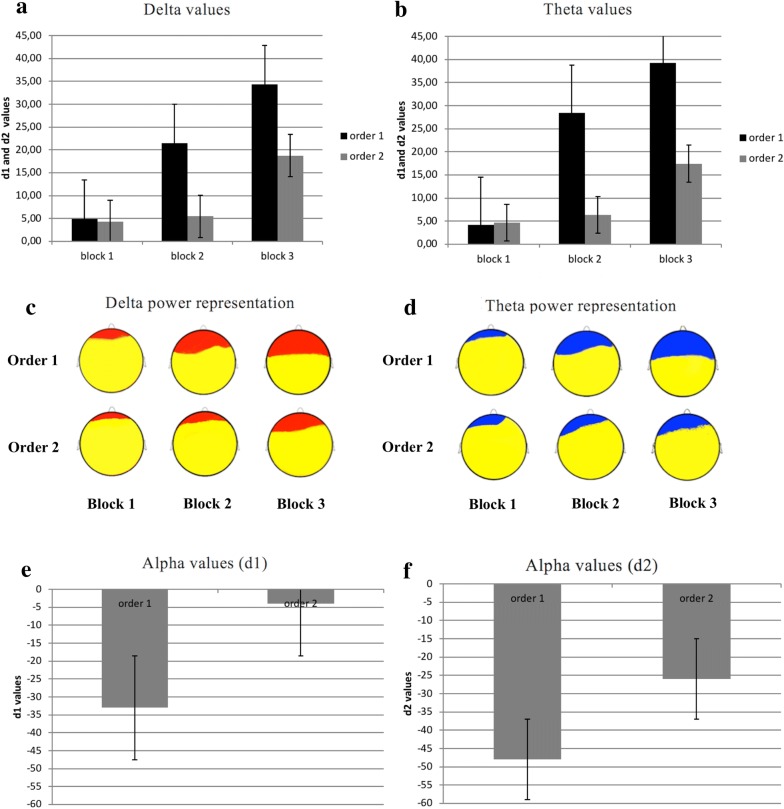
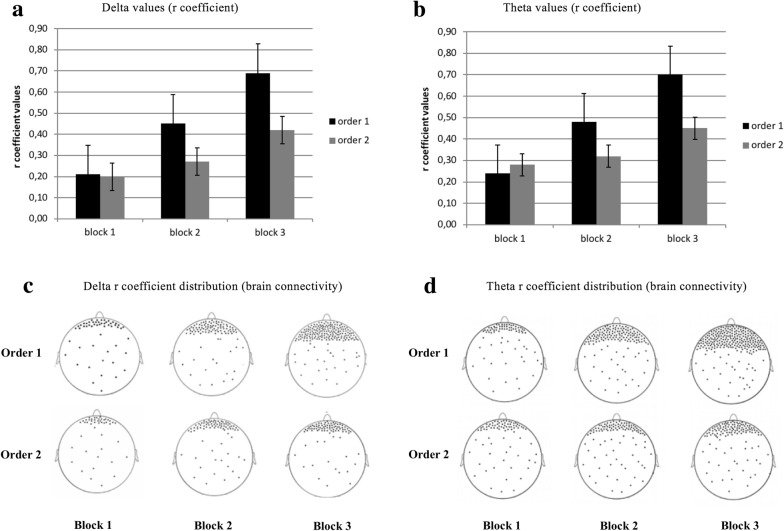
Results: The results showed that after gift exchange there was an improvement in behavioral performance in terms of accuracy. For what concerns EEG, instead, an increase of delta and theta activation was observed in the dorsolateral prefrontal cortex (DLPFC) when gift exchange occurred at the beginning of the task. Furthermore, an increase in neural connectivity for delta and theta bands was observed.
Conclusion: The present research provides a significant contribution to the exploration of the factors contributing to the strengthening of social bonds, increasing cooperation, gratitude and prosocial behavior.
Keywords: Cooperation; DLPFC; EEG; Emotions; Gratitude; Inter-brain connectivity.
Conflict of interest statement
The authors declare that they have no competing interests.
Figures
References
-
- Belk RW, Coon GS. Gift giving as agapic love: an alternative to the exchange paradigm based on dating experiences. J Consum Res. 1993;20:393–417. doi: 10.1086/209357. - DOI
-
- Mick DG, Faure C. Consumer self-gifts in achievement contexts: the role of outcomes, attributions, emotions, and deservingness. Int J Res Mark. 1998;15:293–307. doi: 10.1016/S0167-8116(98)00006-8. - DOI
-
- Binmore K. Why do people cooperate? Polit Philos Econ. 2006;5:81–96. doi: 10.1177/1470594X06060620. - DOI
-
- Lawler EJ, Yoon J. Commitment in exchange relations: test of a theory of relational cohesion. Am Sociol Rev. 1996;1:89–108. doi: 10.2307/2096408. - DOI
-
- Molm LD, Collett JL, Schaefer DR. Building solidarity through generalized exchange: a theory of reciprocity. Am J Sociol. 2007;113:205–242. doi: 10.1086/517900. - DOI
