


Autoimmune polyglandular syndrome type 2 and autoimmune hepatitis with thymoma-associated myasthenia gravis: case report
- PMID: 32264857
- PMCID: PMC7140544
- DOI: 10.1186/s12902-020-0498-5
Autoimmune polyglandular syndrome type 2 and autoimmune hepatitis with thymoma-associated myasthenia gravis: case report
Abstract
Background: Autoimmune polyglandular syndrome type 2 (APS-2) is a rare and complex clinical entity, and little is known about its etiology and progression.
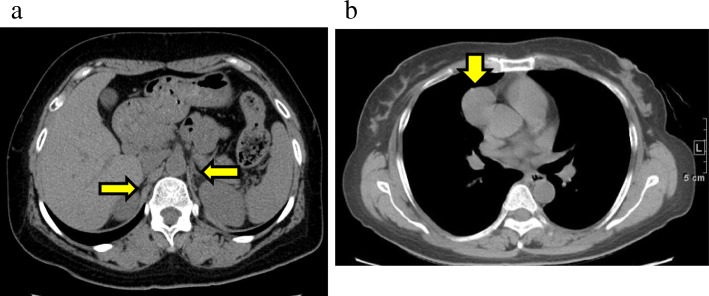
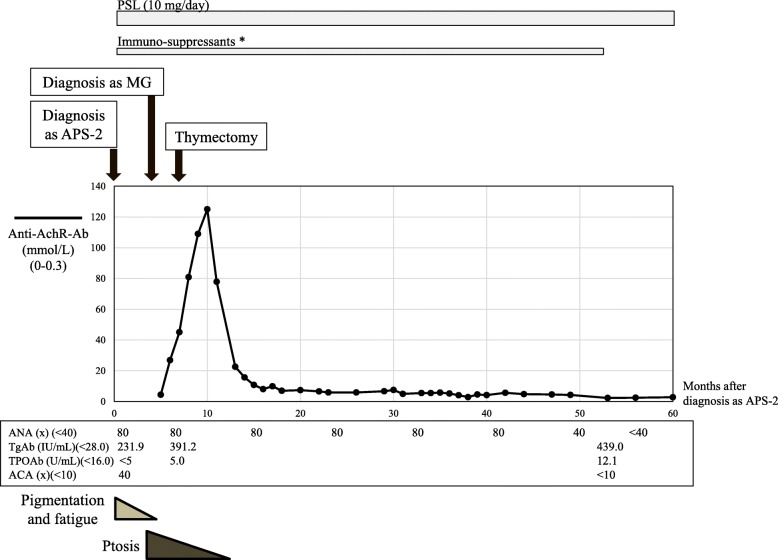
Case presentation: A 52-year-old woman with autoimmune hepatitis (AIH) and bronchial asthma was diagnosed with APS-2; autoimmune Addison's disease (AD), and Hashimoto's thyroiditis (HT), and she underwent prednisolone (PSL) treatment. Five months later, she presented ptosis and was diagnosed with thymoma-associated myasthenia gravis (MG). Thymectomy and PSL treatment with immuno-suppressants appeared to ameliorate MG, AD, AIH, HT, and bronchial asthma. HLA typing analysis revealed that the patient had susceptible HLA alleles to MG, AIH, and HT in a Japanese population.
Conclusions: This case suggests common endocrinological and autoimmune aspects of APS-2 and AIH with thymoma-associated MG, which are considered to be extremely rare complications.
Keywords: Autoimmune Addison’s disease; Autoimmune hepatitis; Autoimmune polyglandular syndrome type 2 (APS-2); Bronchial asthma; Hashimoto’s thyroiditis; Thymoma-associated myasthenia gravis.
Conflict of interest statement
All authors (HIN, HA, HIK, CK, YU, SU, KT, YF, SM, YNY, TO, HIT, YNM, and TA) have no competing interests.
Figures
References
-
- Asakawa H, Kashihara T, Fukuda H, Yamamoto M. A patient with thymoma and four different organ-specific autoimmune diseases. Neth J MedNeth J Med. 2002;60:292–295. - PubMed
Publication types
MeSH terms
LinkOut - more resources
Full Text Sources
Medical
Research Materials
Miscellaneous
