


No association between three polymorphisms (rs1800629, rs361525 and rs1799724) in the tumor necrosis factor-α gene and susceptibility to prostate cancer: a comprehensive meta-analysis
- PMID: 32264962
- PMCID: PMC7137332
- DOI: 10.1186/s41065-020-00125-1
No association between three polymorphisms (rs1800629, rs361525 and rs1799724) in the tumor necrosis factor-α gene and susceptibility to prostate cancer: a comprehensive meta-analysis
Abstract
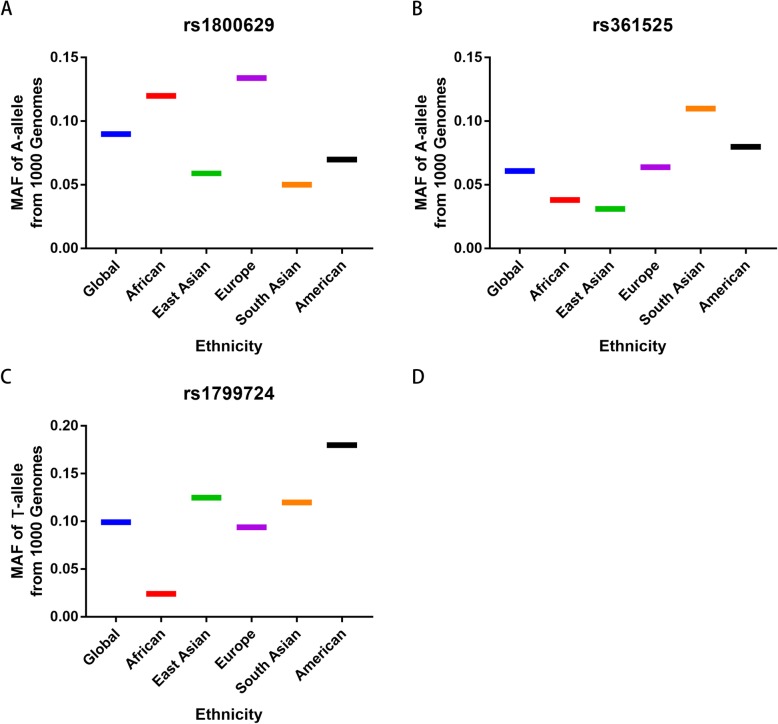
Background: Inflammation is one of the factors associated with prostate cancer. The cytokine tumor necrosis factor-alpha (TNF-α) plays an important role in inflammation. Several studies have focused on the association between TNF-α polymorphisms and prostate cancer development. Our meta-analysis aimed to estimate the association between TNF-α rs1800629 (- 308 G/A), rs361525 (- 238 G/A) and rs1799724 polymorphisms and prostate cancer risk.
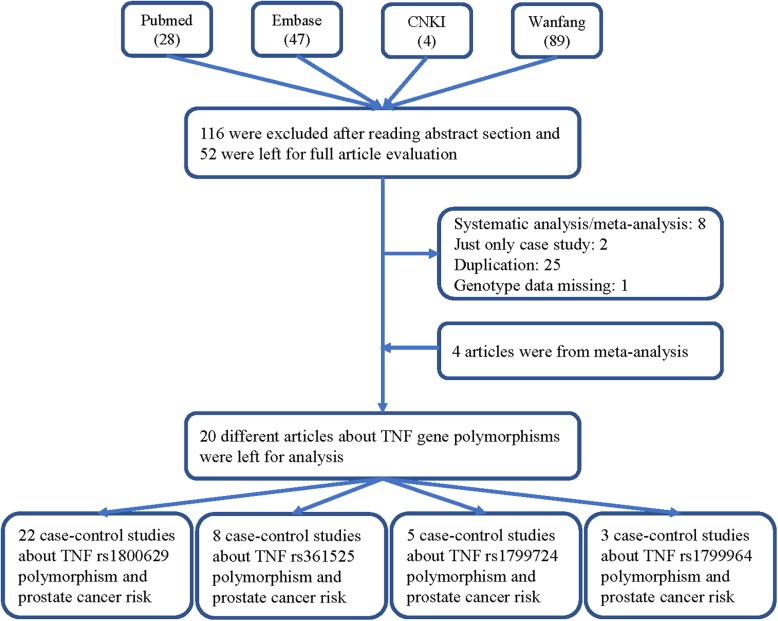
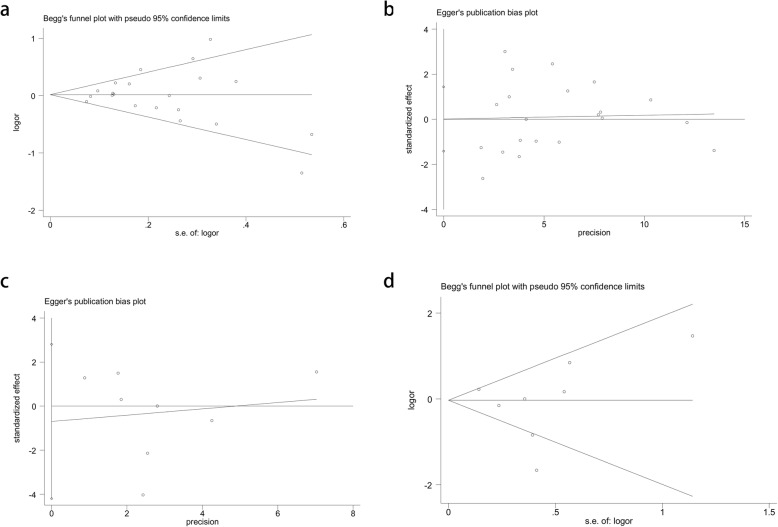
Methods: Eligible studies were identified from electronic databases (PubMed, Embase, Wanfang and CNKI) using keywords: TNF-α, polymorphism, prostate cancer, until Nov 15, 2019. Odds ratios (ORs) with 95% confidence intervals (CIs) were applied to determine the association from a quantitative point-of-view. Publication bias and sensitivity analysis were also applied to evaluate the power of current study. All statistical analyses were done with Stata 11.0 software.
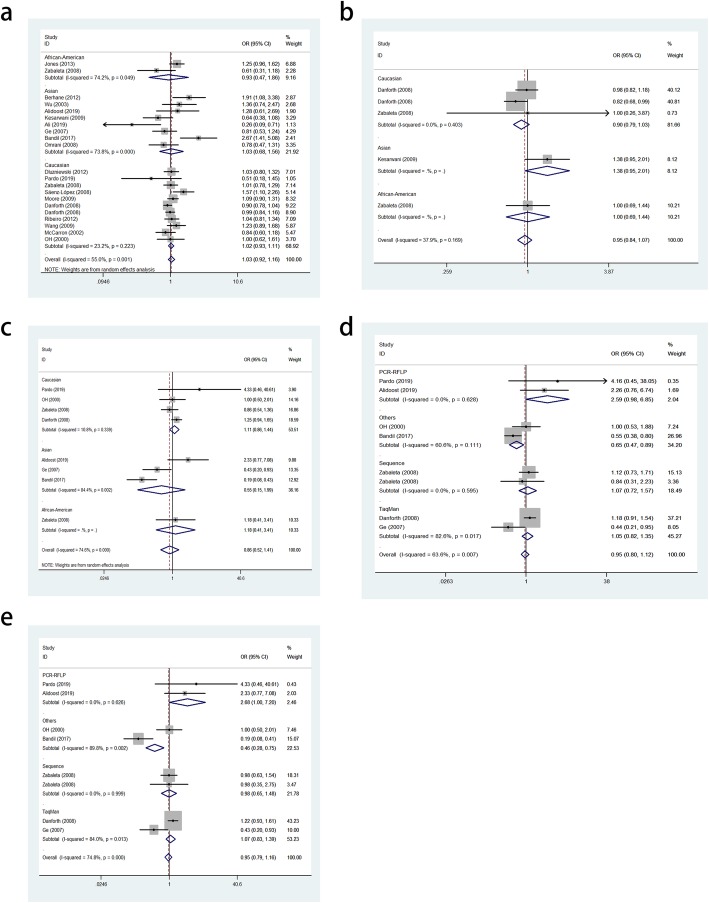
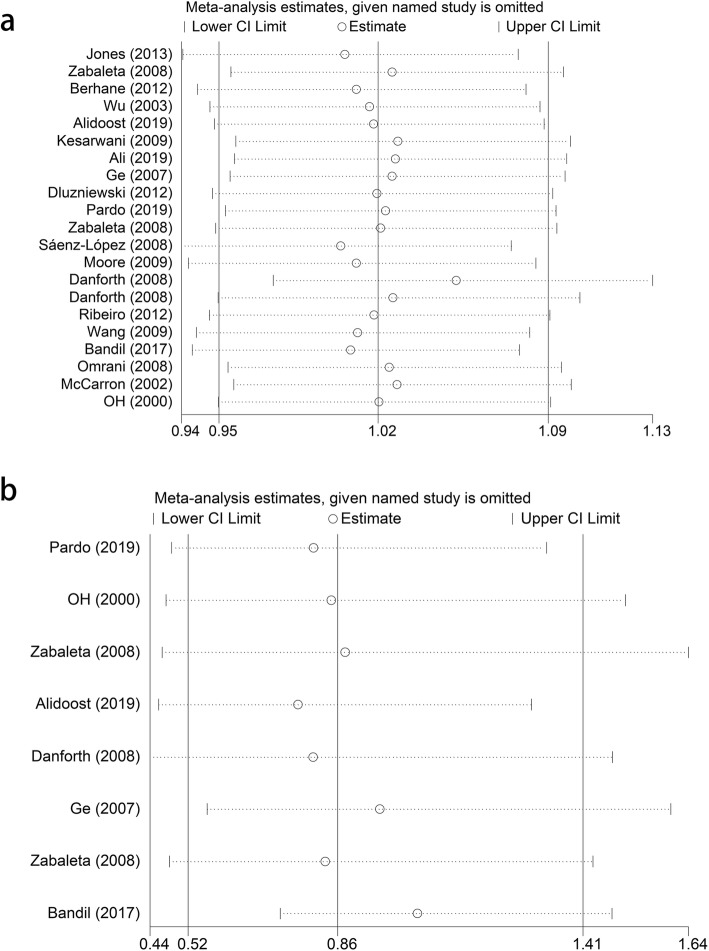
Results: Twenty-two different articles were included (22 studies about rs1800629; 8 studies for rs361525 and 5 studies related to rs1799724). Overall, no significant association was found between rs1800629 and rs1799724 polymorphisms and the risk of prostate cancer in the whole (such as: OR = 1.03, 95% CI = 0.92-1.16, P = 0.580 in the allele for rs1800629; OR = 0.95, 95% CI = 0.84-1.07, P = 0.381 in the allele for rs1799724). The rs361525 polymorphism also had no association with prostate cancer in the cases (OR = 0.93, 95% CI = 0.66-1.32, P = 0.684 in the allele) and ethnicity subgroup. The stratified subgroup of genotype method, however, revealed that the rs361525 variant significantly decreased the risk of prostate cancer in the Others (OR = 0.65, 95% CI = 0.47-0.89, P = 0.008, A-allele vs G-allele) and PCR-RFLP (OR = 2.68, 95% CI = 1.00-7.20, P = 0.050, AG vs GG or AA+AG vs GG) methods.
Conclusions: In summary, the findings of the current meta-analysis indicate that the TNF-α rs1800629, rs361525 and rs1799724 polymorphisms are not correlated with prostate cancer development, although there were some pooled positive results. Further well-designed studies are necessary to form more precise conclusions.
Keywords: Meta-analysis; Polymorphism; Prostate cancer; Susceptibility; Tumor necrosis factor-alpha.
Conflict of interest statement
The authors declare that they have no competing interests.
Figures
References
-
- Ferlay EM, Lam F, Colombet M. Global Cancer Observatory: Cancer Today. Lyon: International Agency for Research on Cancer; 2019.
-
- Panigrahi GK, Praharaj PP, Kittaka H, Mridha AR, Black OM, Singh R, Mercer R, van Bokhoven A, Torkko KC, Agarwal C, et al. Exosome proteomic analyses identify inflammatory phenotype and novel biomarkers in African American prostate cancer patients. Cancer Med. 2019;8(3):1110–1123. doi: 10.1002/cam4.1885. - DOI - PMC - PubMed
Publication types
MeSH terms
LinkOut - more resources
Full Text Sources
Medical
