


Systematic review of gender differences in the epidemiology and risk factors of exertional heat illness and heat tolerance in the armed forces
- PMID: 32265238
- PMCID: PMC7245403
- DOI: 10.1136/bmjopen-2019-031825
Systematic review of gender differences in the epidemiology and risk factors of exertional heat illness and heat tolerance in the armed forces
Abstract
Objectives: This review aimed to describe the epidemiology of all heat-related illnesses in women compared with men in the armed forces and to identify gender-specific risk factors and differences in heat tolerance.
Design: A systematic review of multiple databases (MEDLINE, Emcare, CINAHL, PsycINFO, Informit and Scopus) was conducted from the inception of the databases to 1 April 2019 using the preferred reporting items for systematic review and meta-analysis guidelines.
Eligibility criteria: All relevant studies investigating and comparing heat illness and heat tolerance in women and men in the armed forces were included in the review.
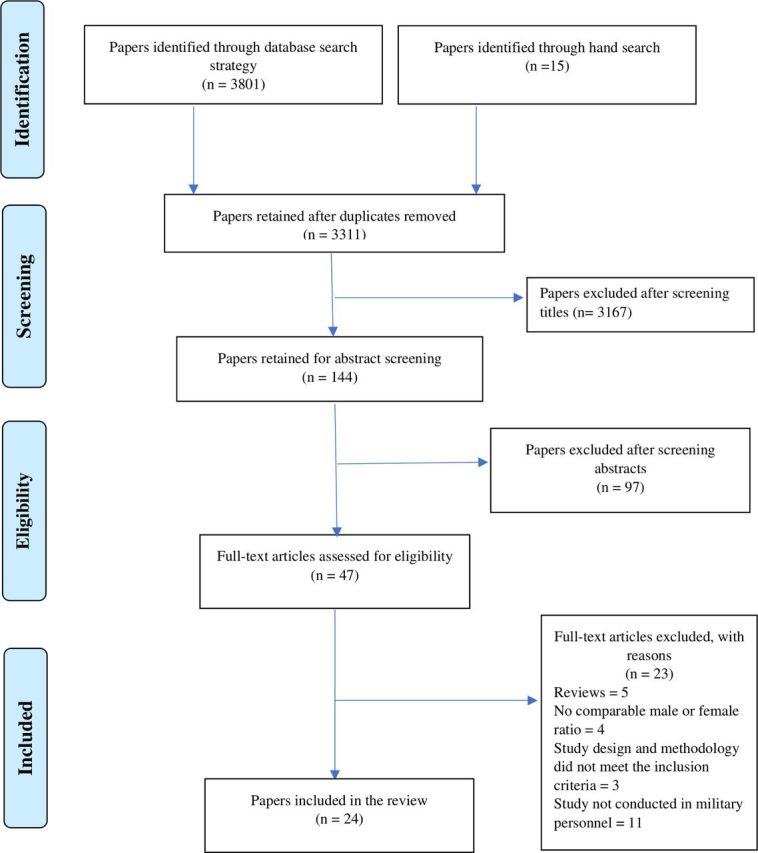
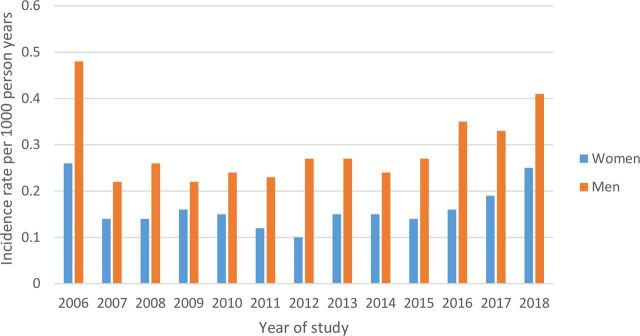
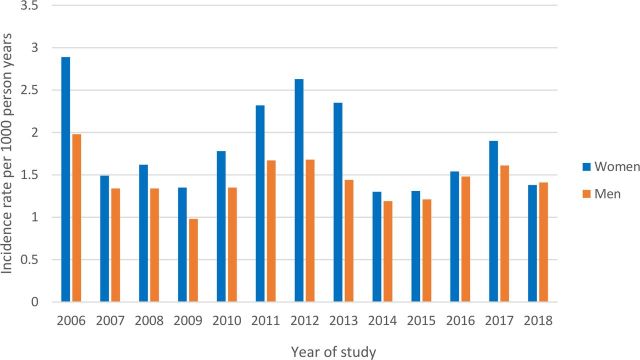
Results: Twenty-four studies were included in the systematic review. The incidence of heat stroke in women ranged from 0.10 to 0.26 per 1000 person-years, while the incidence of heat stroke ranged from 0.22 to 0.48 per 1000 person-years in men. The incidence of other heat illnesses in women compared with men ranged from 1.30 to 2.89 per 1000 person-years versus 0.98 to 1.98 per 1000 person-years. The limited evidence suggests that women had a greater risk of exertional heat illness compared with men. Other gender-specific risk factors were slower run times and body mass index. Although there was a higher proportion of women who were heat intolerant compared with men, this finding needs to be interpreted with caution due to the limited evidence.
Conclusion: The findings of this review suggest that men experienced a slightly higher incidence of heat stroke than women in the armed forces. In addition, the limited available evidence suggests that a higher proportion of women were heat intolerant and being a female was associated with a greater risk of exertional heat illnesses. Given the limited evidence available, further research is required to investigate the influence of gender differences on heat intolerance and heat illness.
Keywords: accident & emergency medicine; armed forces; heat stroke; occupational & industrial medicine; women.
© Author(s) (or their employer(s)) 2020. Re-use permitted under CC BY-NC. No commercial re-use. See rights and permissions. Published by BMJ.
Conflict of interest statement
Competing interests: None declared.
Figures
References
-
- Becker JA, Stewart LK. Heat-related illness. Am Fam Phys 2011;83:1325–30. - PubMed
-
- Epstein Y. Heat intolerance: predisposing factor or residual injury? Med Sci Sports Exerc 1990;22:29–35. - PubMed
-
- Grubenhoff JA, du Ford K, Roosevelt GE. Heat-related illness. Clin Pediatr Emerg Med 2007;8:59–64. 10.1016/j.cpem.2007.02.006 - DOI
Publication types
MeSH terms
LinkOut - more resources
Full Text Sources
Medical
Miscellaneous
