


The Role of PD-1 in Acute and Chronic Infection
- PMID: 32265932
- PMCID: PMC7105608
- DOI: 10.3389/fimmu.2020.00487
The Role of PD-1 in Acute and Chronic Infection
Abstract
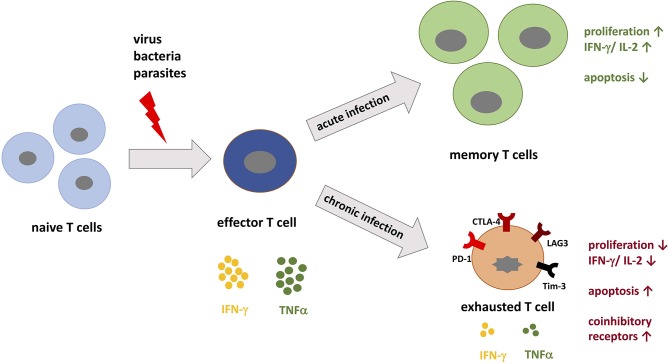
PD-1 as an immune checkpoint molecule down-regulates T cell activity during immune responses in order to prevent autoimmune tissue damage. In chronic infections or tumors, lasting antigen-exposure leads to permanent PD-1 expression that can limit immune-mediated clearance of pathogens or degenerated cells. Blocking PD-1 can enhance T cell function; in cancer treatment PD-1 blockade is already used as a successful therapy. However, the role of PD-1 expression and blocking in the context of acute and chronic infections is less defined. Building on its success in cancer therapy leads to the hypothesis that blocking PD-1 in infectious diseases is also beneficial in acute or chronic infections. This review will focus on the role of PD-1 expression in acute and chronic infections with virus, bacteria, and parasites, with a particular focus on recent studies regarding PD-1 blockade in infectious diseases.
Keywords: PD-1; PD-L1; PD-L2; T cell exhaustion; acute infection; checkpoint inhibitor; chronic infection; infectious disease.
Copyright © 2020 Jubel, Barbati, Burger, Wirtz and Schildberg.
Figures

References
Publication types
MeSH terms
Substances
LinkOut - more resources
Full Text Sources
Other Literature Sources
Research Materials
