


PD-1/PD-L1 pathway: current researches in cancer
- PMID: 32266087
- PMCID: PMC7136921
PD-1/PD-L1 pathway: current researches in cancer
Abstract
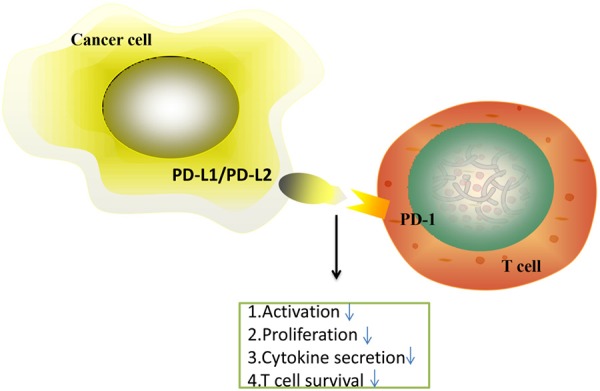
Cancer immunotherapy has been accompanied by promising results over the past few years. Programmed Cell Death Protein 1 (PD-1) plays a vital role in inhibiting immune responses and promoting self-tolerance through modulating the activity of T-cells, activating apoptosis of antigen-specific T cells and inhibiting apoptosis of regulatory T cells. Programmed Cell Death Ligand 1 (PD-L1) is a trans-membrane protein that is considered to be a co-inhibitory factor of the immune response, it can combine with PD-1 to reduce the proliferation of PD-1 positive cells, inhibit their cytokine secretion and induce apoptosis. PD-L1 also plays an important role in various malignancies where it can attenuate the host immune response to tumor cells. Based on these perspectives, PD-1/PD-L1 axis is responsible for cancer immune escape and makes a huge effect on cancer therapy. This review is aimed to summarize the role of PD-1 and PD-L1 in cancer, looking forward to improve the therapy of cancer.
Keywords: PD-1; PD-L1; cancer.
AJCR Copyright © 2020.
Conflict of interest statement
None.
Figures
References
-
- Sameiyan E, Hayes AW, Karimi G. The effect of medicinal plants on multiple drug resistance through autophagy: a review of in vitrostudies. Eur J Pharmacol. 2019;852:244–253. - PubMed
-
- Salmaninejad A, Valilou SF, Shabgah AG, Aslani S, Alimardani M, Pasdar A, Sahebkar A. PD-1/PD-L1 pathway: basic biology and role in cancer immunotherapy. J Cell Physiol. 2019;234:16824–16837. - PubMed
-
- Ljunggren HG, Jonsson R, Hoglund P. Seminal immunologic discoveries with direct clinical implications: the 2018 nobel prize in physiology or medicine honours discoveries in cancer immunotherapy. Scand J Immunol. 2018;88:e12731. - PubMed
Publication types
LinkOut - more resources
Full Text Sources
Other Literature Sources
Research Materials
Miscellaneous