


Investigation of cortisol dynamics in human sweat using a graphene-based wireless mHealth system
- PMID: 32266329
- PMCID: PMC7138219
- DOI: 10.1016/j.matt.2020.01.021
Investigation of cortisol dynamics in human sweat using a graphene-based wireless mHealth system
Abstract
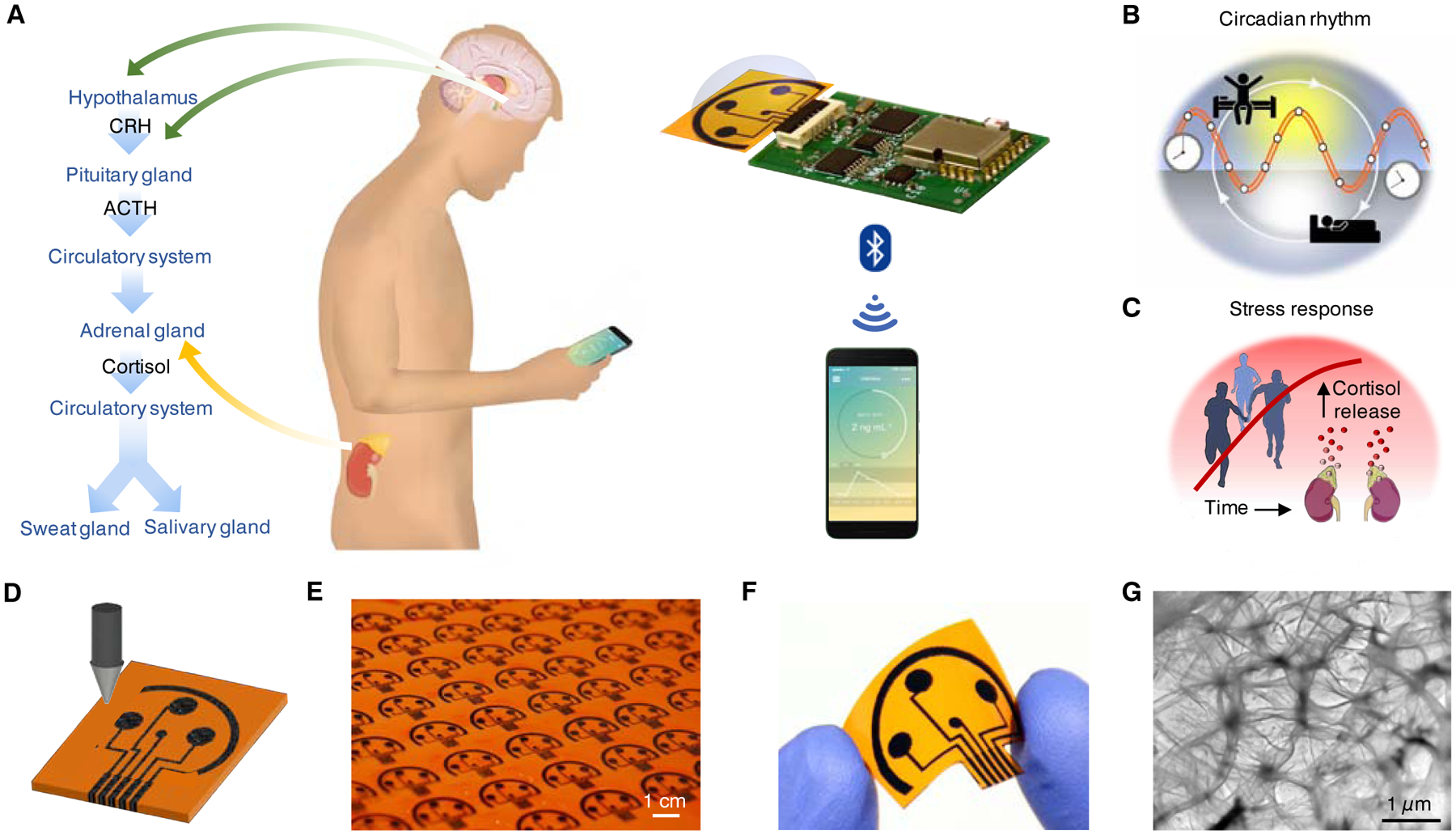
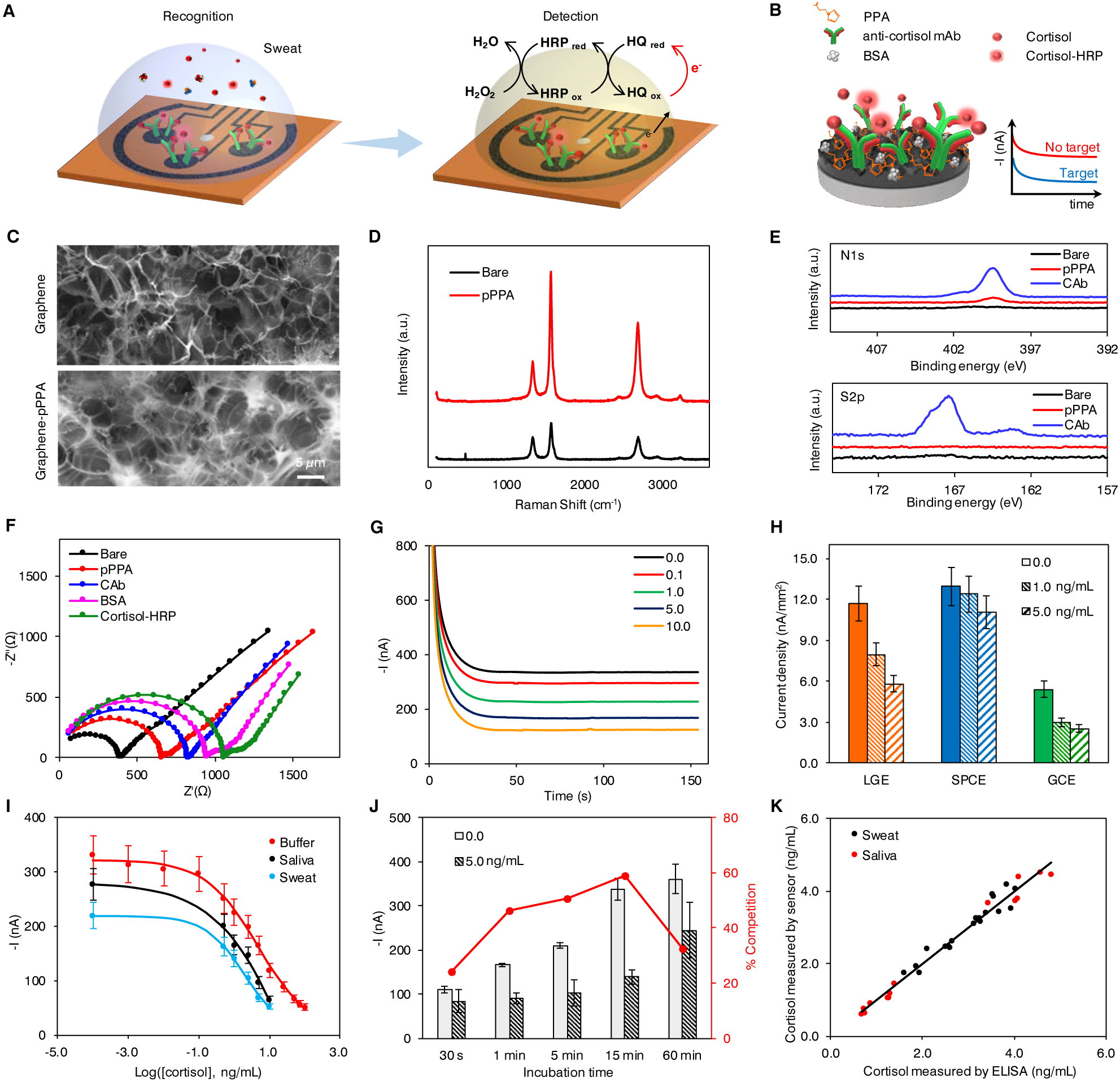
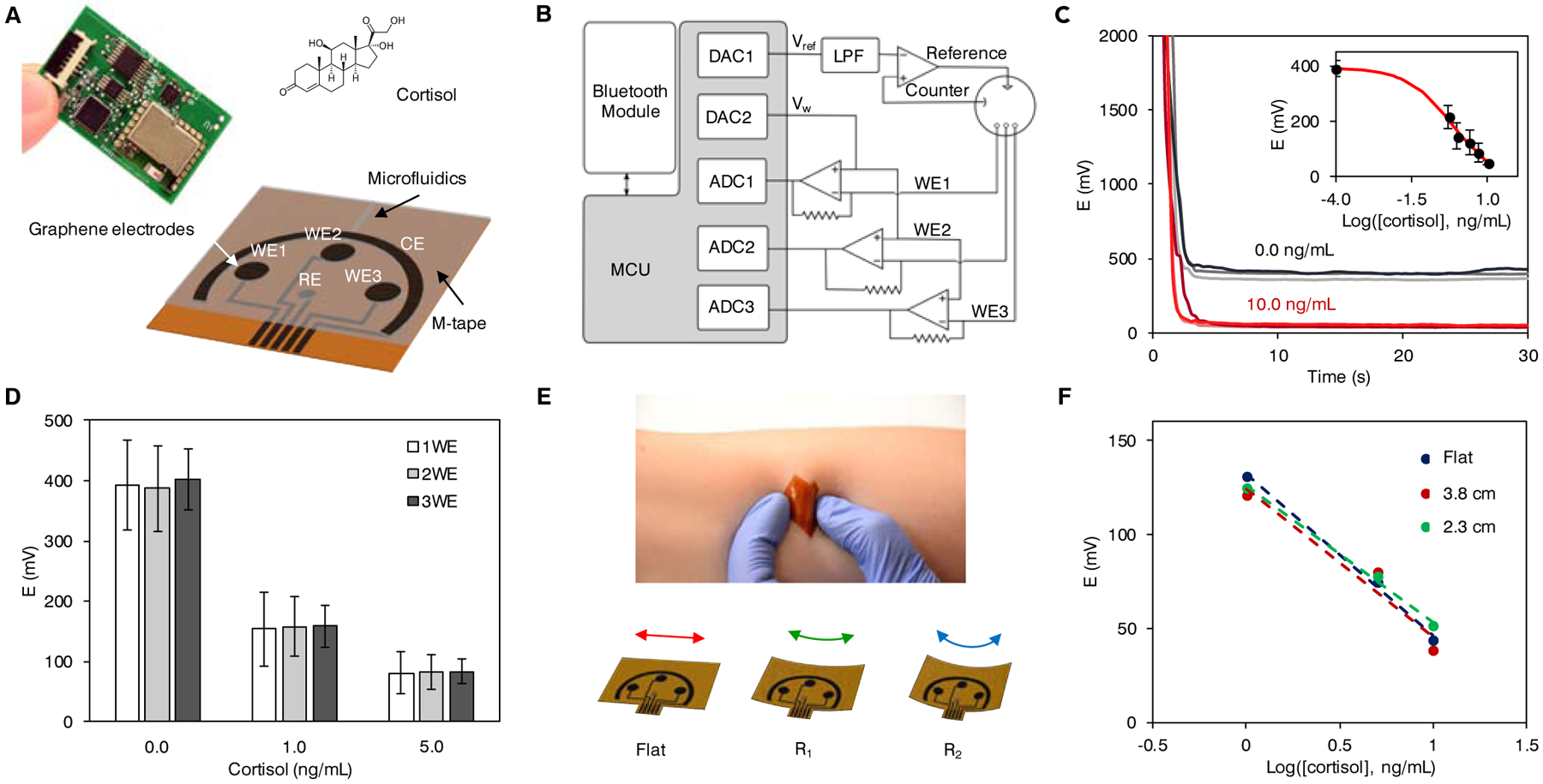
Understanding and assessing endocrine response to stress is crucial to human performance analysis, stress-related disorder diagnosis, and mental health monitoring. Current approaches for stress monitoring are largely based on questionnaires, which could be very subjective. To avoid stress-inducing blood sampling and to realize continuous, non-invasive, and real-time stress analysis at the molecular levels, we investigate the dynamics of a stress hormone, cortisol, in human sweat using an integrated wireless sensing device. Highly sensitive, selective, and efficient cortisol sensing is enabled by a flexible sensor array that exploits the exceptional performance of laser-induced graphene for electrochemical sensing. Herein, we report the first cortisol diurnal cycle and the dynamic stress response profile constructed from human sweat. Our pilot study demonstrates a strong empirical correlation between serum and sweat cortisol, revealing exciting opportunities offered by sweat analysis toward non-invasive dynamic stress monitoring via wearable and portable sensing platforms.
Keywords: cortisol; flexible sensors; graphene; mHealth; stress hormone; stress response; sweat.
Conflict of interest statement
DECLARATION OF INTEREST The authors declare no competing financial interest.
Figures


References
-
- Cohen S, Janicki-Deverts D, and Miller GE (2007). Psychological Stress and Disease. J. Am. Med. Assoc 298, 1685–1687. - PubMed
-
- Nicolson NA and Csikszentmihalyi M, “Stress, coping and cortisol dynamics in daily life,” in The Experience of Psychopathology: Investigating Mental Disorders in their Natural Settings (ed. de Vries MW), 219–232 (Cambridge University Press, 1992)
Grants and funding
LinkOut - more resources
Full Text Sources
Other Literature Sources