


RNA profiling identifies novel, photoperiod-history dependent markers associated with enhanced saltwater performance in juvenile Atlantic salmon
- PMID: 32267864
- PMCID: PMC7141700
- DOI: 10.1371/journal.pone.0227496
RNA profiling identifies novel, photoperiod-history dependent markers associated with enhanced saltwater performance in juvenile Atlantic salmon
Erratum in
-
Correction: RNA profiling identifies novel, photoperiod-history dependent markers associated with enhanced saltwater performance in juvenile Atlantic salmon.PLoS One. 2020 Aug 7;15(8):e0237623. doi: 10.1371/journal.pone.0237623. eCollection 2020. PLoS One. 2020. PMID: 32764821 Free PMC article.
Abstract
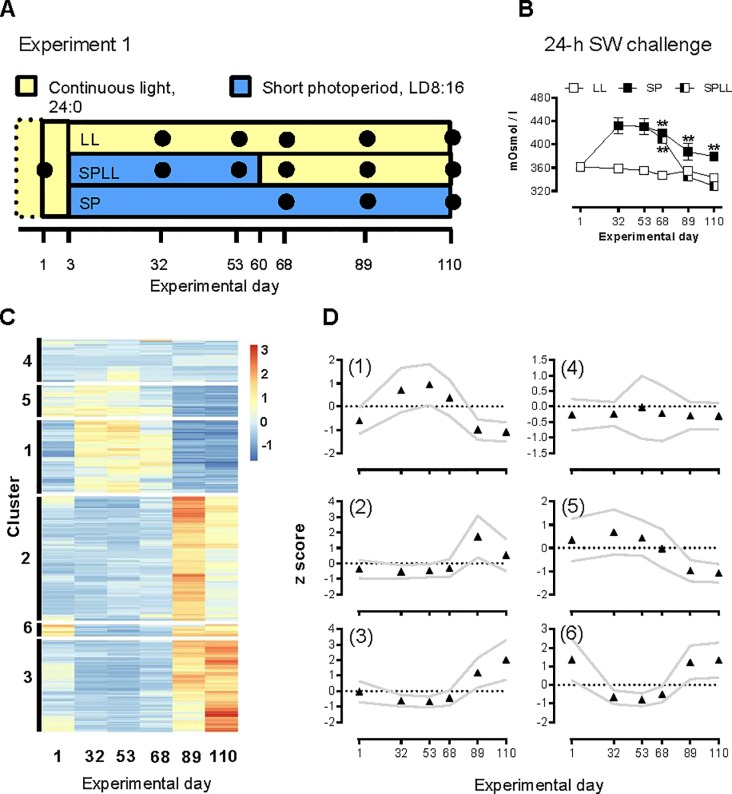
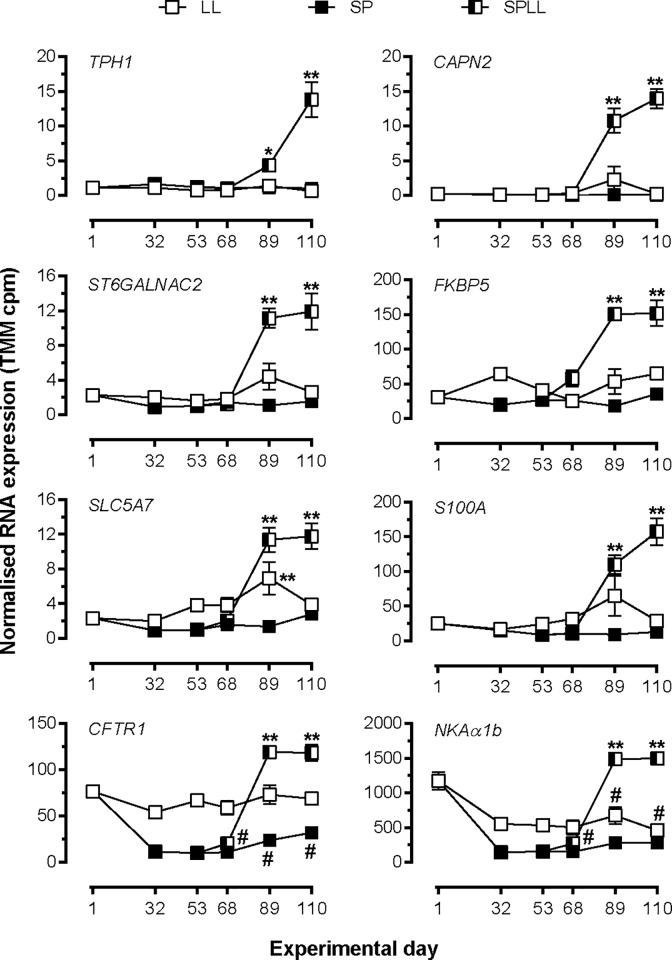
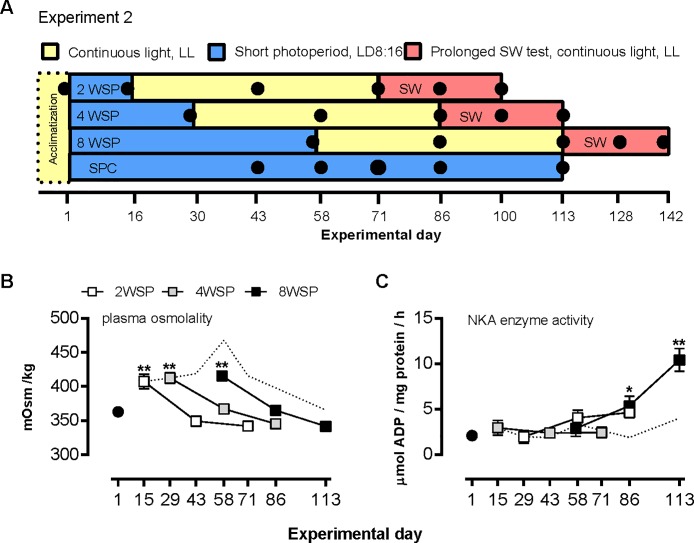
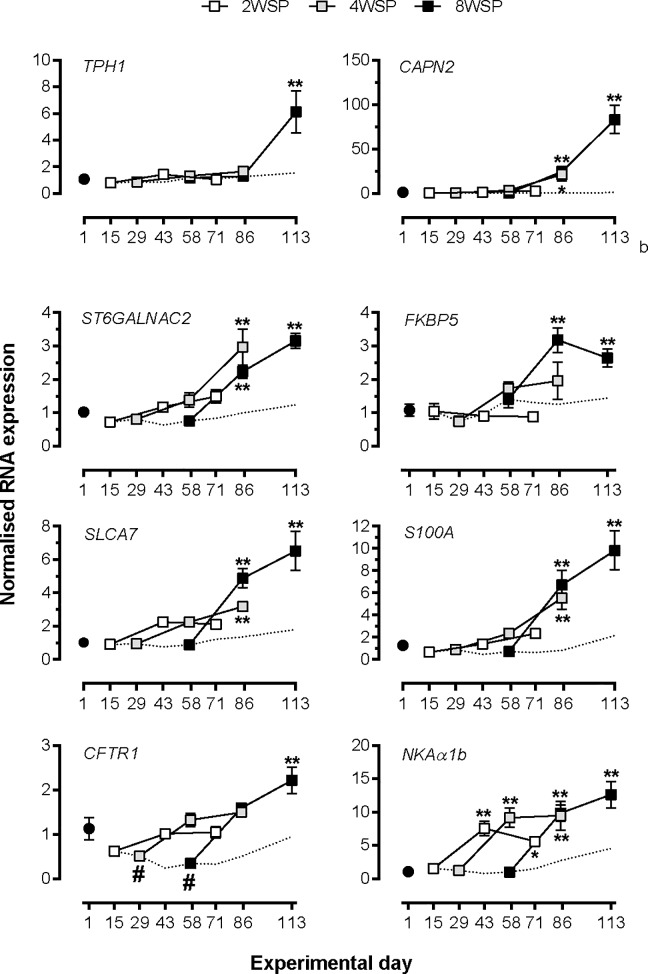
Atlantic salmon migrate to sea following completion of a developmental process known as smolting, which establishes a seawater (SW) tolerant phenotype. Smolting is stimulated by exposure to long photoperiod or continuous light (LL) following a period of exposure to short photoperiod (SP), and this leads to major changes in gill ion exchange and osmoregulatory function. Here, we performed an RNAseq experiment to discover novel genes involved in photoperiod-dependent remodeling of the gill. This revealed a novel cohort of genes whose expression rises dramatically in fish transferred to LL following SP exposure, but not in control fish maintained continuously on LL or on SP. A follow-up experiment revealed that the SP-history dependence of LL induction of gene expression varies considerably between genes. Some genes were inducible by LL exposure after only 2 weeks exposure to SP, while others required 8 weeks prior SP exposure for maximum responsiveness to LL. Since subsequent SW growth performance is also markedly improved following 8 weeks SP exposure, these photoperiodic history-dependent genes may be useful predictive markers for full smolt development.
Conflict of interest statement
The authors would like to declare that they are in the process of filing patent application associated with this research, EP application number 20162777.5. This does not alter our adherence to PLOS ONE policies on sharing data and materials.
Figures
References
-
- Hoar WS. The Physiology of Smolting Salmonids In: Hoar WS, Randall DJ, editors. Fish Physiology. 11 Cambrigde: Academic Press; 1988. p. 275–343.
-
- Stefansson SO, Björnsson BT, Ebbesson LOE, McCormick SD. Smoltification In: Finn RN, Kapoor BG, editors. Fish Larval Physiology. New Dehli: Science Publishers, Inc. Enfield (NH) & IBH Publishing Co. Pvt. Ltd.; 2008.
-
- McCormick SD, Shrimpton JM, Moriyama S, Björnsson BT. Differential hormonal responses of Atlantic salmon parr and smolt to increased daylength: A possible developmental basis for smolting. Aquaculture. 2007;273(2):337–44. 10.1016/j.aquaculture.2007.10.015 - DOI
Publication types
MeSH terms
LinkOut - more resources
Full Text Sources
Other Literature Sources
