Review
. 2020 Aug;16(8):471-482.
doi: 10.1038/s41581-020-0267-8. Epub 2020 Apr 8.

Consensus guidelines for management of hyperammonaemia in paediatric patients receiving continuous kidney replacement therapy

Affiliations
Review

Consensus guidelines for management of hyperammonaemia in paediatric patients receiving continuous kidney replacement therapy

Rupesh Raina et al. Nat Rev Nephrol. 2020 Aug.

Abstract

Hyperammonaemia in children can lead to grave consequences in the form of cerebral oedema, severe neurological impairment and even death. In infants and children, common causes of hyperammonaemia include urea cycle disorders or organic acidaemias. Few studies have assessed the role of extracorporeal therapies in the management of hyperammonaemia in neonates and children. Moreover, consensus guidelines are lacking for the use of non-kidney replacement therapy (NKRT) and kidney replacement therapies (KRTs, including peritoneal dialysis, continuous KRT, haemodialysis and hybrid therapy) to manage hyperammonaemia in neonates and children. Prompt treatment with KRT and/or NKRT, the choice of which depends on the ammonia concentrations and presenting symptoms of the patient, is crucial. This expert Consensus Statement presents recommendations for the management of hyperammonaemia requiring KRT in paediatric populations. Additional studies are required to strengthen these recommendations.


Conflict of interest statement

The authors declare no competing interests.

Figures
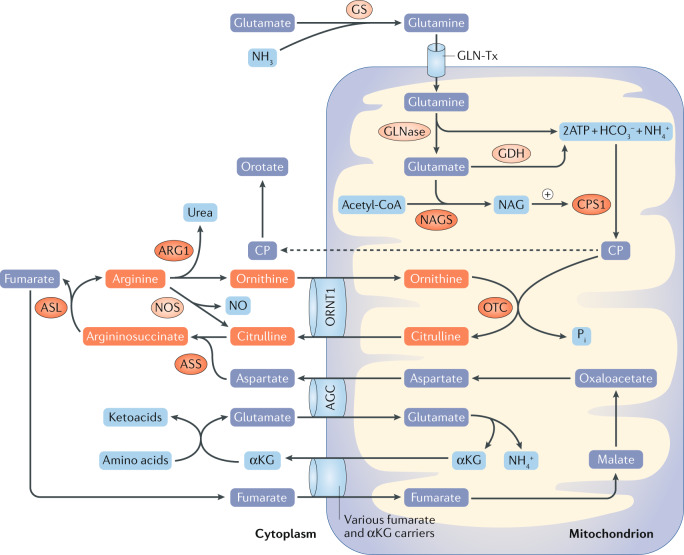
Fig. 1
Fig. 1. Urea cycle dysfunction results in toxic accumulation of ammonia in the blood.
Hyperammonaemia in neonates and infants is typically caused by inborn errors of metabolism. Primary urea cycle disorders are caused by congenital deficiency of any of the six urea cycle enzymes: N-acetylglutamate synthase (NAGS), carbamoyl phosphate synthase I (CPS1), ornithine transcarbamylase (OTC), argininosuccinate synthetase (ASS), argininosuccinate lyase (ASL) and arginase 1 (ARG1). These deficiencies result in severe hyperammonaemia and the accumulation of both urea and the substrate of the missing or defective enzyme. For example, the accumulation of carbamoyl phosphate (CP; dashed line) results in greatly increased production and excretion of orotate. Secondary inhibition of the urea cycle is caused by abnormalities that reduce the activity of other enzymes involved in amino acid processing. These deficiencies cause organic acidaemias, such as methylmalonic acidaemia, propionic acidaemia, isovaleric acidaemia and multiple carboxylase deficiency, as well as (typically mild to moderate) hyperammonaemia. Hyperammonaemia can also occur following exposure to drugs, such as valproic acid. Finally, paediatric patients with liver diseases or acute kidney injury are also susceptible to hyperammonaemia owing to impaired metabolism or excretion of urea, respectively. αKG, α-ketoglutarate; AGC, aspartate–glutamate carrier; GDH, glutamate dehydrogenase; GLNase, glutaminase; GLN-Tx, glutamine transporter; GS, glutamine synthase; NAG, N-acetylglutamate; NOS, nitric oxide synthase; NO, nitric oxide; ORNT1, ornithine translocase.
Fig. 2
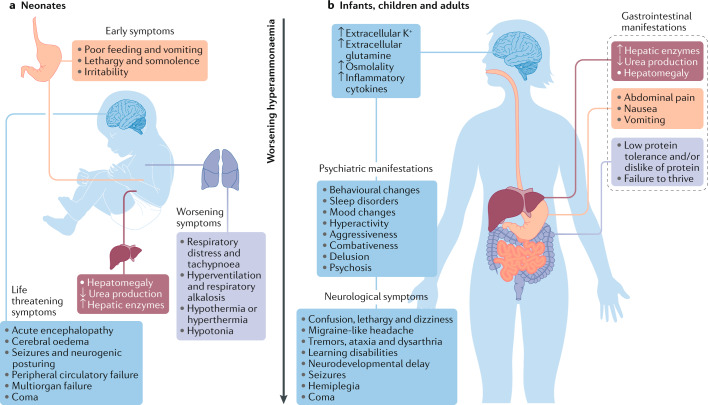
Fig. 2. Clinical manifestations of hyperammonaemia.
The clinical features of an acute hyperammonaemic episode are influenced by the age of the patient and the underlying cause of hyperammonaemia — that is, the specific urea cycle enzyme deficiency or organic acidaemia. a | In neonates, early symptoms include lethargy, loss of appetite and vomiting. If ammonia levels continue to rise, symptoms progress to hypotonia and hyperventilation resulting in respiratory alkalosis. Severe hyperammonaemia is characterized by an acute encephalopathy, seizures, and, if untreated, coma and death. b | Late-onset hyperammonaemia (that is, in infants, children and adults) typically results from a partial or mild urea cycle enzyme deficiency exacerbated by exposure to stressors such as drug treatment. These individuals typically present with failure to thrive and abdominal symptoms, accompanied by psychiatric manifestations such as irritability, learning disabilities, delusion and psychosis. Patients might additionally have neurological symptoms, including neurodevelopmental delay, seizures and hemiplegia. The psychiatric and neurological manifestations of hyperammonaemia are attributable to increased brain levels of ammonia, which is metabolized to glutamine by astrocytes. The resulting high extracellular levels of potassium and glutamine cause increased intracellular osmolality and cerebral oedema, leading to neuronal damage and the release of inflammatory cytokines.

References

    1. Auron A, Brophy PD. Hyperammonemia in review: pathophysiology, diagnosis, and treatment. Pediatr. Nephrol. 2012;27:207–222. - PubMed
    1. Gupta S, Fenves AZ, Hootkins R. The role of RRT in hyperammonemic patients. Clin. J. Am. Soc. Nephrol. 2016;11:1872–1878. - PMC - PubMed
    1. Upadhyay R, Bleck TP, Busl KM. Hyperammonemia: what urea-lly need to know: case report of severe noncirrhotic hyperammonemic encephalopathy and review of the literature. Case Rep. Med. 2016;2016:8512721. - PMC - PubMed
    1. Mew, N. A., Pappa, M. B., Gropman, A. L. in Rosenberg’s Molecular and Genetic Basis of Neurological and Psychiatric Disease (eds Rosenberg, R. N. & Pascual, J. M.) 633–647 (Elsevier, 2014).
    1. Najafi R, et al. Demographic and clinical findings in pediatric patients affected by organic acidemia. Iran. J. Child. Neurol. 2016;10:74–81. - PMC - PubMed

Publication types

MeSH terms