


Maternal and Perinatal Factors Associated with the Human Milk Microbiome
- PMID: 32270132
- PMCID: PMC7127925
- DOI: 10.1093/cdn/nzaa027
Maternal and Perinatal Factors Associated with the Human Milk Microbiome
Abstract
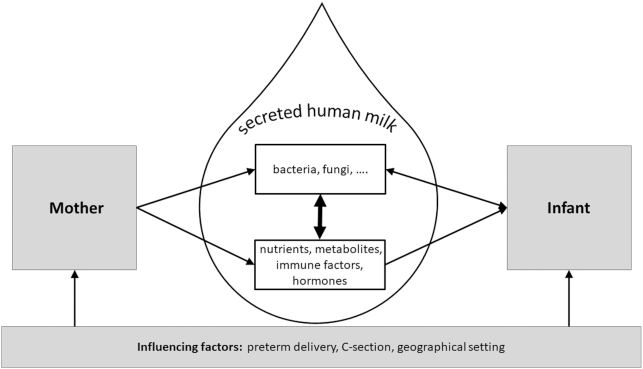
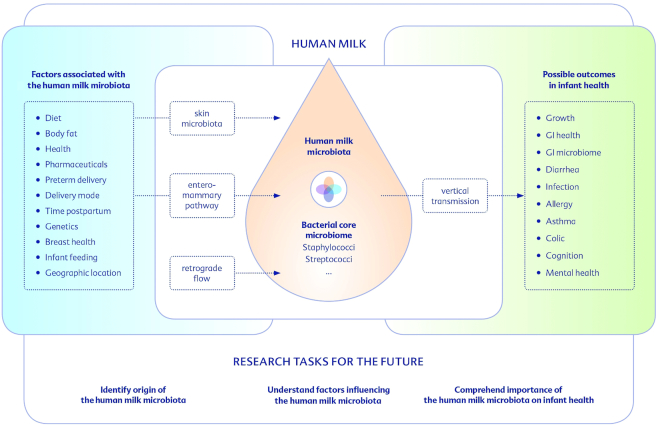
Microbes are present in human milk regardless of the mother's health. The origins of the milk microbiota likely include the mother's skin, infant's mouth, and transfer from the maternal gastrointestinal (GI) tract. Prominent bacterial taxa in human milk are Staphylococcus and Streptococcus, but many other genera are also found including anaerobic Lactobacillus, Bifidobacterium, and Bacteroides. The milk microbiome is highly variable and potentially influenced by geographic location, delivery mode, time postpartum, feeding mode, social networks, environment, maternal diet, and milk composition. Mastitis alters the milk microbiome, and the intake of Lactobacilli has shown potential for mastitis treatment and prevention. Although milk and infant fecal microbiomes are different, their variations appear to be related - suggesting that milk is an important contributor of early GI colonization. Nonetheless, nothing is known regarding whether the milk microbiome influences infant health. Further research and clinical interventions are needed to determine if changes in the microbiomes of human milk and infant formula/food impact health.
Keywords: composition; entero-mammary pathway; geographical setting; human milk; mastitis; milk microbiome; variation.
Copyright © The Author(s) 2020.
Figures
References
-
- Tamburini S, Shen N, Wu HC, Clemente JC. The microbiome in early life: implications for health outcomes. Nat Med. 2016;22(7):713–22. - PubMed
-
- Fernandez L, Langa S, Martin V, Maldonado A, Jimenez E, Martin R, Rodriguez JM. The human milk microbiota: origin and potential roles in health and disease. Pharmacol Res. 2013;69(1):1–10. - PubMed
-
- Cabrera-Rubio R, Collado MC, Laitinen K, Salminen S, Isolauri E, Mira A. The human milk microbiome changes over lactation and is shaped by maternal weight and mode of delivery. Am J Clin Nutr. 2012;96(3):544–51. - PubMed
-
- Victora CG, Bahl R, Barros AJ, Franca GV, Horton S, Krasevec J, Murch S, Sankar MJ, Walker N, Rollins NC et al. .. Breastfeeding in the 21st century: epidemiology, mechanisms, and lifelong effect. Lancet. 2016;387(10017):475–90. - PubMed
Publication types
LinkOut - more resources
Full Text Sources
