


Two genes involved in clindamycin resistance of Bacillus licheniformis and Bacillus paralicheniformis identified by comparative genomic analysis
- PMID: 32271828
- PMCID: PMC7144989
- DOI: 10.1371/journal.pone.0231274
Two genes involved in clindamycin resistance of Bacillus licheniformis and Bacillus paralicheniformis identified by comparative genomic analysis
Abstract
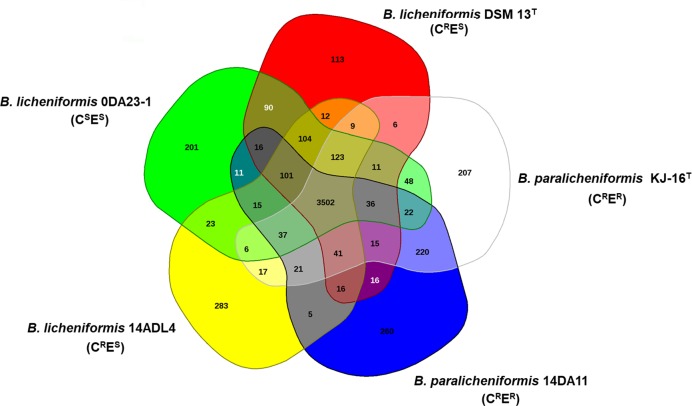
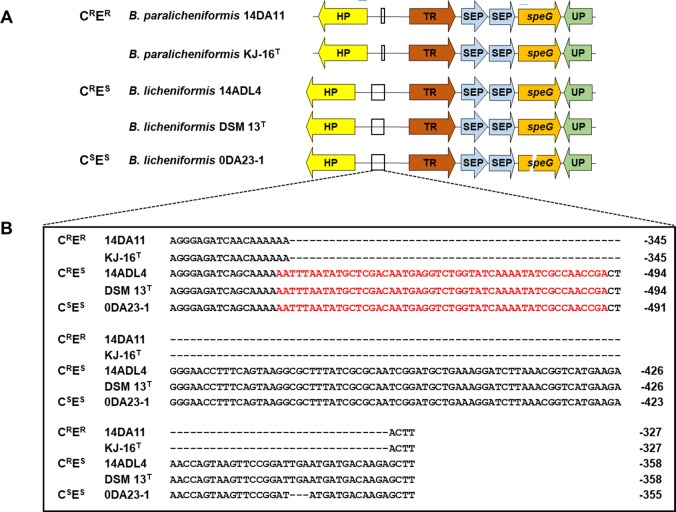
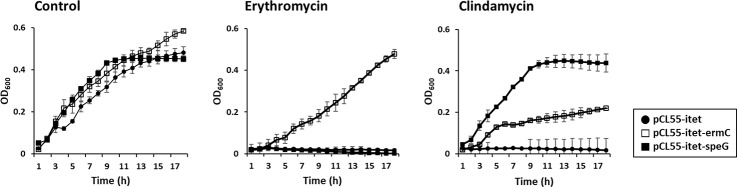
We evaluated the minimum inhibitory concentrations of clindamycin and erythromycin toward 98 Bacillus licheniformis strains isolated from several types of fermented soybean foods manufactured in several districts of Korea. First, based on recent taxonomic standards for bacteria, the 98 strains were separated into 74 B. licheniformis strains and 24 B. paralicheniformis strains. Both species exhibited profiles of erythromycin resistance as an acquired characteristic. B. licheniformis strains exhibited acquired clindamycin resistance, while B. paralicheniformis strains showed unimodal clindamycin resistance, indicating an intrinsic characteristic. Comparative genomic analysis of five strains showing three different patterns of clindamycin and erythromycin resistance identified 23S rRNA (adenine 2058-N6)-dimethyltransferase gene ermC and spermidine acetyltransferase gene speG as candidates potentially involved in clindamycin resistance. Functional analysis of these genes using B. subtilis as a host showed that ermC contributes to cross-resistance to clindamycin and erythromycin, and speG confers resistance to clindamycin. ermC is located in the chromosomes of strains showing clindamycin and erythromycin resistance and no transposable element was identified in its flanking regions. The acquisition of ermC might be attributable to a homologous recombination. speG was identified in not only the five genome-analyzed strains but also eight strains randomly selected from the 98 test strains, and deletions in the structural gene or putative promoter region caused clindamycin sensitivity, which supports the finding that the clindamycin resistance of Bacillus species is an intrinsic property.
Conflict of interest statement
The authors have declared that no competing interests exist.
Figures
References
Publication types
MeSH terms
Substances
Supplementary concepts
LinkOut - more resources
Full Text Sources
Medical
