


Drug Development Targeting the Ubiquitin-Proteasome System (UPS) for the Treatment of Human Cancers
- PMID: 32272746
- PMCID: PMC7226376
- DOI: 10.3390/cancers12040902
Drug Development Targeting the Ubiquitin-Proteasome System (UPS) for the Treatment of Human Cancers
Abstract
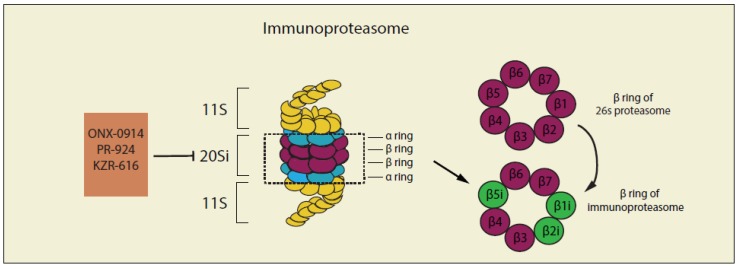
Cancer cells are characterized by a higher rate of protein turnover and greater demand for protein homeostasis compared to normal cells. In this scenario, the ubiquitin-proteasome system (UPS), which is responsible for the degradation of over 80% of cellular proteins within mammalian cells, becomes vital to cancer cells, making the UPS a critical target for the discovery of novel cancer therapeutics. This review systematically categorizes all current reported small molecule inhibitors of the various essential components of the UPS, including ubiquitin-activating enzymes (E1s), ubiquitin-conjugating enzymes (E2s), ubiquitin ligases (E3s), the 20S proteasome catalytic core particle (20S CP) and the 19S proteasome regulatory particles (19S RP), as well as their mechanism/s of action and limitations. We also discuss the immunoproteasome which is considered as a prospective therapeutic target of the next generation of proteasome inhibitors in cancer therapies.
Keywords: cancer; chemoresistance; targeted therapy; ubiquitin.
Conflict of interest statement
The authors declare no conflict of interests.
Figures


References
-
- Goldberg A.L., Akopian T.N., Kisselev A.F., Lee D.H., Rohrwild M. New insights into the mechanisms and importance of the proteasome in intracellular protein degradation. Biol. Chem. 1997;378:131–140. - PubMed
Publication types
Grants and funding
LinkOut - more resources
Full Text Sources
Other Literature Sources
Miscellaneous
