


m6A-binding proteins: the emerging crucial performers in epigenetics
- PMID: 32276589
- PMCID: PMC7146974
- DOI: 10.1186/s13045-020-00872-8
m6A-binding proteins: the emerging crucial performers in epigenetics
Abstract
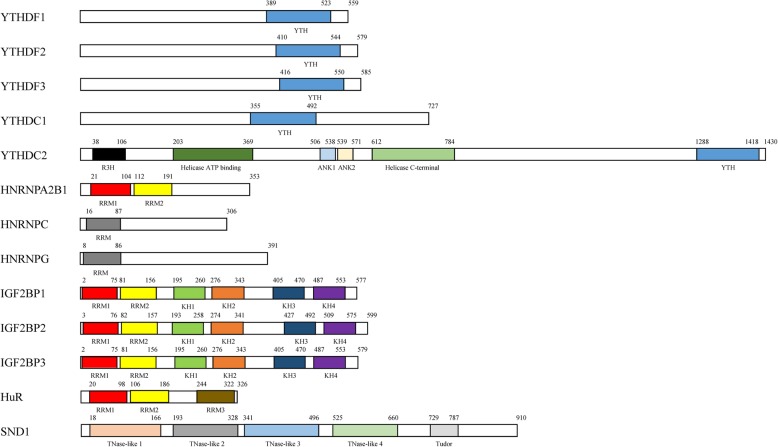
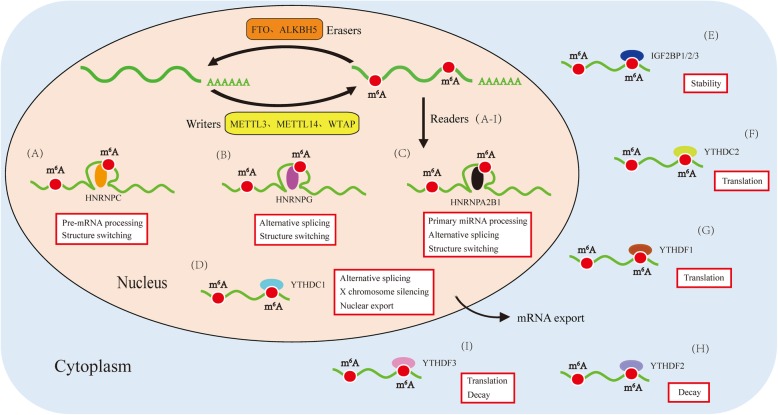
N6-methyladenosine (m6A) is a well-known post-transcriptional modification that is the most common type of methylation in eukaryotic mRNAs. The regulation of m6A is dynamic and reversible, which is erected by m6A methyltransferases ("writers") and removed by m6A demethylases ("erasers"). Notably, the effects on targeted mRNAs resulted by m6A predominantly depend on the functions of different m6A-binding proteins ("readers") including YT521-B homology (YTH) domain family, heterogeneous nuclear ribonucleoproteins (HNRNPs), and insulin-like growth factor 2 mRNA-binding proteins (IGF2BPs). Indeed, m6A readers not only participate in multiple procedures of RNA metabolism, but also are involved in a variety of biological processes. In this review, we summarized the specific functions and underlying mechanisms of m6A-binding proteins in tumorigenesis, hematopoiesis, virus replication, immune response, and adipogenesis.
Keywords: Adipogenesis; Cancer; Immunity; N6-methyladenosine; Virus; m6A-binding proteins.
Conflict of interest statement
The authors declare no competing interests.
Figures
References
-
- Perry RP, Kelley DE. Existence of methylated messenger RNA in mouse L cells. Cell. 1974;1(1):37–42. doi: 10.1016/0092-8674(74)90153-6. - DOI
Publication types
MeSH terms
Substances
LinkOut - more resources
Full Text Sources
