


Measuring Advanced/Extended Practice Roles in Arthritis and Musculoskeletal Care in Canada
- PMID: 32277867
- PMCID: PMC7164630
- DOI: 10.1002/acr2.11129
Measuring Advanced/Extended Practice Roles in Arthritis and Musculoskeletal Care in Canada
Abstract
Objective: Our objective was to characterize Canadian workforce attributes of extended role practitioners (ERPs) in arthritis care.
Methods: We used an exploratory, mixed-methods study that was based on the Canadian Rheumatology Association's Stand Up and Be Counted Rheumatologist Workforce Survey (2015). An anonymous online survey was deployed to groups of non-physician health care professionals across Canada who potentially had post-licensure training in arthritis care. Demographic and practice information were elicited. Qualitative responses were analyzed using grounded theory techniques.
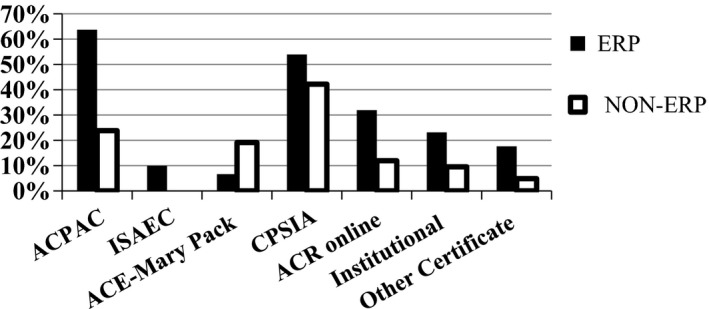
Results: Of 141 respondents, 91 identified as practicing in extended role capacities. The mean age of ERP respondents was 48.7; 87% were female, and 41% of ERPs planned to retire within 5 to 10 years. Respondents were largely physical or occupational therapists by profession and practiced in urban/academic (46%), community (39%), and rural settings (13%). Differences in practice patterns were noted between ERPs (64.5%) and non-ERPs (34.5%), with more ERPs working in extended role capacities while retaining activities reflective of their professional backgrounds. Most respondents (95%) agreed that formal training is necessary to work as an ERP, but only half perceived they had sufficient training opportunities. Barriers to pursuing training were varied, including personal barriers, geographic barriers, patient-care needs, and financial/remuneration concerns.
Conclusion: To our knowledge, no previous studies have assessed the workforce capacity or the perceived need for the training of ERPs working in arthritis and musculoskeletal care. Measurement is important because in these health disciplines, practitioners' scopes of practice evolve, and ERPs integrate into the Canadian health care system. ERPs have emerged to augment provision of arthritis care, but funding for continuing professional development opportunities and for role implementation remains tenuous.
© 2020 The Authors. ACR Open Rheumatology published by Wiley Periodicals, Inc. on behalf of American College of Rheumatology.
Figures
References
-
- Barber CE, Marshall DA, Mosher DP, Akhavan P, Tucker L, Houghton K, et al. Development of system‐level performance measures for evaluation of models of care for inflammatory arthritis in Canada. J Rheumatol 2016;43:530–40. - PubMed
-
- Barber CE, Jewett L, Badley EM, Lacaille D, Cividino A, Ahluwalia V, et al. Stand up and be counted: measuring and mapping the rheumatology workforce in Canada. J Rheumatol 2017;44:248–57. - PubMed
-
- Barber C, Lundon K, Shupak R, Marshall D. So we stood up and got counted… Now what? The Journal of the Canadian Rheumatology Association 2016;26:7–8.
-
- Arthritis Alliance of Canada . The impact of arthritis in Canada: today and over the next 30 years. Toronto: Arthritis Alliance of Canada; 2011.
LinkOut - more resources
Full Text Sources
