


Rapid Response of an Academic Surgical Department to the COVID-19 Pandemic: Implications for Patients, Surgeons, and the Community
- PMID: 32278726
- PMCID: PMC7194622
- DOI: 10.1016/j.jamcollsurg.2020.04.007
Rapid Response of an Academic Surgical Department to the COVID-19 Pandemic: Implications for Patients, Surgeons, and the Community
Abstract
Background: As the coronavirus disease 2019 (COVID-19) pandemic continues to spread, swift actions and preparation are critical for ensuring the best outcomes for patients and providers. We aim to describe our hospital and Department of Surgery's experience in preparing for the COVID-19 pandemic and caring for surgical patients during this unprecedented time.
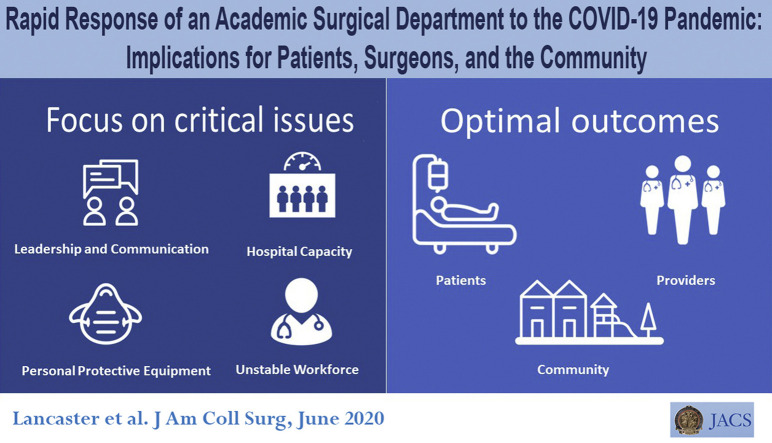
Study design: This is a descriptive study outlining the strategy of a single academic health system for addressing the following 4 critical issues facing surgical departments during the COVID-19 pandemic: developing a cohesive leadership team and system for frequent communication throughout the department; ensuring adequate hospital capacity to care for an anticipated influx of COVID-19 patients; safeguarding supplies of blood products and personal protective equipment to protect patients and providers; and preparing for an unstable workforce due to illness and competing personal priorities, such as childcare.
Results: Through collaborative efforts within the Department of Surgery and hospital, we provided concise and regular communication, reduced operating room volume by 80%, secured a 4-week supply of personal protective equipment, and created reduced staffing protocols with back-up staffing plans.
Conclusions: By developing an enabling infrastructure, a department can nimbly respond to crises like COVID-19 by promoting trust among colleagues and emphasizing an unwavering commitment to excellent patient care. Sharing principles and practical applications of these changes is important to optimize responses across the country and the world.
Copyright © 2020 American College of Surgeons. Published by Elsevier Inc. All rights reserved.
Figures


References
-
- WHO. Rolling updates on coronavirus disease (COVID-19) https://www.who.int/emergencies/diseases/novel-coronavirus-2019/events-a... Available at: Accessed March 30, 2020.
-
- Fineberg H.V. Pandemic preparedness and response—lessons from the H1N1 influenza of 2009. N Engl J Med. 2014;370:1335–1342. - PubMed
