


Health-Related Quality of Life in Common Variable Immunodeficiency Italian Patients Switched to Remote Assistance During the COVID-19 Pandemic
- PMID: 32278865
- PMCID: PMC7195351
- DOI: 10.1016/j.jaip.2020.04.003
Health-Related Quality of Life in Common Variable Immunodeficiency Italian Patients Switched to Remote Assistance During the COVID-19 Pandemic
Abstract
Background: A rapidly expanding pandemic of the new coronavirus has become the focus of global scientific attention. Data are lacking on the impact of the pandemic caused by the severe acute respiratory syndrome coronavirus 2 on health-related quality of life among patients affected by primary antibody deficiencies (PADs).
Objective: To identify factors impacting the health-related-quality of life (HRQOL) among Italian patients affected by PADs switched to remote assistance at the time of the coronavirus disease 2019 pandemic.
Methods: The quality of life was surveyed in 158 patients with PADs by the Common Variable Immune Deficiency Quality of Life questionnaire, a disease-specific tool, and by the 12-item General Health Questionnaire, a generic tool to assess the risk of anxiety/depression. Since the beginning of the coronavirus disease 2019 epidemic, we shifted all patients with PADs to home therapy, and activated remote visits. Questionnaires were sent by email 4 weeks later. Common Variable Immune Deficiency Quality of Life questionnaire and 12-item General Health Questionnaire data scores were compared with the same set of data from a survey done in 2017.
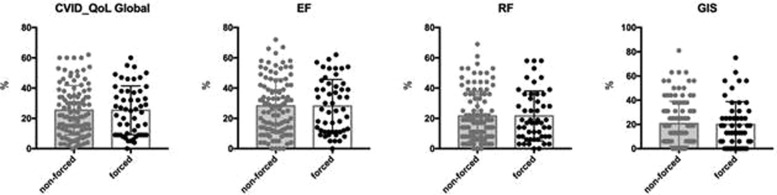
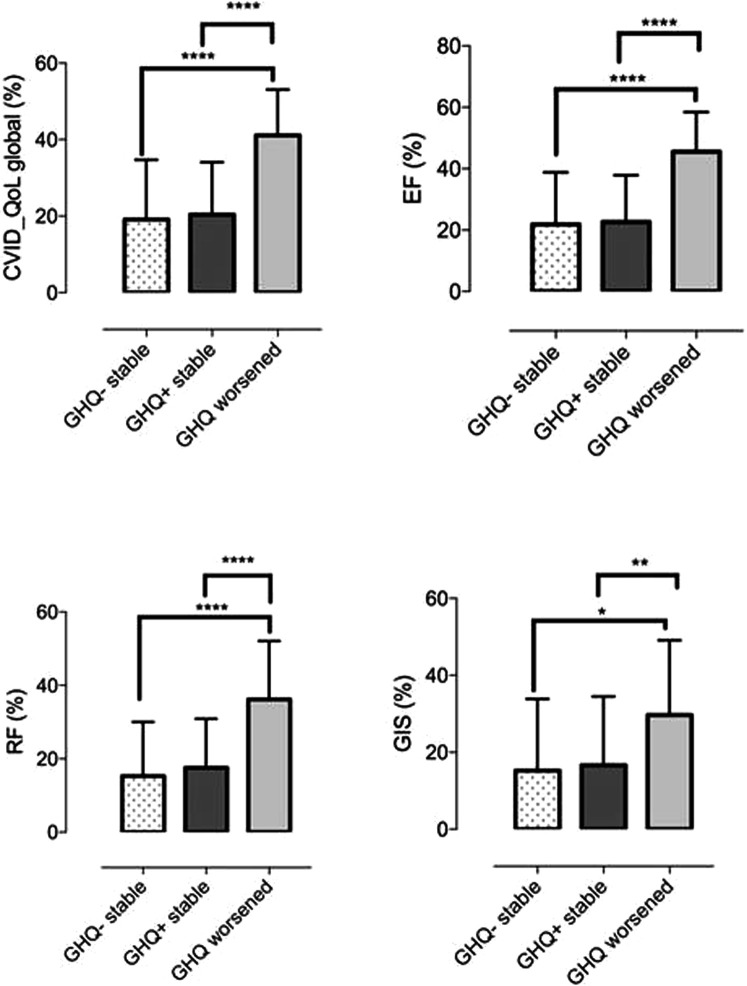
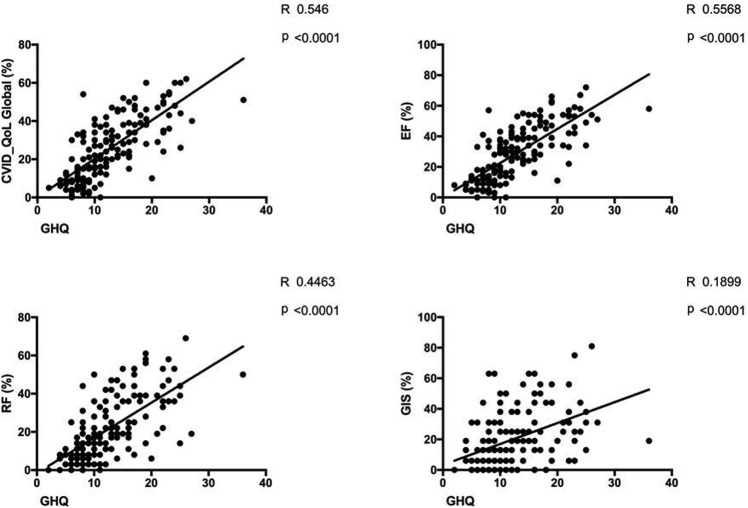
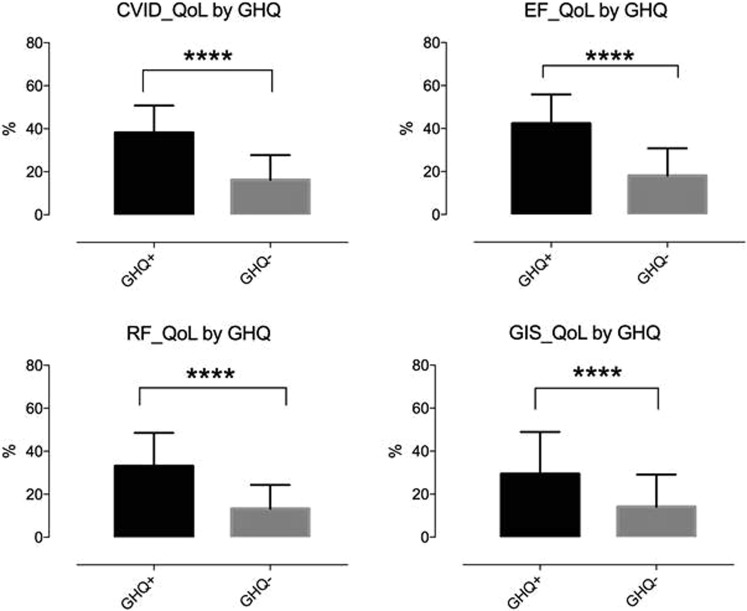
Results: Of 210 patients, 158 (75%) agreed to participate. The quality of life was worse in the group of patients who were at risk of anxiety/depression at the study time. HRQOL was similar in patients forced to shift from hospital-based to home-based immunoglobulin treatment and in patients who continued their usual home-based replacement. The risk of anxiety/depression is associated with pandemia caused by the severe acute respiratory syndrome coronavirus 2 and with patients' fragility, and not with related clinical conditions associated with common variable immune deficiencies. Anxiety about running out of medications is a major new issue.
Conclusions: The coronavirus disease 2019 epidemic impacted HRQOL and the risk of anxiety/depression of patients with PADs. The remote assistance program was a useful possibility to limit personal contacts without influencing the HRQOL.
Keywords: Anxiety; COVID-19; COVID-19 epidemic; Common variable immunodeficiencies; Coronavirus; Depression; General Health Questionnaire; Health-related quality of life; Remote assistance.
Copyright © 2020. Published by Elsevier Inc.
Figures
References
-
- World Health Organization Coronavirus disease (COVID-19) pandemic. https://www.who.int/emergencies/diseases/novel-coronavirus-2019 Available from: Accessed April 1, 2020.
-
- Carsetti R., Rosado M.M., Donnanno S., Guazzi V., Soresina A., Meini A. The loss of IgM memory B cells correlates with clinical disease in common variable immunodeficiency. J Allergy Clin Immunol. 2005;115:412–417. - PubMed
