Meta-Analysis
. 2020 Sep;45(10):1617-1626.
doi: 10.1038/s41386-020-0664-5. Epub 2020 Apr 12.

Shared genetic background between children and adults with attention deficit/hyperactivity disorder

Paula Rovira #  1   2 Ditte Demontis #  3   4   5 Cristina Sánchez-Mora  1   2   6   7 Tetyana Zayats  8   9   10 Marieke Klein  11   12 Nina Roth Mota  11   13   14 Heike Weber  15   16 Iris Garcia-Martínez  1   2   17   18 Mireia Pagerols  1   2 Laura Vilar-Ribó  1   2 Lorena Arribas  1   2 Vanesa Richarte  2   6   19 Montserrat Corrales  2   6   19 Christian Fadeuilhe  2   6   19 Rosa Bosch  2   6   19 Gemma Español Martin  2   19   20 Peter Almos  21 Alysa E Doyle  22   23 Eugenio Horacio Grevet  13   24 Oliver Grimm  16 Anne Halmøy  8   25 Martine Hoogman  11 Mara Hutz  26 Christian P Jacob  21 Sarah Kittel-Schneider  16 Per M Knappskog  27   28 Astri J Lundervold  29 Olga Rivero  21 Diego Luiz Rovaris  13   26   30 Angelica Salatino-Oliveira  26 Bruna Santos da Silva  13   26 Evgeniy Svirin  21   31 Emma Sprooten  32 Tatyana Strekalova  21   31   33 ADHD Working Group of the Psychiatric Genomics Consortium23andMe Research teamAlejandro Arias-Vasquez  11   14 Edmund J S Sonuga-Barke  34   35 Philip Asherson  36 Claiton Henrique Dotto Bau  13   26 Jan K Buitelaar  32   37 Bru Cormand  7   38   39   40 Stephen V Faraone  41 Jan Haavik  8   25 Stefan E Johansson  27   28 Jonna Kuntsi  36 Henrik Larsson  42   43 Klaus-Peter Lesch  21   31   33 Andreas Reif  16 Luis Augusto Rohde  44 Miquel Casas  1   2   6   19 Anders D Børglum #  3   4   5 Barbara Franke #  11   14 Josep Antoni Ramos-Quiroga #  1   2   6   19 María Soler Artigas #  45   46   47   48 Marta Ribasés #  49   50   51   52
Affiliations
Meta-Analysis

Shared genetic background between children and adults with attention deficit/hyperactivity disorder

Paula Rovira et al. Neuropsychopharmacology. 2020 Sep.

Abstract

Attention deficit/hyperactivity disorder (ADHD) is a common neurodevelopmental disorder characterized by age-inappropriate symptoms of inattention, impulsivity, and hyperactivity that persist into adulthood in the majority of the diagnosed children. Despite several risk factors during childhood predicting the persistence of ADHD symptoms into adulthood, the genetic architecture underlying the trajectory of ADHD over time is still unclear. We set out to study the contribution of common genetic variants to the risk for ADHD across the lifespan by conducting meta-analyses of genome-wide association studies on persistent ADHD in adults and ADHD in childhood separately and jointly, and by comparing the genetic background between them in a total sample of 17,149 cases and 32,411 controls. Our results show nine new independent loci and support a shared contribution of common genetic variants to ADHD in children and adults. No subgroup heterogeneity was observed among children, while this group consists of future remitting and persistent individuals. We report similar patterns of genetic correlation of ADHD with other ADHD-related datasets and different traits and disorders among adults, children, and when combining both groups. These findings confirm that persistent ADHD in adults is a neurodevelopmental disorder and extend the existing hypothesis of a shared genetic architecture underlying ADHD and different traits to a lifespan perspective.


Figures
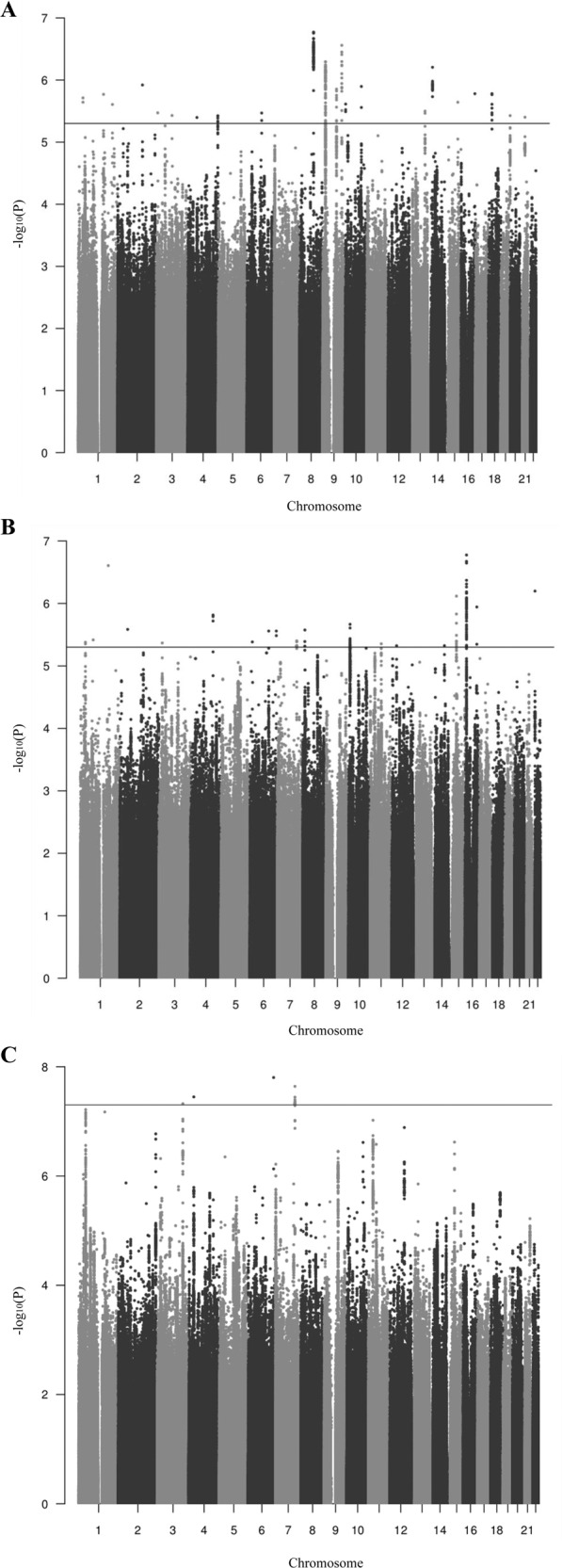
Fig. 1
Fig. 1. Manhattan plots of the three GWAS meta-analyses conducted.
(a) GWAS-MA of nine cohorts of persistent ADHD in adults, (b) GWAS-MA of ten cohorts of ADHD in childhood, and (c) GWAS-MA of all datasets of ADHD across the lifespan (ADHD in childhood + persistent ADHD). Horizontal lines indicate suggestive (P value = 5.00E−06) and genome-wide significant (P = 5.00E−08) thresholds in a-b, and c, respectively.
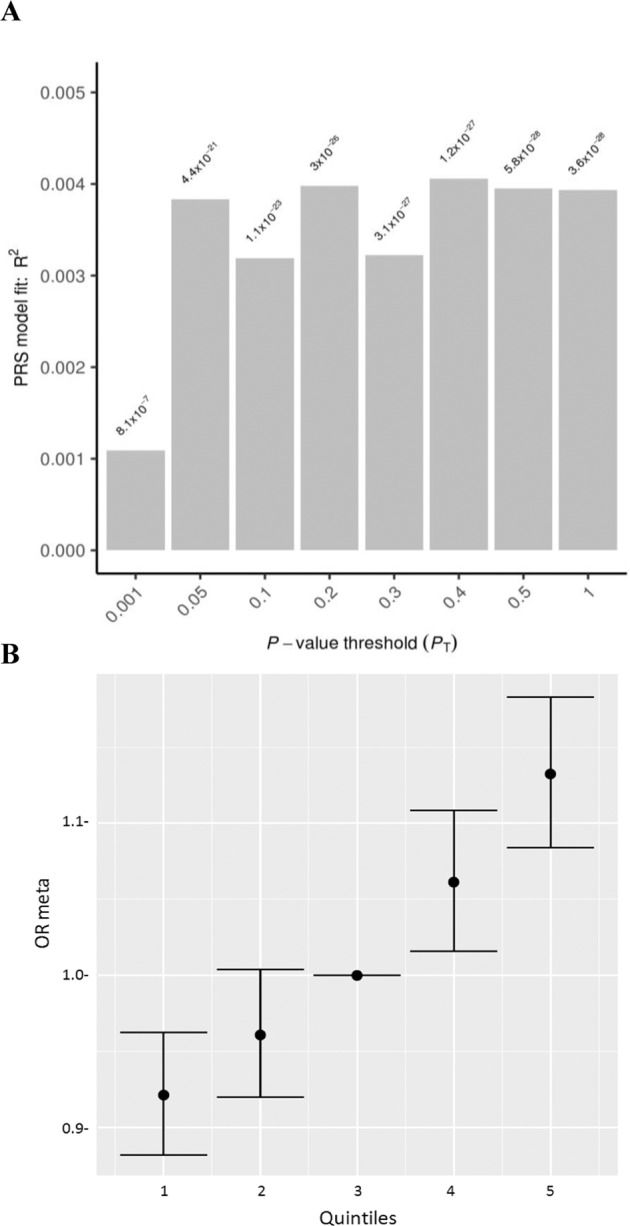
Fig. 2
Fig. 2. Polygenic risk scores for ADHD in childhood tested on persistent ADHD as target sample.
a Bar plot and b quintile plot of meta-analysis odds ratios (OR meta) with 95% confidence intervals for P value threshold = 0.4 using the third quintile as baseline.
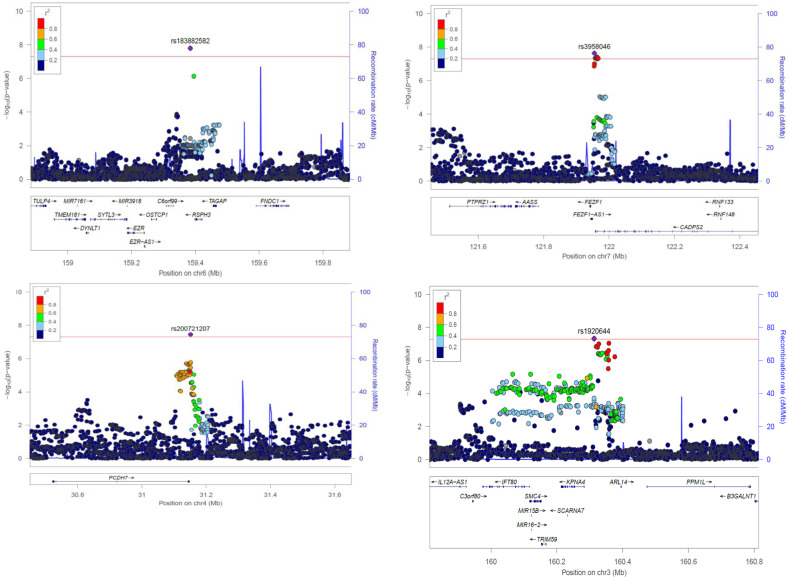
Fig. 3
Fig. 3. Regional association plots for genome-wide significant loci identified in the GWAS meta-analysis of ADHD across the lifespan.
Each plot includes information about the locus, the location and orientation of the genes in the region, the local estimates of recombination rate (in the right corner), and the LD estimates of surrounding SNPs with the index SNP (r2 values are estimated based on 1000 Genomes European reference panel), which is indicated by color (in the upper left corner).
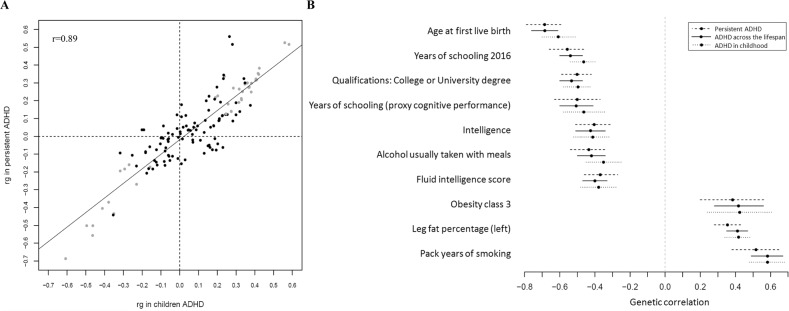
Fig. 4
Fig. 4. Genetic correlation of ADHD and several traits.
a Dots represent genetic correlations (rg) for all traits considered (with h2 > 0.1 and z-score > 4) and those traits that met Bonferroni correction in both children and adult ADHD groups are presented in grey. r indicates Pearson’s correlation coefficient. b The ten strongest genetic correlations (with 95% confidence intervals) surpassing Bonferroni corrections in the children and persistent ADHD analysis are shown for each trait and ADHD.

References

    1. Franke B, Michelini G, Asherson P, Banaschewski T, Bilbow A, Buitelaar JK, et al. Live fast, die young? A review on the developmental trajectories of ADHD across the lifespan. Eur Neuropsychopharmacol. 2018;28:1059–88. doi: 10.1016/j.euroneuro.2018.08.001. - DOI - PMC - PubMed
    1. Polanczyk GV, Salum GA, Sugaya LS, Caye A, Rohde LA. Annual research review: a meta-analysis of the worldwide prevalence of mental disorders in children and adolescents. J Child Psychol Psychiatry. 2015;56:345–65. doi: 10.1111/jcpp.12381. - DOI - PubMed
    1. Brikell I, Kuja-Halkola R, Larsson H. Heritability of attention-deficit hyperactivity disorder in adults. Am J Med Genet B Neuropsychiatr Genet. 2015;168:406–13. doi: 10.1002/ajmg.b.32335. - DOI - PubMed
    1. Kan KJ, Dolan CV, Nivard MG, Middeldorp CM, van Beijsterveldt CE, Willemsen G, et al. Genetic and environmental stability in attention problems across the lifespan: evidence from the Netherlands twin register. J Am Acad Child Adolesc Psychiatry. 2013;52:12–25. doi: 10.1016/j.jaac.2012.10.009. - DOI - PubMed

    1. Kuntsi J, Rijsdijk F, Ronald A, Asherson P, Plomin R. Genetic influences on the stability of attention-deficit/hyperactivity disorder symptoms from early to middle childhood. Biol Psychiatry. 2005;57:647–54. doi: 10.1016/j.biopsych.2004.12.032. - DOI - PubMed

Publication types