Review
. 2020 Apr 2:7:5.
doi: 10.1186/s40694-020-00095-z. eCollection 2020.

Growing a circular economy with fungal biotechnology: a white paper

Affiliations
Review

Growing a circular economy with fungal biotechnology: a white paper

Vera Meyer et al. Fungal Biol Biotechnol. .

Abstract

Fungi have the ability to transform organic materials into a rich and diverse set of useful products and provide distinct opportunities for tackling the urgent challenges before all humans. Fungal biotechnology can advance the transition from our petroleum-based economy into a bio-based circular economy and has the ability to sustainably produce resilient sources of food, feed, chemicals, fuels, textiles, and materials for construction, automotive and transportation industries, for furniture and beyond. Fungal biotechnology offers solutions for securing, stabilizing and enhancing the food supply for a growing human population, while simultaneously lowering greenhouse gas emissions. Fungal biotechnology has, thus, the potential to make a significant contribution to climate change mitigation and meeting the United Nation's sustainable development goals through the rational improvement of new and established fungal cell factories. The White Paper presented here is the result of the 2nd Think Tank meeting held by the EUROFUNG consortium in Berlin in October 2019. This paper highlights discussions on current opportunities and research challenges in fungal biotechnology and aims to inform scientists, educators, the general public, industrial stakeholders and policymakers about the current fungal biotech revolution.


Conflict of interest statement

Competing interestsThe authors declare that they have no competing interests.

Figures
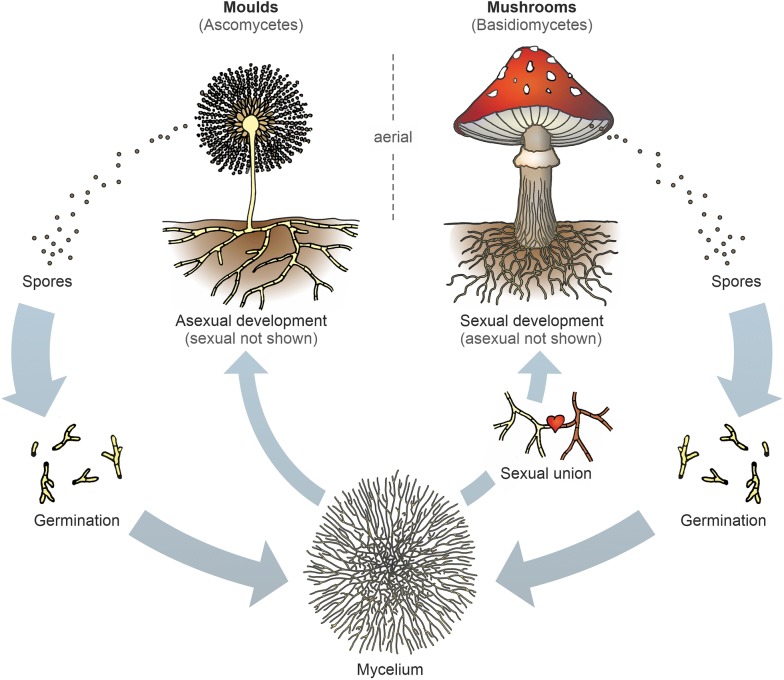
Fig. 1
Fig. 1
The fungal life cycle
Fig. 2
Fig. 2
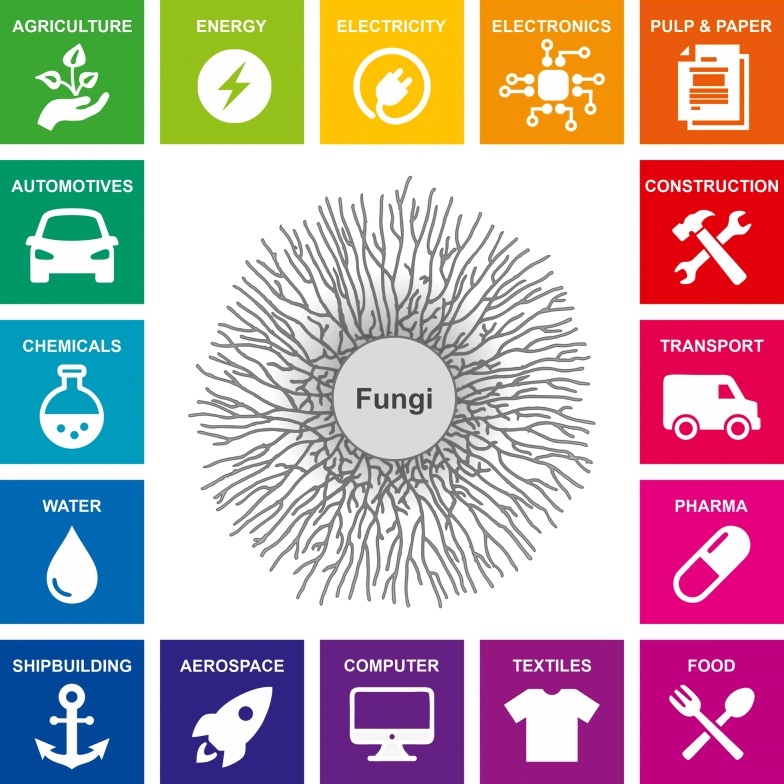
Industries profiting from the metabolic capacities of filamentous fungi
Fig. 3
Fig. 3
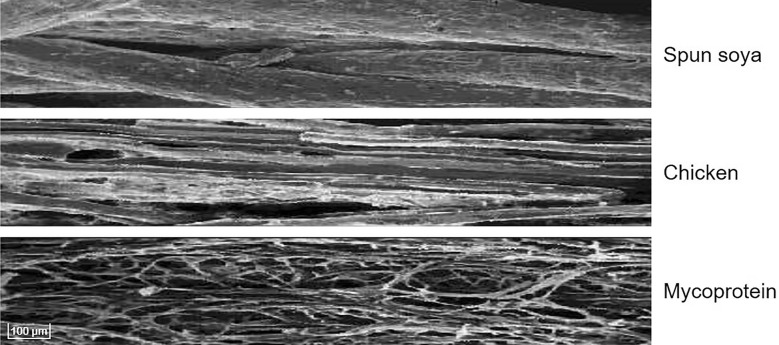
Unique textural attributes of Quorn™. Electron microscopic images of protein fibres from spun soya and chicken and hyphal filaments of F. venenatum. Bar, 100 µm
Fig. 4
Fig. 4
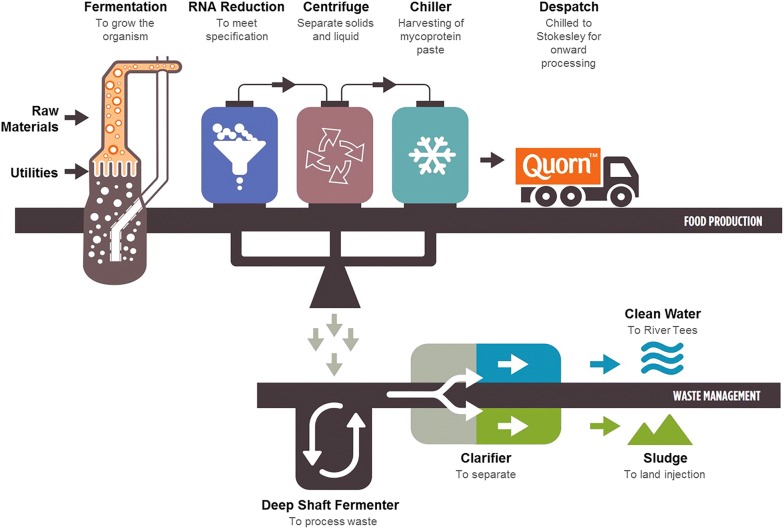
The Quorn™ fermentation process. A continuous supply of medium is fed into the fermenter and the broth is harvested simultaneously. The harvested broth is heated to a temperature that destroys proteases but leaves RNAses active, allowing the RNA content of the mycelium to be reduced to less than 2%, which is a regulatory requirement. Once the broth has been heat-treated, the mycelium is spun down to form a paste, which is mixed with binders and flavouring agents before being shaped, cooked and frozen. The supernatant from the paste is currently sent for treatment as wastewater, but active research at Marlow Foods is looking into how the 1.5% solids in the waste can be recovered as a food grade co-product
Fig. 5
Fig. 5
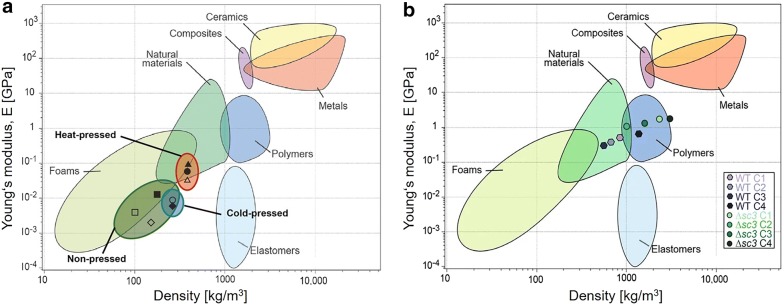
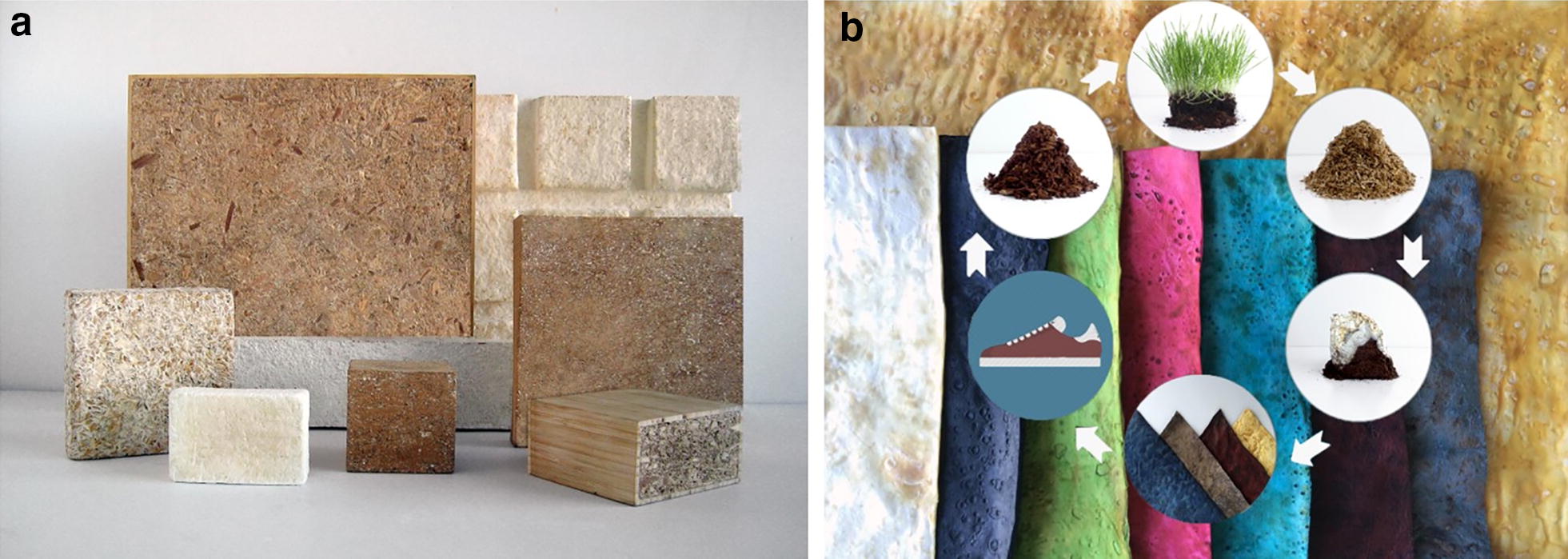
Material properties that can be achieved with fungal mycelia. a Mycelium composites. b Mycelium textiles. The pictures depicted are reproduced from [45], which has been published under a Creative Commons Attribution licence (CC BY, http://creativecommons.org/licenses/by/4.0/)
Fig. 6
Fig. 6
MycoWorks’ fungal analogues for composites and leather. a Analogues for synthetic wood composites and expanded polystyrene foams. Mushrooms are very sensitive to their surroundings, and it is possible by altering subtle factors to make their tissue express a range of variably determined physical characteristics. While these materials can be grown into building components for construction and interior architectures, they can also be grown with delicately tuneable qualities. The strength, durability and biodegradable nature of mushroom-based materials suggest many ways in which fungi may be used. When the material is processed with traditional industrial wrapping and laminating equipment, it is possible to create functional materials. b Analogues for animal leather. The MycoWorks technology is able to tune fine mycelium leather to have material advantages similar to animal skin, becoming supple, elastic and strong, with excellent return, drape, compression and insulation. This mycelium leather, launched in early 2020 as Reishi™, has been designed as a drop-in material for existing leather processing machine tools, where it can be cured, finished and manufactured using well-honed industrial techniques and formulas
Fig. 7
Fig. 7
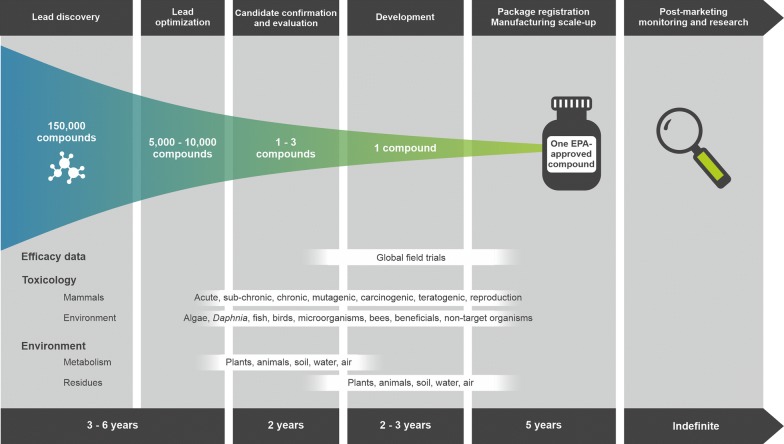
From science to market—the fungicide discovery and approval pipeline. Historically, the biological activity profile (fungicidal potency and spectrum) was used to filter hit compounds to lead molecules. Nowadays, regulatory requirements regarding human and ecotoxicological safety mean that proxy assays for these regulatory requirements are now utilised as early in the discovery pipeline as possible as part of the selection criteria for compound progression. It will typically take 10–12 years for a new fungicide to pass through the various stages of research (lead generation, early and late lead evaluation, optimisation and candidate confirmation) before promotion into evaluation and, finally, product development. After reaching the market, a significant amount of investment is still required for product lifecycle management (e.g. product monitoring feeds into improvements in formulation)
Fig. 8
Fig. 8
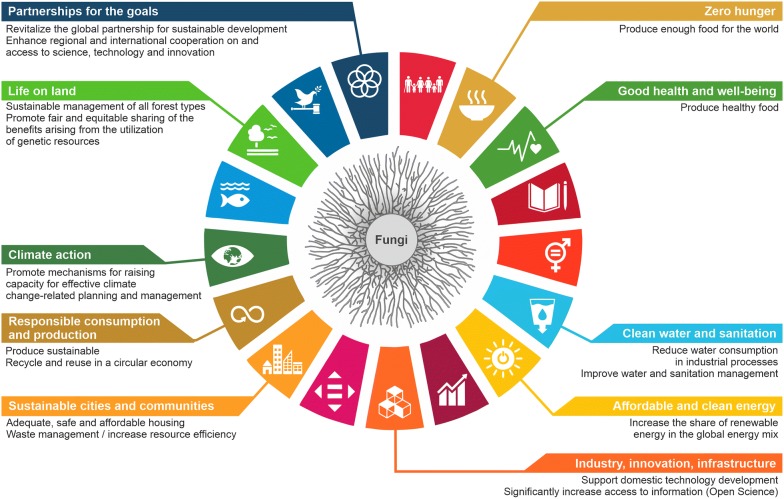
Fungal biotechnology has the potential to make a significant contribution meeting 10 out of 17 United Nation’s sustainable development goals through the rational improvement of filamentous fungal cell factories

References

    1. Ereky K. Biotechnologie der Fleisch-, Fett-, und Milcherzeugung im landwirtschaftlichen Grossbetriebe: für naturwissenschaftlich gebildete Landwirte verfasst. Berlin: Paul Parey; 1919.
    1. Cairns TC, Nai C, Meyer V. How a fungus shapes biotechnology: 100 years of Aspergillus niger research. Fungal Biol Biotechnol. 2018;5:13. doi: 10.1186/s40694-018-0054-5. - DOI - PMC - PubMed
    1. Citric Acid Market worth 3.6 Billion USD by 2020. Markets and markets. 2015. https://www.marketsandmarkets.com/PressReleases/citric-acid.asp. Accessed 3 Jan 2020.
    1. Meyer V, Andersen MR, Brakhage AA, Braus GH, Caddick MX, Cairns TC, et al. Current challenges of research on filamentous fungi in relation to human welfare and a sustainable bio-economy: a white paper. Fungal Biol Biotechnol. 2016;3:6. doi: 10.1186/s40694-016-0024-8. - DOI - PMC - PubMed
    1. Bayer E. The mycelium revolution is upon us. Scientific American. 1 July 2019. https://blogs.scientificamerican.com/observations/the-mycelium-revolutio.... Accessed 20 Feb 2020.

LinkOut - more resources