


The effect of nasal and oral breathing on airway collapsibility in patients with obstructive sleep apnea: Computational fluid dynamics analyses
- PMID: 32282859
- PMCID: PMC7153879
- DOI: 10.1371/journal.pone.0231262
The effect of nasal and oral breathing on airway collapsibility in patients with obstructive sleep apnea: Computational fluid dynamics analyses
Abstract
Objective: The purpose of this study was to investigate the effect of breathing route on the collapsibility of the pharyngeal airway in patients with obstructive sleep apnea by using computational fluid dynamics technology.
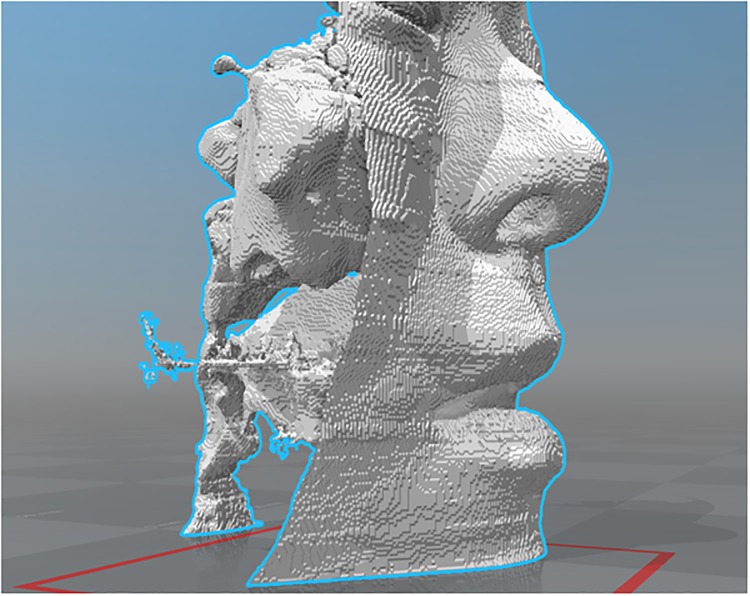
Methods: This study examined Japanese men with obstructive sleep apnea. Computed tomography scans of the nose and pharynx were taken during nasal breathing with closed mouth, nasal breathing with open mouth, and oral breathing while they were awake. Three-dimensional reconstructed stereolithography models and digital unstructured grid models were created and airflow simulations were performed using computational fluid dynamics software.
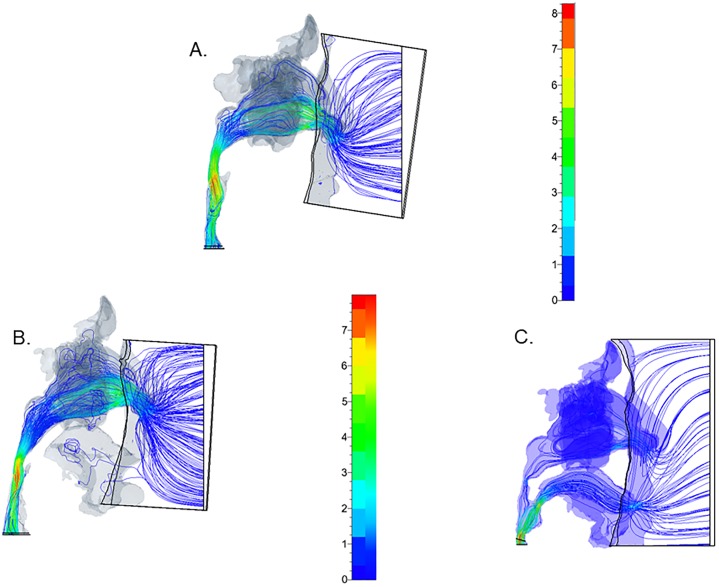
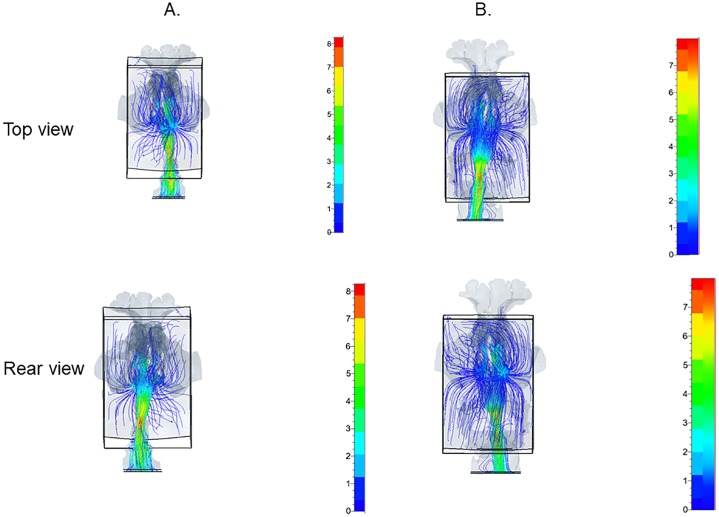
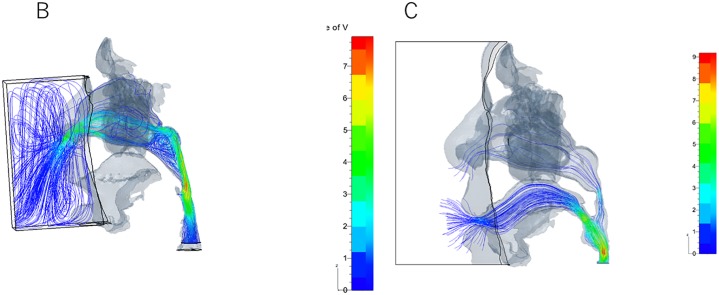
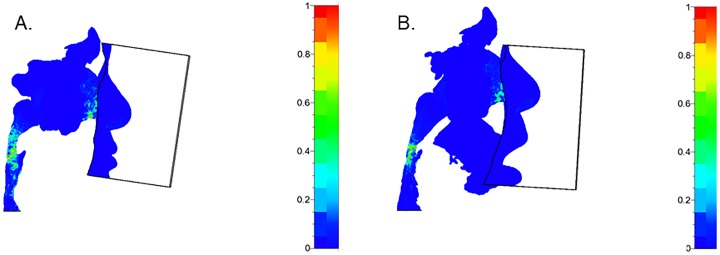
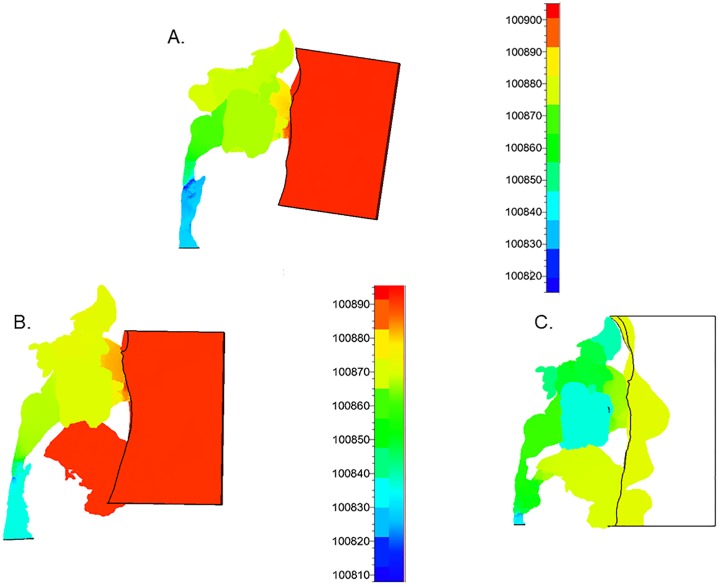
Results: Airflow velocity was significantly higher during oral breathing than during nasal breathing with open or closed mouth. No significant difference in maximum velocity was noted between nasal breathing with closed and open mouth. However, airflow during nasal breathing with open mouth was slow but rapidly sped up at the lower level of the velopharynx, and then spread and became a disturbed, unsteady stream. In contrast, airflow during nasal breathing with closed mouth gradually sped up at the oropharyngeal level without spreading or disturbance. Negative static pressure during oral breathing was significantly decreased; however, there were no significant differences between nasal breathing with closed or open mouth.
Conclusions: Computational fluid dynamics results during nasal and oral breathing revealed that oral breathing is the primary condition leading to pharyngeal airway collapse based on the concept of the Starling Resistor model. Airflow throughout the entirety of the breathing route was smoother during nasal breathing with closed mouth than that with open mouth.
Conflict of interest statement
The authors have declared that no competing interests exist.
Figures
References
-
- Berry RB, Brooks R, Gamaldo CE, Harding SM, Lloyd RM, Quan SF, et al. for the American Academy of Sleep Medicine. The AASM Manual for the Scoring of Sleep and Associated Events: Rules, Terminology and Technical Specifications. Darien, IL: American Academy of Sleep Medicine; 2018. Version 2.5.
MeSH terms
LinkOut - more resources
Full Text Sources
