


Study of knowledge, attitude, anxiety & perceived mental healthcare need in Indian population during COVID-19 pandemic
- PMID: 32283510
- PMCID: PMC7139237
- DOI: 10.1016/j.ajp.2020.102083
Study of knowledge, attitude, anxiety & perceived mental healthcare need in Indian population during COVID-19 pandemic
Abstract
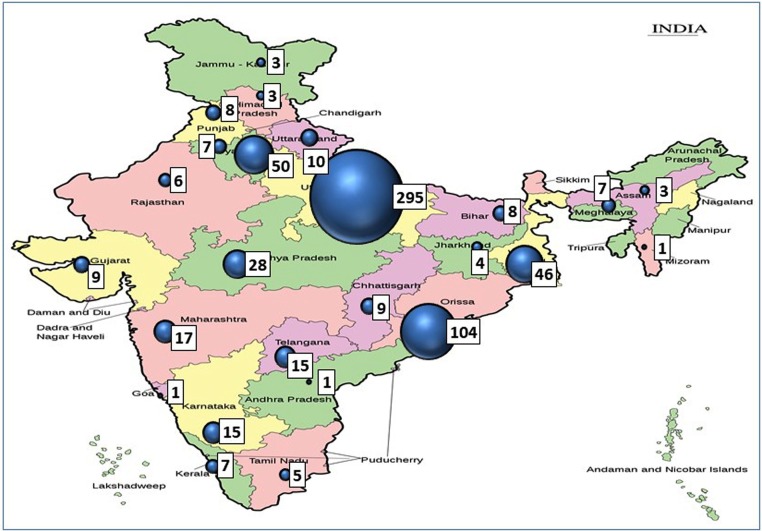
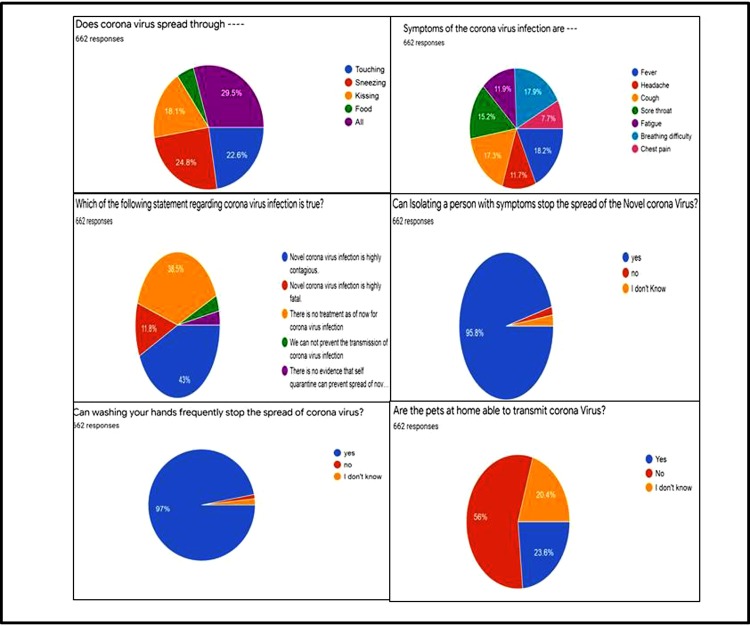
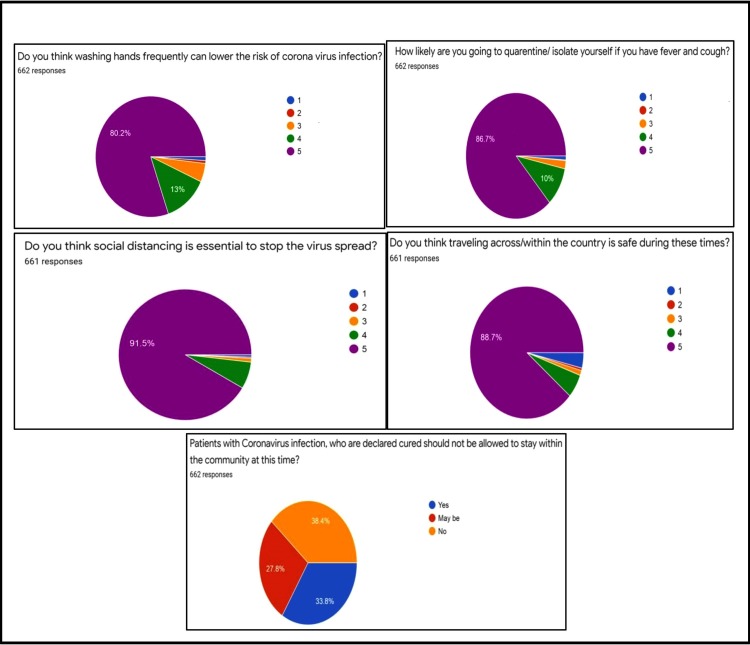
Novel Corona Virus Disease (COVID-19) originating from China has rapidly crossed borders, infecting people throughout the whole world. This phenomenon has led to a massive public reaction; the media has been reporting continuously across borders to keep all informed about the pandemic situation. All these things are creating a lot of concern for people leading to heightened levels of anxiety. Pandemics can lead to heightened levels of stress; Anxiety is a common response to any stressful situation. This study attempted to assess the knowledge, attitude, anxiety experience, and perceived mental healthcare need among adult Indian population during the COVID-19 pandemic. An online survey was conducted using a semi-structured questionnaire using a non-probability snowball sampling technique. A total of 662 responses were received. The responders had a moderate level of knowledge about the COVID-19 infection and adequate knowledge about its preventive aspects. The attitude towards COVID-19 showed peoples' willingness to follow government guidelines on quarantine and social distancing. The anxiety levels identified in the study were high. More than 80 % of the people were preoccupied with the thoughts of COVID-19 and 72 % reported the need to use gloves, and sanitizers. In this study, sleep difficulties, paranoia about acquiring COVID-19 infection and distress related social media were reported in 12.5 %, 37.8 %, and 36.4 % participants respectively. The perceived mental healthcare need was seen in more than 80 % of participants. There is a need to intensify the awareness and address the mental health issues of people during this COVID-19 pandemic.
Keywords: Anxiety; Attitude; Awareness; COVID-19 pandemic; Mental healthcare.
Copyright © 2020 Elsevier B.V. All rights reserved.
Conflict of interest statement
Declaration of Competing Interest None.
Figures
Comment in
-
How the COVID-19 Pandemic Affects the Definition of a Condition?: A commentary on the diagnostic process of Autism Spectrum Disorder.Sultan Qaboos Univ Med J. 2021 May;21(2):e164-e165. doi: 10.18295/squmj.2021.21.02.002. Epub 2021 Jun 21. Sultan Qaboos Univ Med J. 2021. PMID: 34221461 Free PMC article. No abstract available.
References
-
- Abebe T.B., Bhagavathula A.S., Tefera Y.G., Ahmad A., Khan M.U., Belachew S.A., Brown B., Abegaz T.M. Healthcare professionals’ awareness, knowledge, attitudes, perceptions and beliefs about Ebola at Gondar University Hospital, Northwest Ethiopia: a cross-sectional study. J. Public Health Afr. 2016;7:570. doi: 10.4081/jphia.2016.570. - DOI - PMC - PubMed
-
- Burrell C.J., Howard C.R., Murphy F.A. In: Fenner and White’s Medical Virology (Fifth Edition) Burrell C.J., Howard C.R., Murphy F.A., editors. Academic Press; London: 2017. Chapter 31 - coronaviruses; pp. 437–446. - DOI
