


Reasons for Tooth Extractions and Related Risk Factors in Adult Patients: A Cohort Study
- PMID: 32283707
- PMCID: PMC7178127
- DOI: 10.3390/ijerph17072575
Reasons for Tooth Extractions and Related Risk Factors in Adult Patients: A Cohort Study
Abstract
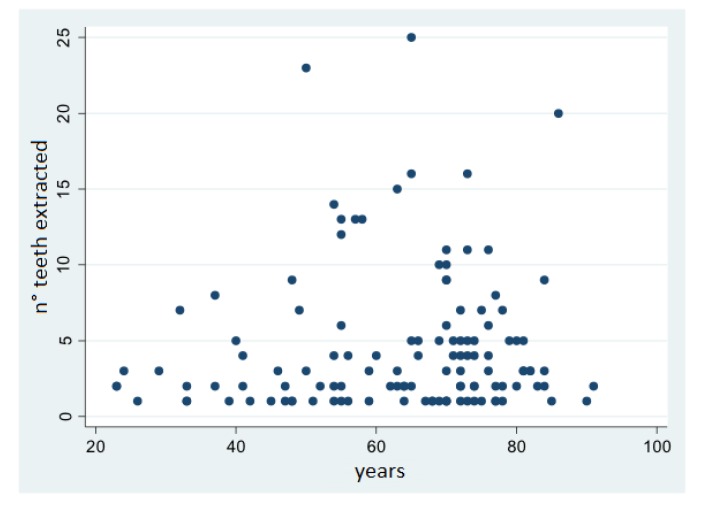
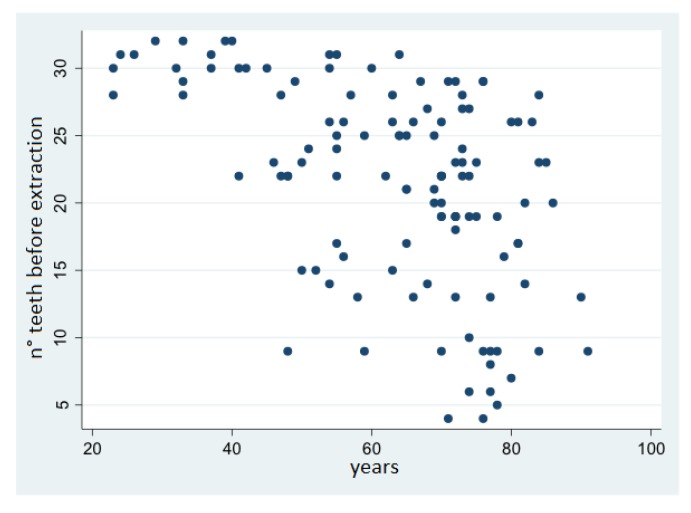
Background: The aim of this study was to evaluate oral status, the reasons for tooth extractions and related risk factors in adult patients attending a hospital dental practice. Methods: 120 consecutive patients ranging from 23 to 91 years in age (mean age of 63.3 ± 15.8) having a total of 554 teeth extracted were included. Surveys about general health status were conducted and potential risk factors such as smoking, diabetes and age were investigated. Results: a total of 1795 teeth were missing after extraction procedures and the mean number of remaining teeth after the extraction process was 16.8 ± 9.1 per patient. Caries (52.2%) was the most common reason for extraction along with periodontal disease (35.7%). Males were more prone to extractions, with 394 of the teeth extracted out of the total of 554 (71.1%). Male sex (β = 2.89; 95% CI 1.26, 4.53; p = 0.001) and smoking habit (β = 2.95; 95% CI 1.12, 4.79; p = 0.002) were related to a higher number of teeth extracted. Age (β = -0.24; 95% CI -0.31, -0.16; p < 0.001) and diabetes (β = -4.47; 95% CI -7.61, -1.33; p = 0.006) were related to a higher number of missing teeth at evaluation time. Moreover, periodontal disease was more common as a reason of extraction among diabetic patients than among non-diabetic ones (p = 0.04). Conclusions: caries and periodontal disease were the most common causes of extraction in a relatively old study population: further screening strategies might be required for the early interception of caries and periodontal disease.
Keywords: caries; dentistry; extractions; oral health.
Conflict of interest statement
The authors declare no conflict of interest.
Figures
References
MeSH terms
LinkOut - more resources
Full Text Sources
Medical
