An ancient evolutionary connection between Ribonuclease A and EndoU families
- PMID: 32284351
- PMCID: PMC7297114
- DOI: 10.1261/rna.074385.119
An ancient evolutionary connection between Ribonuclease A and EndoU families
Abstract
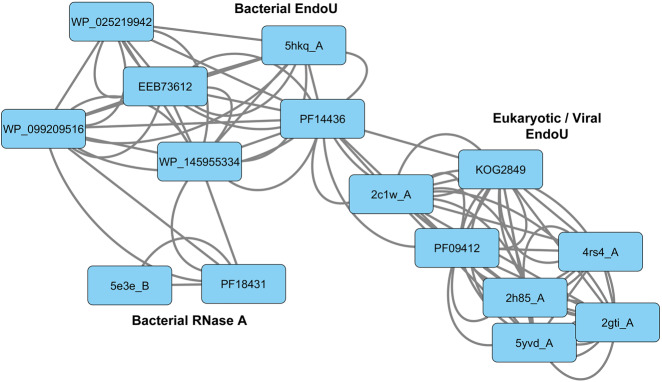
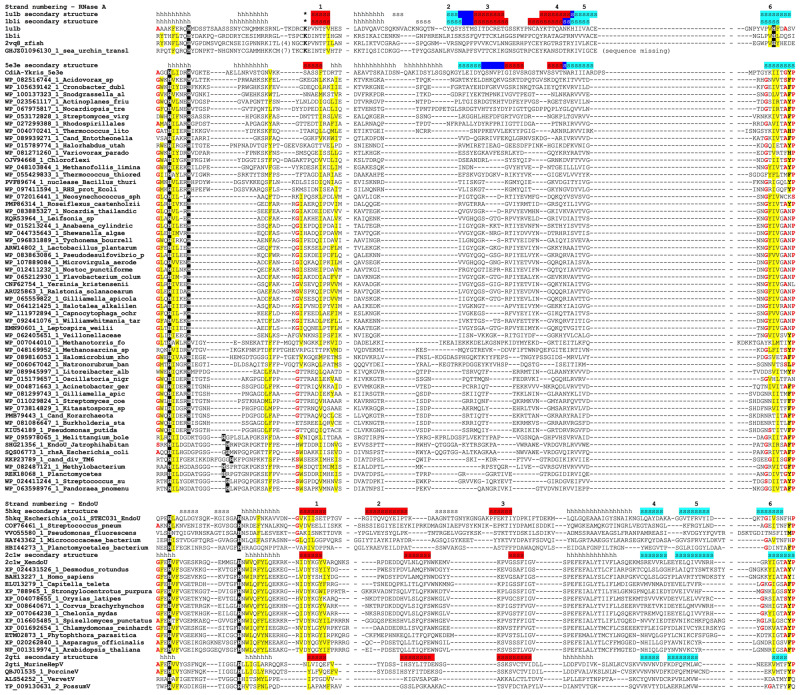
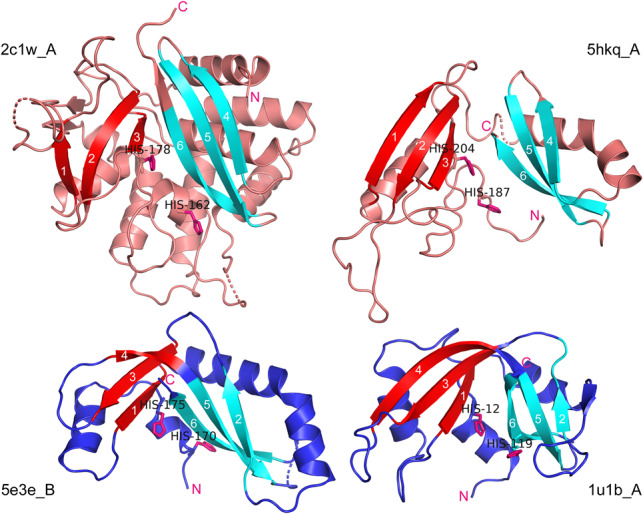
The ribonuclease A family of proteins is well studied from the biochemical and biophysical points of view, but its evolutionary origins are obscure, as no sequences homologous to this family have been reported outside of vertebrates. Recently, the spatial structure of the ribonuclease domain from a bacterial polymorphic toxin was shown to be closely similar to the structure of vertebrate ribonuclease A. The absence of sequence similarity between the two structures prompted a speculation of convergent evolution of bacterial and vertebrate ribonuclease A-like enzymes. We show that bacterial and homologous archaeal polymorphic toxin ribonucleases with a known or predicted ribonuclease A-like fold are distant homologs of the ribonucleases from the EndoU family, found in all domains of cellular life and in viruses. We also detected a homolog of vertebrate ribonucleases A in the transcriptome assembly of the sea urchin Mesocentrotus franciscanus These observations argue for the common ancestry of prokaryotic ribonuclease A-like and ubiquitous EndoU-like ribonucleases, and suggest a better-grounded scenario for the origin of animal ribonucleases A, which could have emerged in the deuterostome lineage, either by an extensive modification of a copy of an EndoU gene, or, more likely, by a horizontal acquisition of a prokaryotic immunity-mediating ribonuclease gene.
Keywords: protein folding; ribonuclease A; ribonuclease EndoU.
© 2020 Mushegian et al.; Published by Cold Spring Harbor Laboratory Press for the RNA Society.
Figures
References
Publication types
MeSH terms
Substances
Grants and funding
LinkOut - more resources
Full Text Sources
Miscellaneous