MiR-186 bidirectionally regulates cisplatin sensitivity of ovarian cancer cells via suppressing targets PIK3R3 and PTEN and upregulating APAF1 expression
- PMID: 32284740
- PMCID: PMC7150455
- DOI: 10.7150/jca.41135
MiR-186 bidirectionally regulates cisplatin sensitivity of ovarian cancer cells via suppressing targets PIK3R3 and PTEN and upregulating APAF1 expression
Abstract
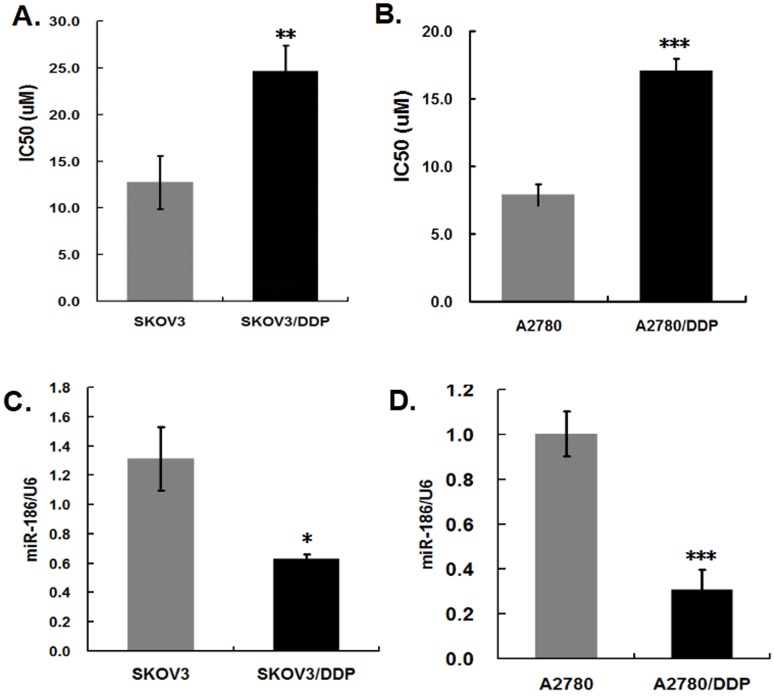
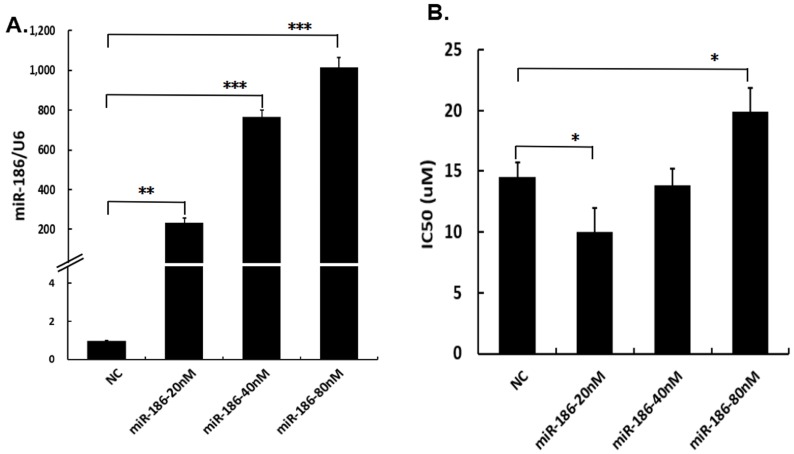
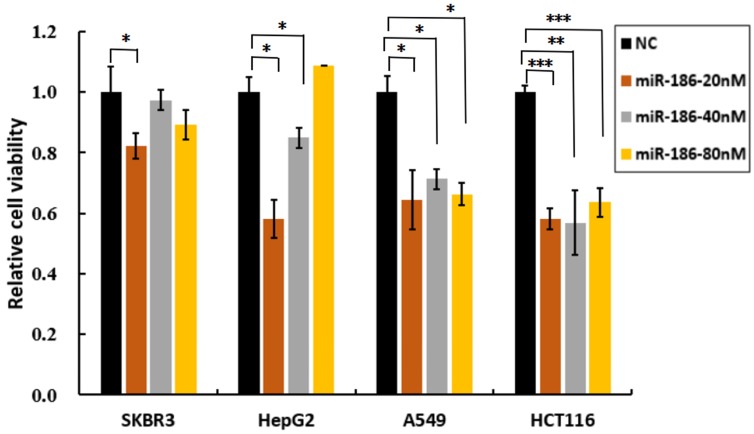
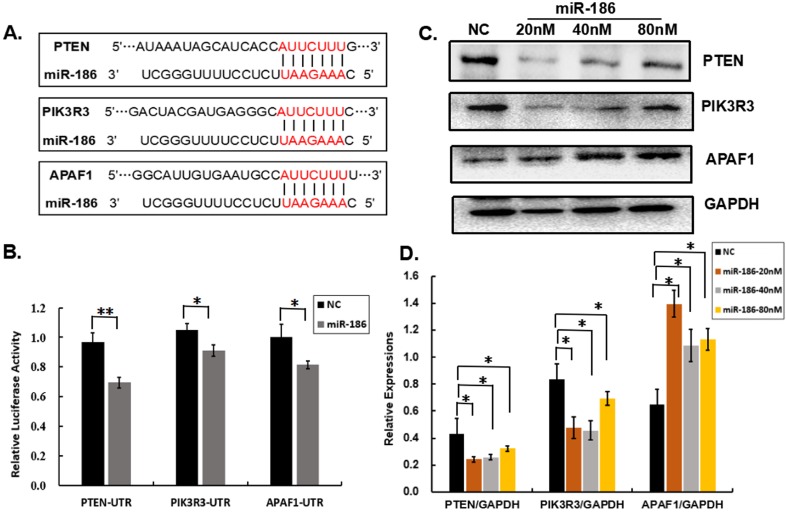
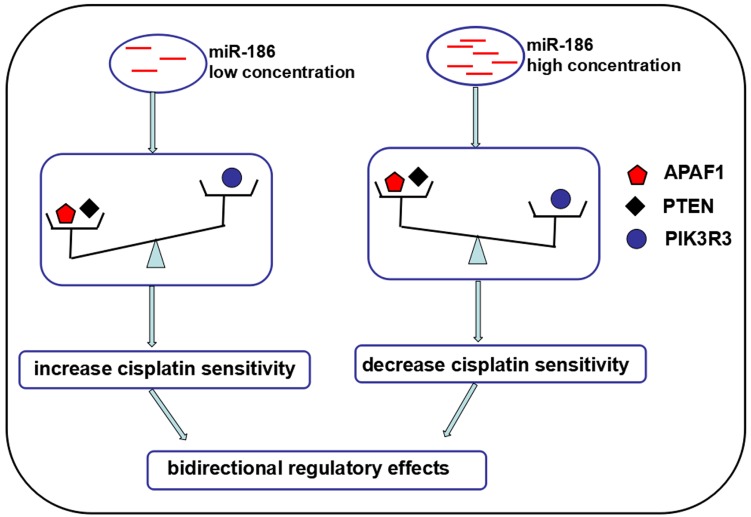
Ovarian cancer is a highly lethal malignancy in the female reproductive system. Platinum drugs, represented by cisplatin, are the first-line chemotherapeutic agents for treatment of various malignancies including ovarian cancer, but drug resistance leads to chemotherapy failure. MicroRNAs emerged as promising molecules in reversal of cisplatin resistance. MiR-186 was reported to be downregulated in the cisplatin-resistant ovarian cell lines and miR-186 expression increased cisplatin sensitivity. However, we found the bidirectional regulatory effects of miR-186 on cisplatin sensitivity for the first time that overexpression of miR-186 at low concentration increased the cisplatin sensitivity of ovarian cancer cells A2780/DDP, while high concentration of miR-186 decreased the cisplatin sensitivity. The survival assay in other types of cancer cell lines verified the bidirectional regulatory function of miR-186 on cisplatin sensitivity in dose and cell type dependent manners. MiR-186 suppressed the protein levels of PTEN and PIK3R3 dose-dependently, which are opposite regulatory molecules of the oncogenic AKT pathway. MiR-186 also enhanced the protein levels of apoptotic gene APAF1 dose-dependently. We proposed the final effects of PTEN and APAF1 outweighed PIK3R3 when miR-186 at low concentration so as to increase the cisplatin sensitivity of ovarian cancer cells, while the final effects of PIK3R3 outweighed PTEN and APAF1 when miR-186 at high concentration so as to decrease the cisplatin sensitivity. We concluded the outcome of regulation of these opposite functional molecules contributed to the bidirectional regulatory effects of miR-186 in ovarian cancer cisplatin sensitivity. It deserves more attentions when developing therapeutic strategies based on the bidirectional functional miRNAs.
Keywords: bidirectional regulation; cisplatin sensitivity; dose-dependent; miR-186; ovarian cancer.
© The author(s).
Conflict of interest statement
Competing Interests: The authors have declared that no competing interest exists.
Figures
References
-
- Bray F, Ferlay J, Soerjomataram I. et al. Global cancer statistics 2018: GLOBOCAN estimates of incidence and mortality worldwide for 36 cancers in 185 countries. CA Cancer J Clin. 2018;68(6):394–424. - PubMed
-
- Barabas K, Milner R, Lurie D. et al. Cisplatin: a review of toxicities and therapeutic applications. Vet Comp Oncol. 2008;6(1):1–18. - PubMed
-
- Friedlander M, Trimble E, Tinker A. et al. Clinical trials in recurrent ovarian cancer. Int J Gynecol Cancer. 2011;21(4):771–775. - PubMed
-
- Li H, Zeng J, Shen K. PI3K/AKT/mTOR signaling pathway as a therapeutic target for ovarian cancer. Arch Gynecol Obstet. 2014;290(6):1067–1078. - PubMed
LinkOut - more resources
Full Text Sources
Research Materials