


Understanding the mechanisms that facilitate specificity, not redundancy, of chemokine-mediated leukocyte recruitment
- PMID: 32285441
- PMCID: PMC7370109
- DOI: 10.1111/imm.13200
Understanding the mechanisms that facilitate specificity, not redundancy, of chemokine-mediated leukocyte recruitment
Abstract
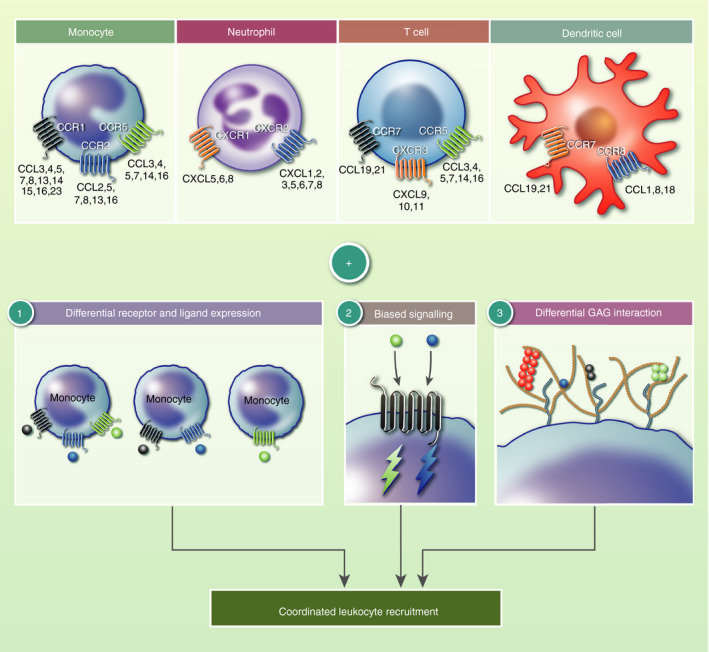
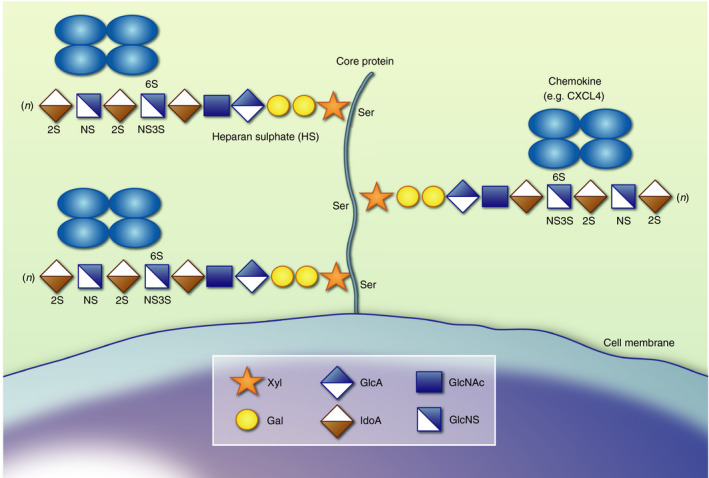
Chemokines (chemotactic cytokines) and their receptors are critical to recruitment and positioning of cells during development and the immune response. The chemokine system has long been described as redundant for a number of reasons, where multiple chemokine ligands can bind to multiple receptors and vice versa. This apparent redundancy has been thought to be a major reason for the failure of drugs targeting chemokines during inflammatory disease. We are now beginning to understand that chemokine biology is in fact based around a high degree of specificity, where each chemokine and receptor plays a particular role in the immune response. This specificity hypothesis is supported by a number of recent studies designed to address this problem. This review will detail these studies and the mechanisms that produce this specificity of function with an emphasis on the emerging role of chemokine-glycosaminoglycan interactions.
Keywords: chemokine/chemokine receptors; chemokines; chemotaxis; inflammation.
© 2020 The Authors. Immunology published by John Wiley & Sons Ltd.
Conflict of interest statement
The author has no conflict of interest.
Figures
References
-
- Luster AD. Chemokines–chemotactic cytokines that mediate inflammation. N Engl J Med 1998; 338:436–45. - PubMed
-
- Olson TS, Ley K. Chemokines and chemokine receptors in leukocyte trafficking. Am J Physiol Regul Integr Comp Physiol 2002; 283:R7–28. - PubMed
-
- Baggiolini M, Loetscher P. Chemokines in inflammation and immunity. Immunol Today 2000; 21:418–20. - PubMed
-
- Gerard C, Rollins BJ. Chemokines and disease. Nat Immunol 2001; 2:108–15. - PubMed
-
- Griffith JW, Sokol CL, Luster AD. Chemokines and chemokine receptors: positioning cells for host defense and immunity. Annu Rev Immunol 2014; 32:659–702. - PubMed
Publication types
MeSH terms
Substances
Grants and funding
LinkOut - more resources
Full Text Sources
