. 2020 Apr 14;15(4):e0231323.
doi: 10.1371/journal.pone.0231323. eCollection 2020.

Identification and characterization of large-scale genomic rearrangements during wheat evolution

Affiliations

Identification and characterization of large-scale genomic rearrangements during wheat evolution

Inbar Bariah et al. PLoS One. .

Abstract

Following allopolyploidization, nascent polyploid wheat species react with massive genomic rearrangements, including deletion of transposable element-containing sequences. While such massive rearrangements are considered to be a prominent process in wheat genome evolution and speciation, their structure, extent, and underlying mechanisms remain poorly understood. In this study, we retrieved ~3500 insertions of a specific variant of Fatima, one of the most dynamic gypsy long-terminal repeat retrotransposons in wheat from the recently available high-quality genome drafts of Triticum aestivum (bread wheat) and Triticum turgidum ssp. dicoccoides or wild emmer, the allotetraploid mother of all modern wheats. The dynamic nature of Fatima facilitated the identification of large (i.e., up to ~ 1 million bases) Fatima-containing insertions/deletions (indels) upon comparison of bread wheat and wild emmer genomes. We characterized 11 such indels using computer-assisted analysis followed by PCR validation, and found that they might have occurred via unequal intra-strand recombination or double-strand break (DSB) events. Additionally, we observed one case of introgression of novel DNA fragments from an unknown source into the wheat genome. Our data thus indicate that massive large-scale DNA rearrangements might play a prominent role in wheat speciation.


Conflict of interest statement

The authors have declared that no competing interests exist.

Figures
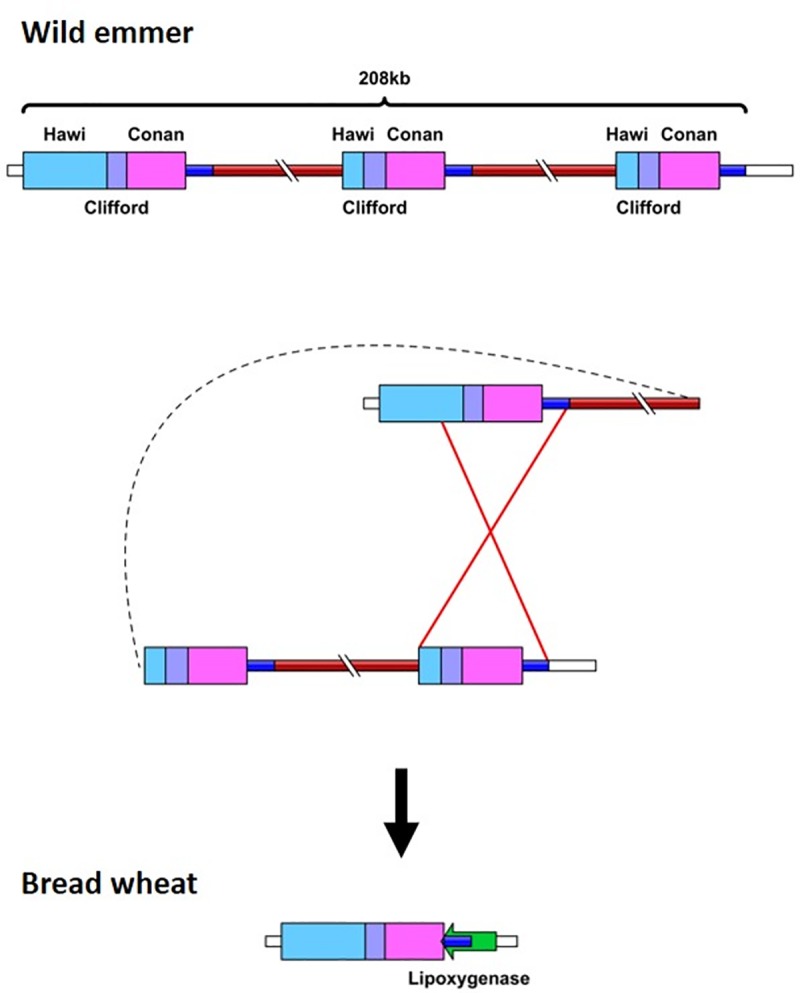
Fig 1
Fig 1. Schematic representation of the locus containing 5B1 in the wild emmer and bread wheat genomes.
Unequal intra-strand recombination involving TEs resulted in a large-scale deletion in bread wheat (bottom) vs. wild emmer (top). Sequence length is unscaled. The lipoxgenase gene (TRIAE_CS42_5BL_TGACv1_408003_AA1360930, green arrow) was annotated in bread wheat, while no genes were identified in the orthologous genomic locus in wild emmer. Different colored boxes denote different TE families. Pale blue box notes a retrotransposon. Purple and pink boxes note DNA-transposons. Brown line represents two direct sequence repeats. Blue line represents ~4 kb sequence segment that was annotated as part of a gene coding for a lipoxygenase in bread wheat and was not annotated in wild emmer. Red lines represent the suggested unequal intra-strand recombination event.
Fig 2
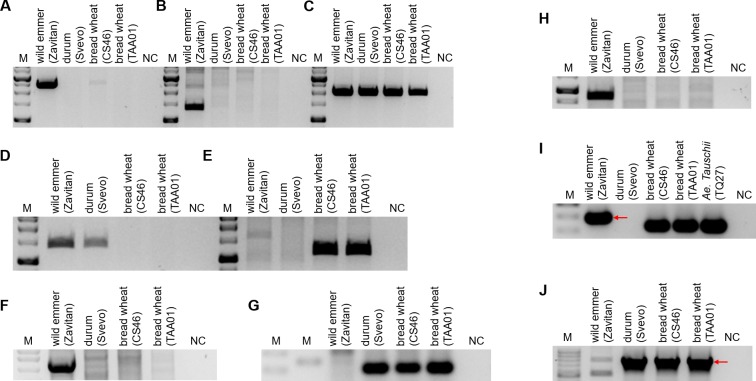
Fig 2. PCR analysis using primers designed based on Indels identified between wild emmer and bread wheat.
Indel in locus 5B1 (A-C): (A) Forward primer designed based on the 7.6 kb segment in bread wheat genome which shows high nucleotide identity to both the 5' region and the 3' region flanking the wild emmer 5B1 locus deleted sequence from the wild emmer genome and reverse primer designed based on the deleted sequence. (B) Forward primer designed based on the deleted sequence and reverse wild emmer specific primer designed based on the Indel 3' flanking region of 5B1 which shows high nucleotide identity to the 7.6 kb segment in bread wheat 5B1 locus. (C) Forward primer as was used for the reaction described for (A) and reverse primer designed based on the Indel 3' flanking. Indel in locus 5B3 (D-E): (D) Forward primer designed based on the deleted sequence and reverse primer based on the Indel 3' flanking. (E) Forward primer based on the Indel 5' flanking and the same reverse primer as was used for the reaction described for (D). Indel in locus 3B4 (F-G): (F) Forward primer designed based of the 5' flanking sequence of 3B4 and reverse primer designed based on the deleted sequence. (G) Forward primer as was used for the reaction described for (F) and reverse primer designed from the 3' flanking of 3B4. Indel in locus 5B5 (H-J): PCR validations were carried out using primers designed based on the flanking sequences of the Indel coupled with primers designed from the 41 kb wild emmer specific segment (H-I). Expected product length are indicated by red arrows in (I-J). The lower bands in (I) were sequenced and identified in the D sub-genome of the bread wheat. (J) Forward primer designed based on the 11kb bread wheat specific sequence and the reverse primer was the same primer as was used for (I), designed based on sequence located downstream to the Indel. Non-specific amplification was observed for wild emmer. See S1 Table for detailed plant accessions list and S2 Table for primers design and expected products lengths. “M” represents the size marker, “NC” represents for negative control, ddH20 was used as template in PCR reactions. The PCR analysis in (A-C), (D-E), (F), (G), (H), (I) and (J) were visualized on separate agarose gels.
Fig 3
Fig 3
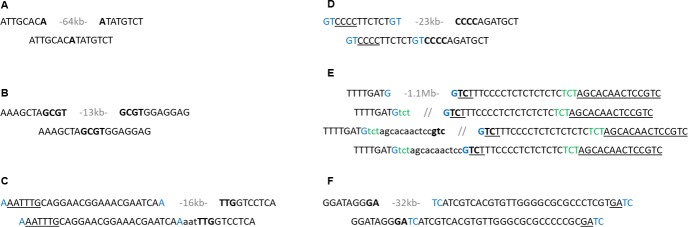
Indels result in sequence signatures characterizing DSB repair via MMEJ (A-B) and SD-MMEJ (C-F). Sequence signatures from genomic loci 5B3 (A), 5B4 (B), 3B2 (C), 3B3 (D), 3B4 (E), and 3B5 (F). The top row represents the indel breakpoints in wild emmer, while the bottom row represents the sequence at the orthologous loci in bread wheat. In (E), the second and third rows represent suggested SD-MMEJ intermediates. Only top strands are shown. Bold-short direct or inverted repeats spanning the DSB which might have been utilized for microhomology during DSB repair. Blue and green- short direct repeats near but not necessarily spanning the DSB that might have been used as primer repeats. Templates used in fill-in synthesis are underlined and net sequence insertions are in lowercase. The length of the deleted sequence is indicated in gray.
Fig 4
Fig 4
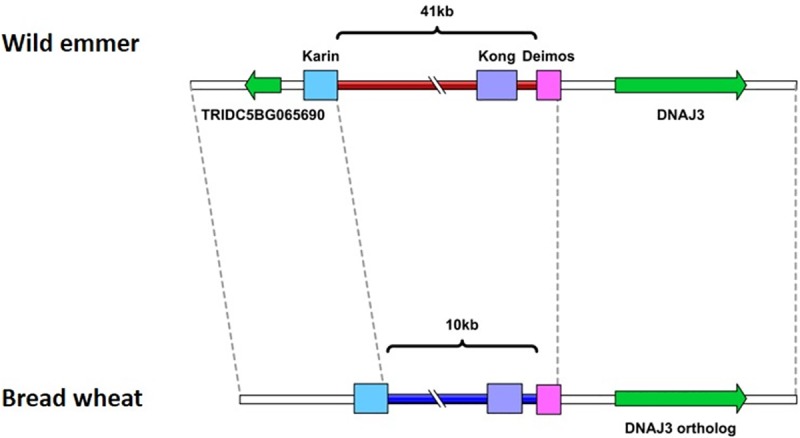
Schematic representation of locus 5B5 in wild emmer (top) and bread wheat (bottom). Introgression of a new sequence into locus 5B5 in the wheat genome. Sequence length is unscaled. Colored boxes denote different TE families. Pale blue box notes retrotransposon. Purple and pink boxes note DNA-transposons. Genes are represented by green arrows. A gene (accession number: TRIDC5BG065690) codes for an undescribed protein and found ~0.5 kb upstream to the Karin insertion in wild emmer. A gene (accession number: TRIDC5BG065700) codes for chaperone protein dnaJ3, found ~1 kb downstream from the Deimos insertion in wild emmer. A protein coding gene (accession number:: TRIAE_CS42_5BL_TGACv1_405168_AA1321480) in bread wheat shows homology to “TRIDC5BG065700” gene. Brown and blue lines represent the wild emmer and bread wheat specific sequence, respectively. Dashed lines connect between orthologous sequence segments in the borders of the indel and in the ends of the represented sequences.
Fig 5
Fig 5
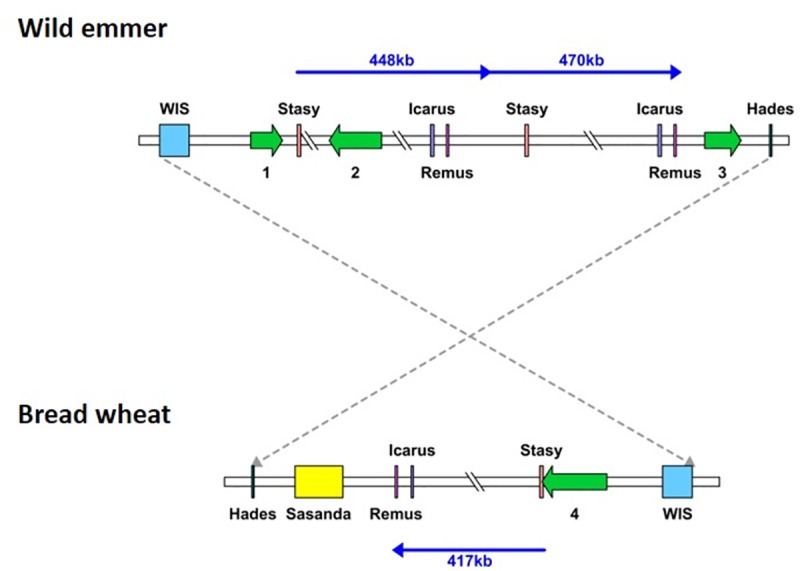
Schematic representation of locus 5B6 in wild emmer (top) and bread wheat (bottom). Segmental duplication in wild emmer locus 5B6. Sequence length is unscaled. Locus 5B6 is part of a ~6.5 Mbp segment that underwent inversion between wild emmer and bread wheat. TEs are represented as colored boxes. Pale blue, orange and yellow boxes note retrotransposons. Purple, pink and dark green boxes note DNA-transposons. Genes are denoted by green arrows: (1) F-box domain-containing protein (accession number: TRIDC5BG011160.1); (2) Coatomer, beta subunit (accession number: TRIDC5BG011170.1); (3) Gene encodes for unknown function protein (accession number: TRIDC5BG011180); and (4) Protein coding gene (accession number: TRIAE_CS42_5BS_TGACv1_424303_AA1388580). Dashed lines connect between orthologous in the ends of the represented sequences. The blue line represents the ~460 kb segment, which appears as two tandem repeats in the wild emmer genome and in a single copy in the bread wheat genome.
Fig 6
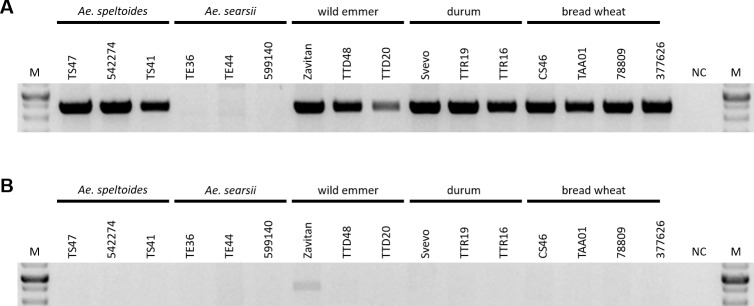
Fig 6. PCR analysis using primers designed based on copy number variation identified in locus 5B6.
(A) Forward primer designed from the 5' flanking (in wild emmer genome) of the sequence that underwent copy number variation and reverse primer designed from the 5' region of the repeat unit (in wild emmer genome). (B) Forward primer designed based on sequence located in the 3' end (in wild emmer genome) of the segment that underwent copy number variation and the reverse primer that was used for the reaction in (A). “M” represents the size marker, “NC” represents negative control, ddH20 was used as template in PCR reactions. The PCR analysis was performed for different accessions of wheat allopolyploids (3 wild emmer accessions, 3 durum accessions and 4 bread wheat accessions) and for the available species which are closely related to the diploid B sub-genome donor (3 Ae. speltoides accessions and 3 Ae. searsii accessions). See S1 Table for detailed plant accessions list and S2 Table for primers design and expected products lengths. The PCR analysis in (A) and (B) were visualized on separate agarose gels.

References

    1. Miki Y, Yoshida K, Mizuno N, Nasuda S, Sato K, Takumi S. Origin of wheat B-genome chromosomes inferred from RNA sequencing analysis of leaf transcripts from section Sitopsis species of Aegilops. Isobe S, editor. DNA Res. 2019;26: 171–182. 10.1093/dnares/dsy047 - DOI - PMC - PubMed
    1. Ling H-Q, Ma B, Shi X, Liu H, Dong L, Sun H, et al. Genome sequence of the progenitor of wheat A subgenome Triticum urartu. Nature. 2018;557: 424 10.1038/s41586-018-0108-0 - DOI - PMC - PubMed
    1. Feldman M, Levy AA. Allopolyploidy–a shaping force in the evolution of wheat genomes. Cytogenet Genome Res. 2005;109: 250–258. 10.1159/000082407 - DOI - PubMed
    1. Dvořák J, Terlizzi P di, Zhang H-B, Resta P. The evolution of polyploid wheats: identification of the A genome donor species. Genome. 1993;36: 21–31. 10.1139/g93-004 - DOI - PubMed
    1. Avni R, Nave M, Barad O, Baruch K, Twardziok SO, Gundlach H, et al. Wild emmer genome architecture and diversity elucidate wheat evolution and domestication. Science (80-). 2017;357: 93–97. - PubMed

Publication types