


Learning during a crisis: The SARS epidemic in Taiwan
- PMID: 32287877
- PMCID: PMC7116916
- DOI: 10.1016/j.jdeveco.2014.09.006
Learning during a crisis: The SARS epidemic in Taiwan
Abstract
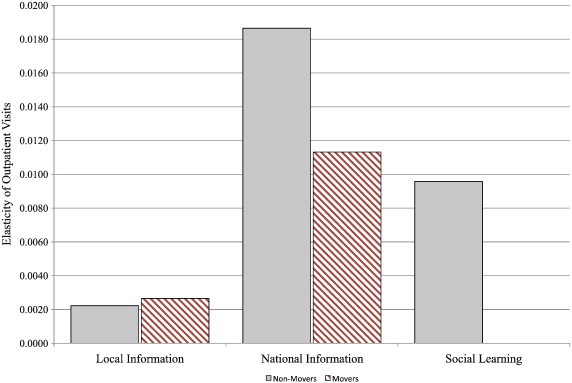
SARS struck Taiwan in 2003, causing a national crisis. Many people feared that SARS would spread through the health care system, and outpatient visits fell by more than 30% in the course of a few weeks. We examine how both public information and the behavior and opinions of peers contributed to this reaction. We identify a peer effect through a difference-in-difference comparison of longtime residents and recent arrivals, who are less socially connected. Although several forms of social interaction may contribute to this pattern, social learning is a plausible explanation for our finding. We find that people respond to both public information and to their peers. In a dynamic simulation based on the regressions, social interactions substantially magnify the response to SARS.
Keywords: Crisis; Economic epidemiology; Peer effects; Prevalence response; SARS; Social learning.
Copyright © 2014 Elsevier B.V. All rights reserved.
Figures




References
-
- Abadie Alberto, Gardeazabal Javier. The economic costs of conflict: a case study in the Basque Country. Am. Econ. Rev. 2003;93(1):113–132. (March)
-
- Ahituv Avner, Joseph Hotz V., Philipson Tomas. The responsiveness of the demand for condoms to the local prevalence of HIV. J. Hum. Resour. 1996;31(4):869–897. (September)
-
- Apesteguia Jose, Huck Steffan, Oechssler Jörg. Imitation — theory and experimental evidence. J. Econ. Theory. 2007;136:217–235.
-
- Banerjee Abhijit. A simple model of herd behavior. Q. J. Econ. 1992;107(3):797–817.
-
- Becker Gary, Rubinstein Yona. Centre for Economic Performance (LSE) Discussion Paper. 2011. Fear and the Response to Terrorism: An Economic Analysis.
LinkOut - more resources
Full Text Sources
Other Literature Sources
Miscellaneous
