


Anticancer potential of emodin
- PMID: 32289000
- PMCID: PMC7104001
- DOI: 10.1016/j.biomed.2012.03.003
Anticancer potential of emodin
Abstract
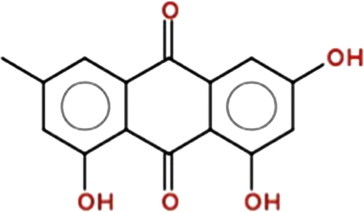
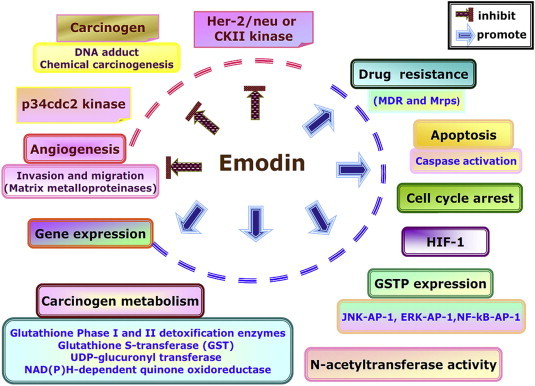
Traditional Chinese Medicine (TCM) is widely used in clinical research due to its low toxicity, low number of side effects, and low cost. Many components of common fruits and vegetables play well-documented roles as chemopreventive or chemotherapeutic agents that suppress tumorigenesis. Anthraquinones are commonly extracted from the Polygonaceae family of plants, e.g., Rheum palmatum and Rheum officinale. Some of the major chemical components of anthraquinone and its derivatives, such as aloe-emodin, danthron, emodin, chrysophanol, physcion, and rhein, have demonstrated potential anticancer properties. This review evaluates the pharmacological effects of emodin, a major component of Aloe vera. In particular, emodin demonstrates anti-neoplastic, anti-inflammatory, anti-angiogenesis, and toxicological potential for use in pharmacology, both in vitro and in vivo. Emodin demonstrates cytotoxic effects (e.g., cell death) through the arrest of the cell cycle and the induction of apoptosis in cancer cells. The overall molecular mechanisms of emodin include cell cycle arrest, apoptosis, and the promotion of the expression of hypoxia-inducible factor 1α, glutathione S-transferase P, N-acetyltransferase, and glutathione phase I and II detoxification enzymes while inhibiting angiogenesis, invasion, migration, chemical-induced carcinogen-DNA adduct formation, HER2/neu, CKII kinase, and p34cdc2 kinase in human cancer cells. Hopefully, this summary will provide information regarding the actions of emodin in cancer cells and broaden the application potential of chemotherapy to additional cancer patients in the future.
Keywords: angiogenesis; apoptosis; cell cycle arrest; emodin; traditional Chinese medicine (TCM).
Copyright © 2012 Published by Elsevier B.V.
Figures
References
-
- Wang M., Zhao R., Wang W., Mao X., Yu J. Lipid regulation effects of Polygoni Multiflori Radix, its processed products and its major substances on steatosis human liver cell line L02. J Ethnopharmacol. 2012;139:287–293. - PubMed
-
- Rao G.X., Xue Y.M., Hui T.T., Wang W.J., Zhang Q.L. Studies on the chemical constituents of the leaves of Polygonum multiflorum. Zhong Yao Cai. 2009;32:891–893. - PubMed
-
- Shin J.A., Shim J.H., Jeon J.G., Choi K.H., Choi E.S., Cho N.P. Apoptotic effect of Polygonum Cuspidatum in oral cancer cells through the regulation of specificity protein 1. Oral Dis. 2011;17:162–170. - PubMed
-
- Lee M.H., Kao L., Lin C.C. Comparison of the antioxidant and transmembrane permeative activities of the different Polygonum cuspidatum extracts in phospholipid-based microemulsions. J Agric Food Chem. 2011;59:9135–9141. - PubMed
-
- Liu J., Xia Z.T., Zhou G.R., Zhang L.L., Kong L.Y. Study on the chemical constituents of Rumex patientis. Zhong Yao Cai. 2011;34:893–895. - PubMed
Publication types
LinkOut - more resources
Full Text Sources
Other Literature Sources
Research Materials
Miscellaneous