


5-Year Update of a Multi-Institution, Prospective Phase 2 Hypofractionated Postmastectomy Radiation Therapy Trial
- PMID: 32289474
- PMCID: PMC7373304
- DOI: 10.1016/j.ijrobp.2020.03.020
5-Year Update of a Multi-Institution, Prospective Phase 2 Hypofractionated Postmastectomy Radiation Therapy Trial
Abstract
Purpose: Hypofractionation in the setting of postmastectomy radiation (PMRT) is not currently the standard of care in most countries. Here we present a 5-year update of our multi-institutional, phase 2 prospective trial evaluating a novel 15-day hypofractionated PMRT regimen.
Methods and materials: Patients were enrolled to receive 3.33 Gy daily to the chest wall (or reconstructed breast) and regional lymphatics in 11 fractions with an optional 4-fraction mastectomy scar boost. The primary endpoint was freedom from grade 3 or higher late non-reconstruction-related radiation toxicities. Toxicities were scored using Common Terminology Criteria for Adverse Events v4.0. Secondary endpoints included local and locoregional recurrence rates, cosmesis, and reconstruction complications.
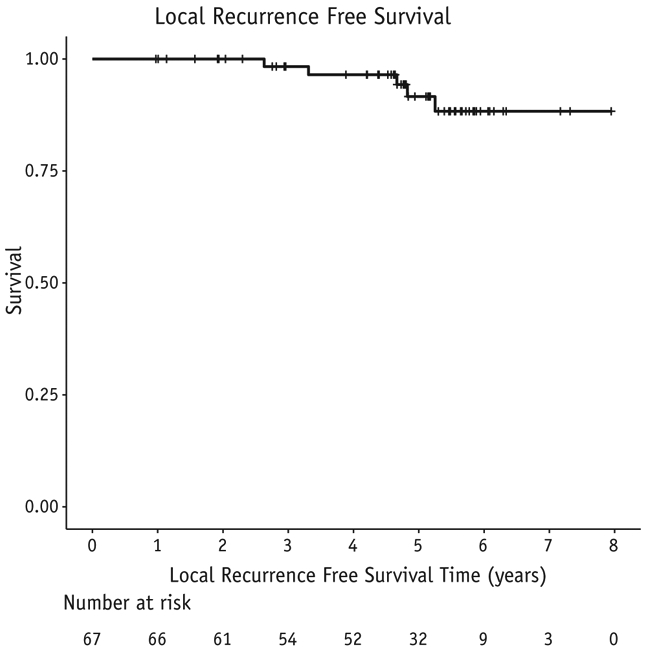
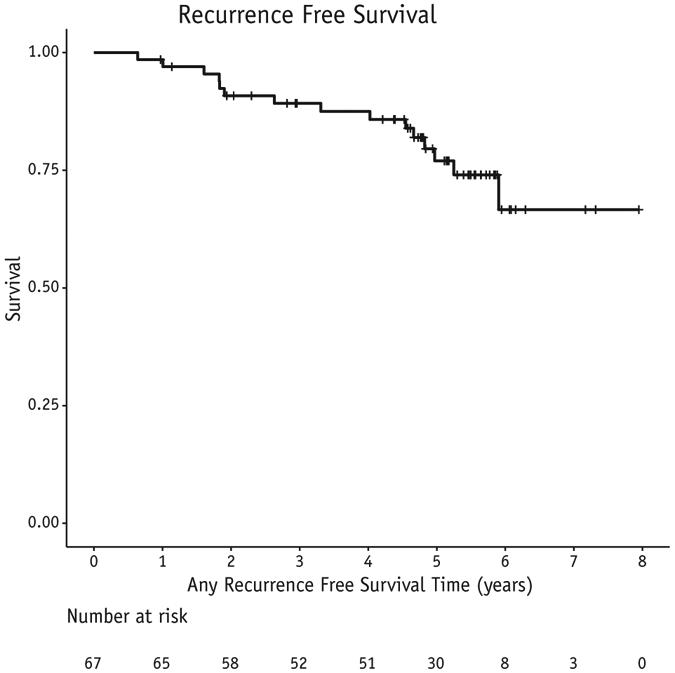
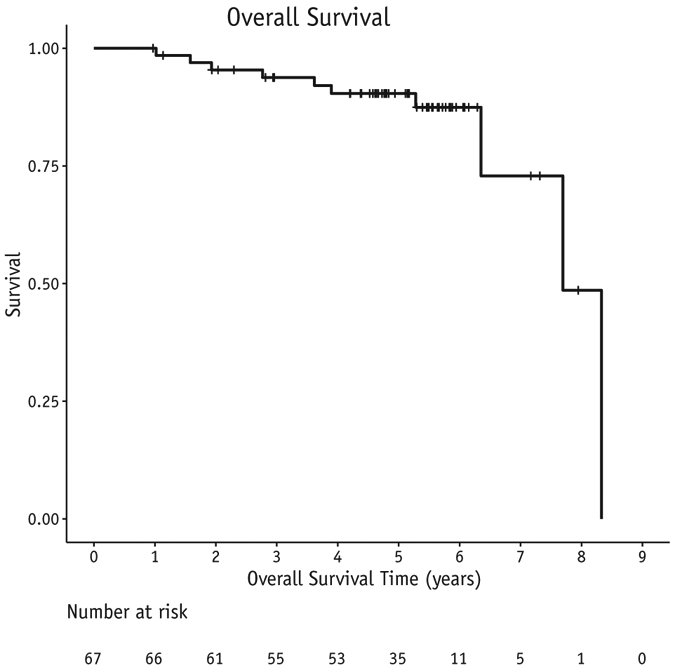
Results: After enrolling 69 patients with stage II-IIIa breast cancer, 67 women were eligible for analysis. At a median follow up of 54 months, there were no acute or late grade 3 and 4 nonreconstruction reported toxicities. The grade 2 or greater late toxicity rate was only 12% and comprised grade 2 pain, fatigue, and lymphedema that persisted beyond 6 months after completion of radiation therapy. Only 3 women (4.6%) experienced a chest wall or nodal recurrence as a first site of relapse. Freedom from local failure, including local failure after distant relapse, was 92% at 5 years, and the 5-year overall survival was 90%.
Conclusions: This is the first prospective trial conducted in the United States to demonstrate the safe and effective use of hypofractionated PMRT. We have demonstrated a low complication rate while achieving excellent local control. Toxicity was better than anticipated based on previously published series of PMRT toxicities. Although our fractionation was novel, the radiobiological equivalent dose is similar to other hypofractionation schedules. This trial was the basis for the creation of Alliance A221505 (RT CHARM), which is currently accruing patients in a phase 3 randomized design.
Copyright © 2020 Elsevier Inc. All rights reserved.
Figures
Comment in
-
In Regard to Poppe et al.Int J Radiat Oncol Biol Phys. 2021 Jan 1;109(1):300-301. doi: 10.1016/j.ijrobp.2020.09.014. Int J Radiat Oncol Biol Phys. 2021. PMID: 33308698 No abstract available.
-
In Reply to Dyer et al.Int J Radiat Oncol Biol Phys. 2021 Jan 1;109(1):301-302. doi: 10.1016/j.ijrobp.2020.09.013. Int J Radiat Oncol Biol Phys. 2021. PMID: 33308699 No abstract available.
References
-
- Overgaard M, Hansen P, Overgaard J, et al. Postoperative radiotherapy in high-risk premenopausal women with breast cancer who receive adjuvant chemotherapy. N Engl J Med 1997;337:949–955. - PubMed
-
- Overgaard M, Jensen M, Overgaard J, et al. Postoperative radiotherapy in high-risk postmenopausal breast-cancer patients given adjuvant tamoxifen: Danish Breast Cancer Cooperative Group DBCG 82C randomized trial. Lancet 1999;353:1641–1648. - PubMed
-
- Ragaz J, Jackson SM, Le N, et al. Adjuvant radiotherapy and chemotherapy in node-positive premenopausal women with breast cancer. N Engl J Med 1997;337:956–962. - PubMed
-
- Haviland JS, Owen JR, Dewar JA, et al. The UK standardisation of breast radiotherapy (Start) trials of radiotherapy hypofractionation for treatment of early breast cancer: 10-year follow-up results of two randomised controlled trials. Lancet Oncol 2013;14:1086–1094. - PubMed
-
- Whelan TJ, Pignol JP, Levine MN, et al. Long-term results of hypofractionated radiation therapy for breast cancer. N Engl J Med 2010; 362:513–520. - PubMed
Publication types
MeSH terms
Grants and funding
LinkOut - more resources
Full Text Sources
Medical
