Review
. 2020 Apr 10;9(4):170.
doi: 10.3390/antibiotics9040170.

Plant Secondary Metabolites in the Battle of Drugs and Drug-Resistant Bacteria: New Heroes or Worse Clones of Antibiotics?

Affiliations
Review

Plant Secondary Metabolites in the Battle of Drugs and Drug-Resistant Bacteria: New Heroes or Worse Clones of Antibiotics?

Cyrill L Gorlenko et al. Antibiotics (Basel). .

Abstract

Infectious diseases that are caused by bacteria are an important cause of mortality and morbidity in all regions of the world. Bacterial drug resistance has grown in the last decades, but the rate of discovery of new antibiotics has steadily decreased. Therefore, the search for new effective antibacterial agents has become a top priority. The plant kingdom seems to be a deep well for searching for novel antimicrobial agents. This is due to the many attractive features of plants: they are readily available and cheap, extracts or compounds from plant sources often demonstrate high-level activity against pathogens, and they rarely have severe side effects. The huge variety of plant-derived compounds provides very diverse chemical structures that may supply both the novel mechanisms of antimicrobial action and provide us with new targets within the bacterial cell. In addition, the rapid development of modern biotechnologies opens up the way for obtaining bioactive compounds in environmentally friendly and low-toxic conditions. In this short review, we ask the question: do antibacterial agents derived from plants have a chance to become a panacea against infectious diseases in the "post-antibiotics era".

Keywords: antimicrobial activity; bacterial drug resistance; pathogens; plant secondary metabolites.


Conflict of interest statement

The authors declare no conflict of interest.

Figures
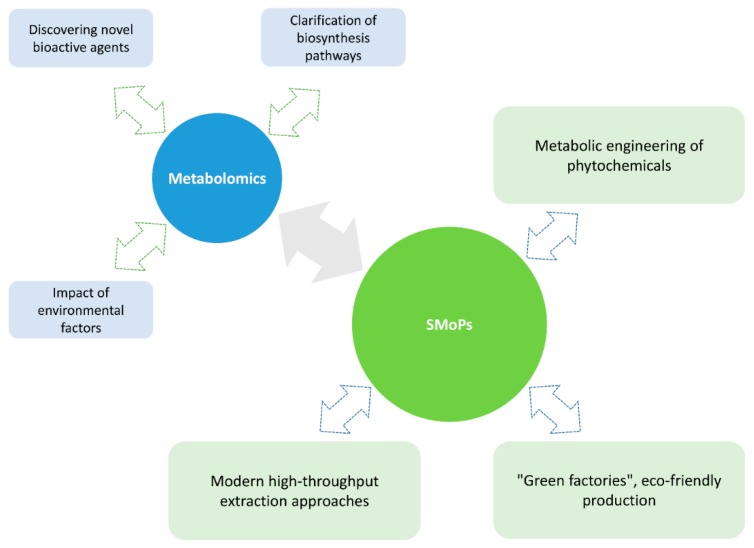
Figure 1
Figure 1
Herbal manufacture in the twenty first century.
Figure 2
Figure 2
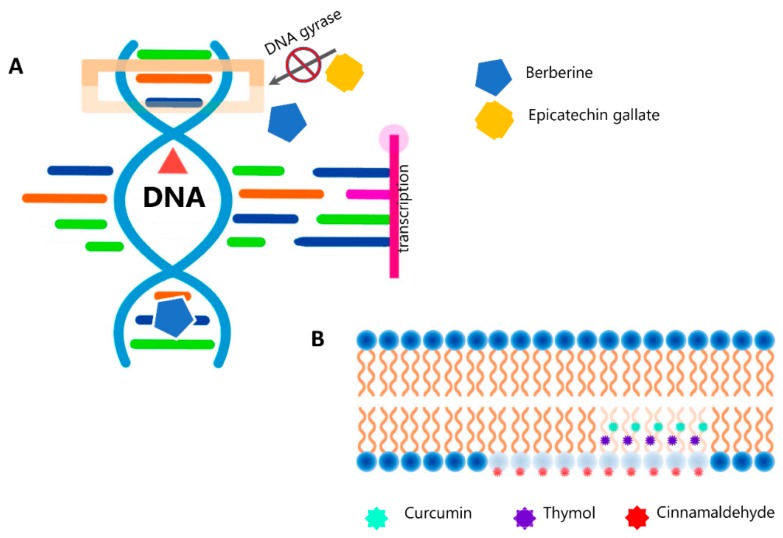
Antimicrobial action of secondary metabolites of plants (SMoPs). (A). Effect of SMoPs on the DNA replication and transcription. Epicatechin gallate inhibits bacterial DNA gyrase by binding to the ATP binding site of the gyrase B subunit [103]. Berberine inhibits DNA synthesis by affecting the activity of DNA topoisomerase [93]. An intercalative mode of binding for this alkaloid to DNA was also suggested. [104]. (B). Curcumin [57] as well as cinnamaldehyde [3] penetrate to membrane bilayer and enhance its permeability both in Gram-positive (S. aureus) and Gram-negative (E. coli) bacteria. Disruption of membrane integrity is the major mechanism of action of thymol against S. typhimurium [105].
Figure 3
Figure 3
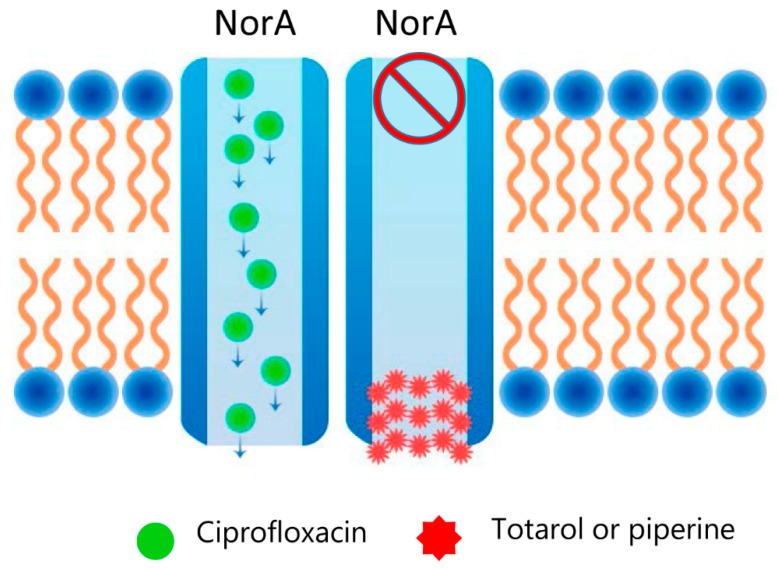
Plugging the efflux pumps with SMoPs. Piperine, the major plant alkaloid present in black pepper (Piper nigrum) and long pepper (Piper longum), or totarol—a diterpene from Podocarpus totara, inhibits NorA-mediated ciprofloxacin efflux from S. aureus cells [112,113,114].

References

    1. Achan J., Talisuna A.O., Erhart A., Yeka A., Tibenderana J.K., Baliraine F.N., Rosenthal P.J., D’Alessandro U. Quinine, an old anti-malarial drug in a modern world: Role in the treatment of malaria. Malar. J. 2011;10:144. doi: 10.1186/1475-2875-10-144. - DOI - PMC - PubMed
    1. Vasconcelos N.G., Croda J., Simionatto S. Antibacterial mechanisms of cinnamon and its constituents: A review. Microb. Pathog. 2018;120:198–203. doi: 10.1016/j.micpath.2018.04.036. - DOI - PubMed
    1. Zhang Y.B., Jiang P.P., Liu X.Y., Li W.D. Mechanism and antibacterial activity of cinnamaldehyde against Escherichia coli and Staphylococcus aureus. Mod. Food Sci. Technol. 2015;31:31–35. doi: 10.13982/j.mfst.1673-9078.2015.5.006. - DOI
    1. Li Y., Kong D., Fu Y., Sussman M.R., Wu H. The effect of developmental and environmental factors on secondary metabolites in medicinal plants. Plant. Physiol. Biochem. 2020;148:80–89. doi: 10.1016/j.plaphy.2020.01.006. - DOI - PubMed
    1. Bilal M., Rasheed T., Iqbal H.M.N., Hu H., Wang W., Zhang X. Macromolecular agents with antimicrobial potentialities: A drive to combat antimicrobial resistance. Int. J. Biol. Macromol. 2017;103:554–574. doi: 10.1016/j.ijbiomac.2017.05.071. - DOI - PubMed

LinkOut - more resources