


Regional Emergence of Candida auris in Chicago and Lessons Learned From Intensive Follow-up at 1 Ventilator-Capable Skilled Nursing Facility
- PMID: 32291441
- PMCID: PMC8376188
- DOI: 10.1093/cid/ciaa435
Regional Emergence of Candida auris in Chicago and Lessons Learned From Intensive Follow-up at 1 Ventilator-Capable Skilled Nursing Facility
Abstract
Background: Since the identification of the first 2 Candida auris cases in Chicago, Illinois, in 2016, ongoing spread has been documented in the Chicago area. We describe C. auris emergence in high-acuity, long-term healthcare facilities and present a case study of public health response to C. auris and carbapenemase-producing organisms (CPOs) at one ventilator-capable skilled nursing facility (vSNF-A).
Methods: We performed point prevalence surveys (PPSs) to identify patients colonized with C. auris and infection-control (IC) assessments and provided ongoing support for IC improvements in Illinois acute- and long-term care facilities during August 2016-December 2018. During 2018, we initiated a focused effort at vSNF-A and conducted 7 C. auris PPSs; during 4 PPSs, we also performed CPO screening and environmental sampling.
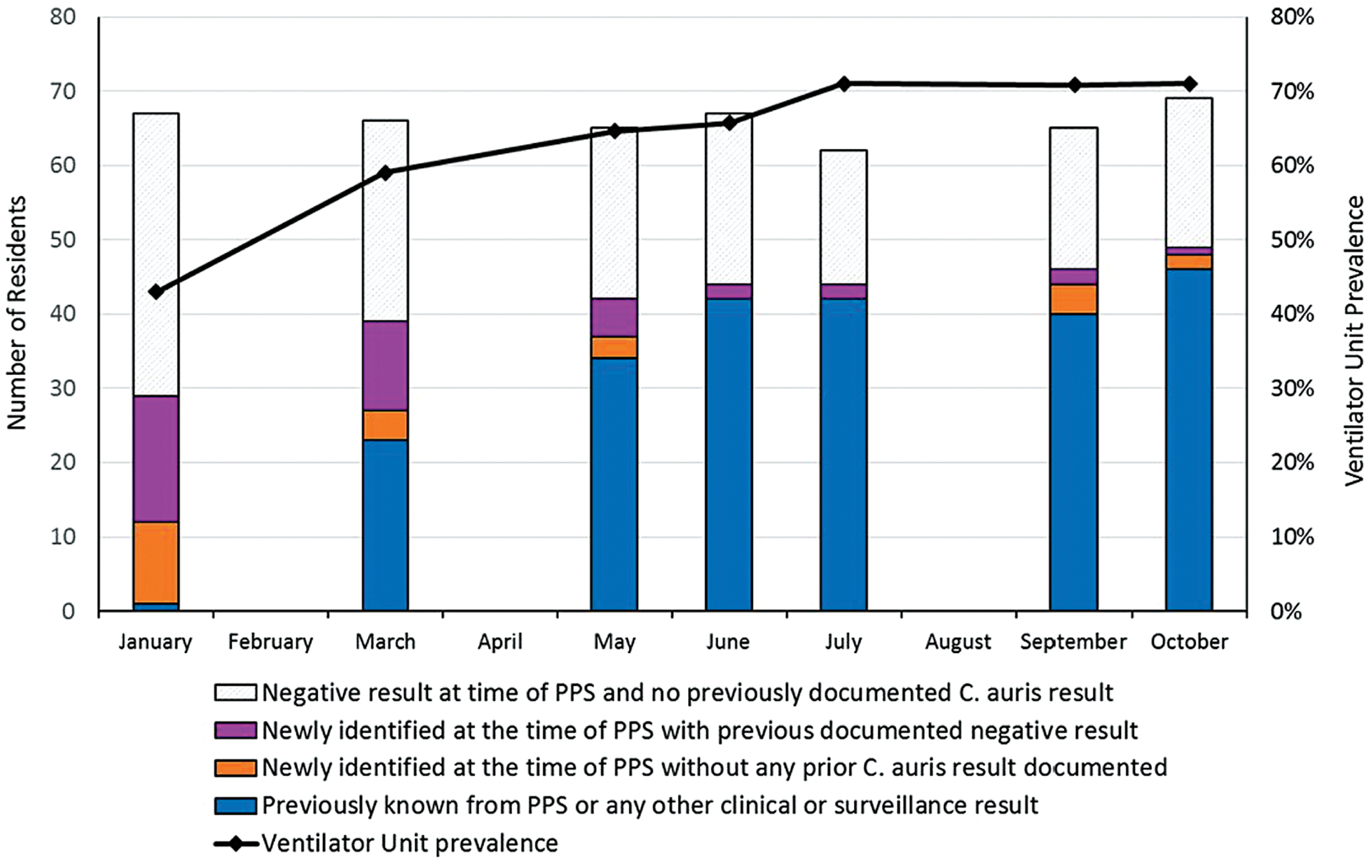
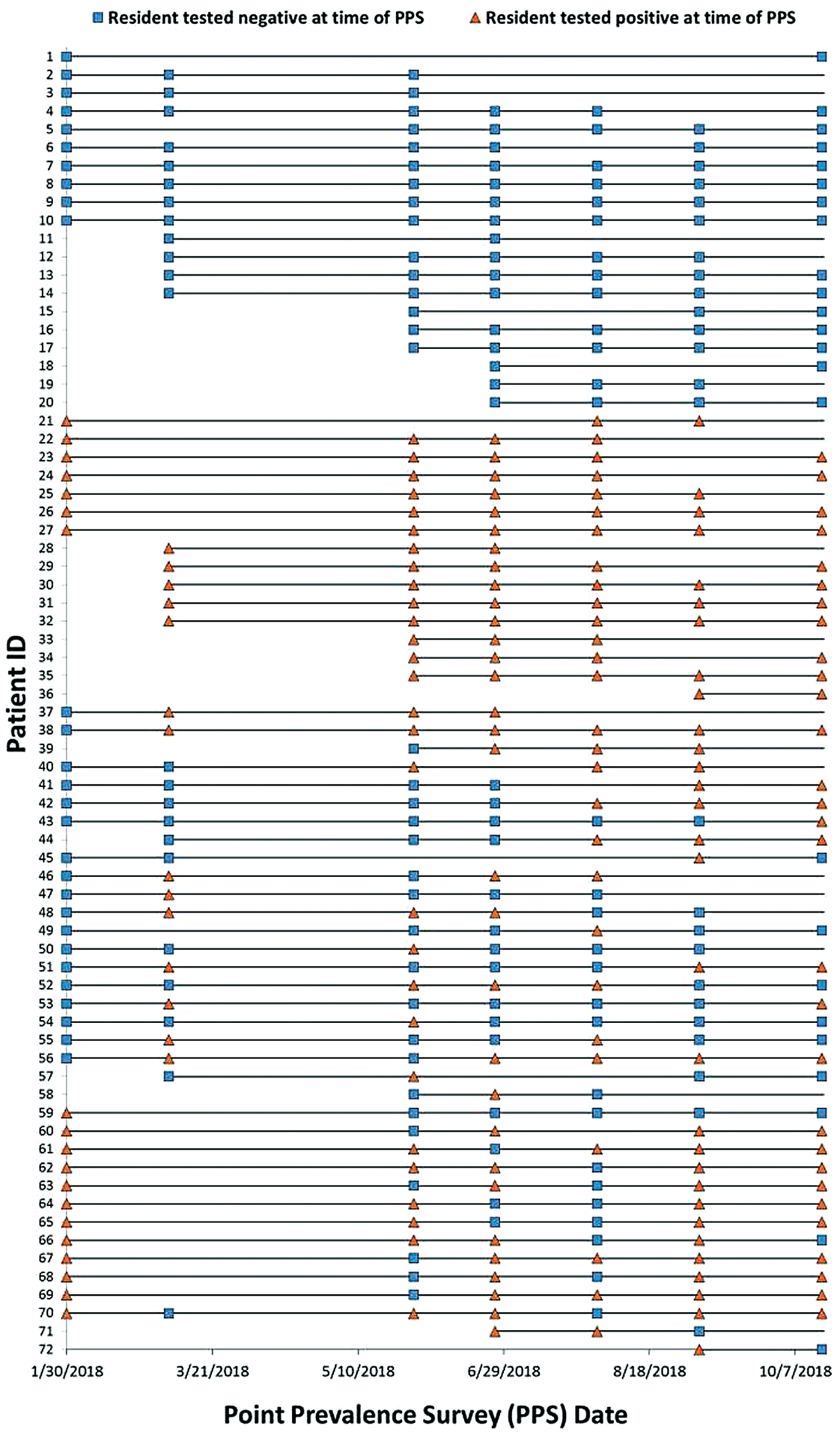
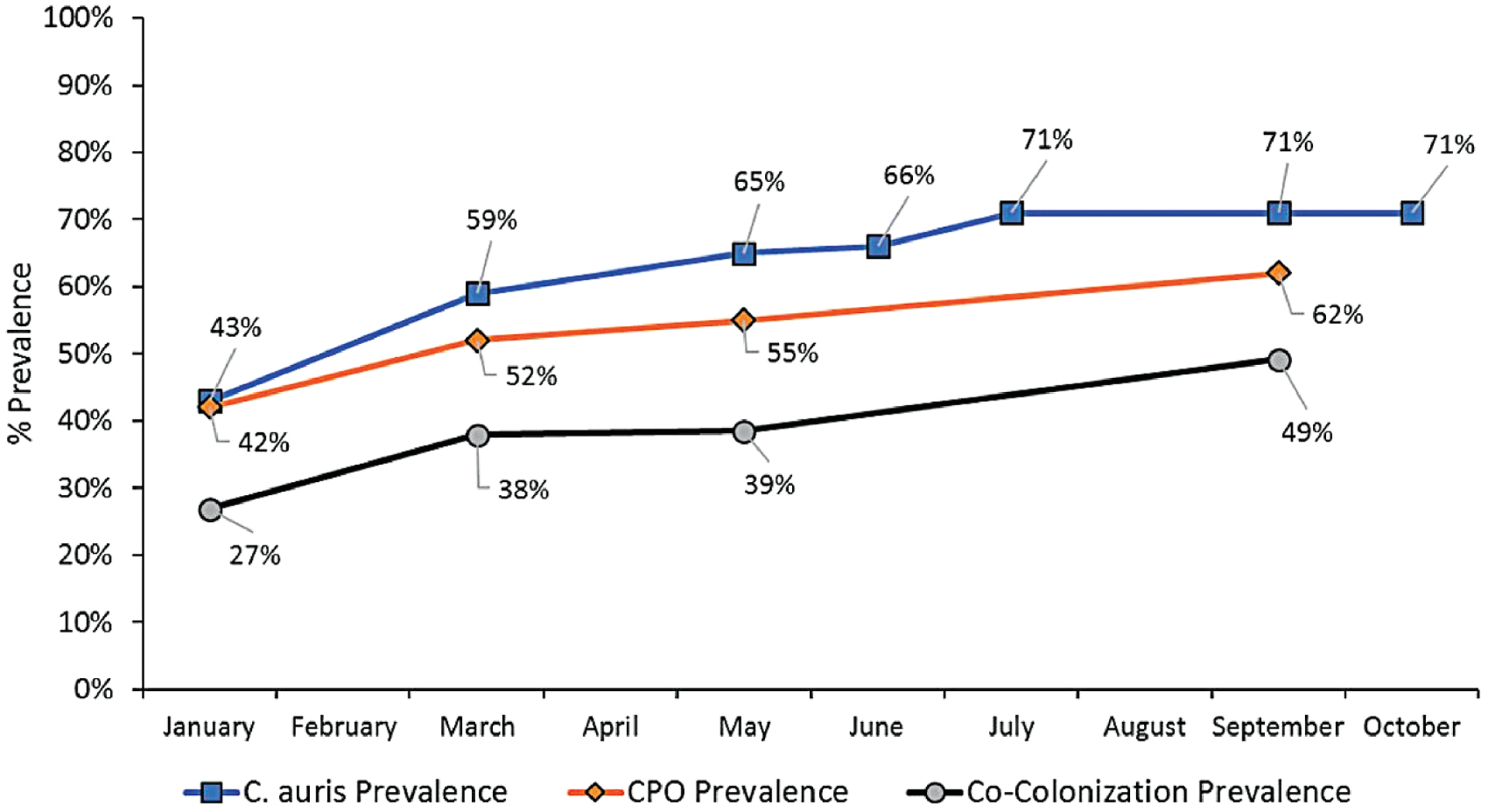
Results: During August 2016-December 2018 in Illinois, 490 individuals were found to be colonized or infected with C. auris. PPSs identified the highest prevalence of C. auris colonization in vSNF settings (prevalence, 23-71%). IC assessments in multiple vSNFs identified common challenges in core IC practices. Repeat PPSs at vSNF-A in 2018 identified increasing C. auris prevalence from 43% to 71%. Most residents screened during multiple PPSs remained persistently colonized with C. auris. Among 191 environmental samples collected, 39% were positive for C. auris, including samples from bedrails, windowsills, and shared patient-care items.
Conclusions: High burden in vSNFs along with persistent colonization of residents and environmental contamination point to the need for prioritizing IC interventions to control the spread of C. auris and CPOs.
Keywords: Candida; communicable diseases; emerging; fungal; infection control.
© The Author(s) 2020. Published by Oxford University Press for the Infectious Diseases Society of America. All rights reserved. For permissions, e-mail: journals.permissions@oup.com.
Figures
References
-
- Vallabhaneni S, Kallen A, Tsay S, Chow N, et al. Investigation of the first seven reported cases of Candida auris, a globally emerging invasive, multidrug-resistant fungus—United States, May 2013–August 2016. MMWR Morb Mortal Wkly Rep 2016; 65:1234–7. - PubMed
-
- Pop-Vicas A, Mitchell SL, Kandel R, Schreiber R, D’Agata EM. Multidrug-resistant gram-negative bacteria in a long-term care facility: prevalence and risk factors. J Am Geriatr Soc 2008; 56:1276–80. - PubMed
